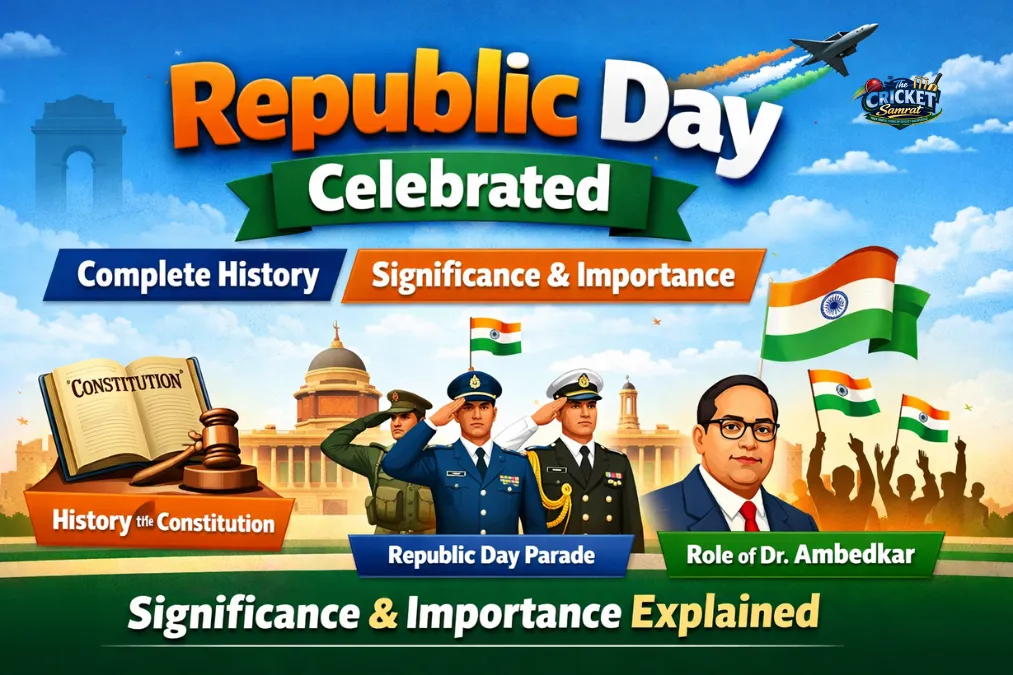
Why is Republic Day celebrated? This question reminds every Indian of the day when the nation truly became a republic with its own Constitution. Republic Day is one of the most important national festivals of India and is celebrated every year on 26 January with pride, respect, and patriotic spirit.
Republic Day marks the moment when India adopted its Constitution and became a sovereign, democratic republic. It is not just a public holiday but a powerful reminder of India’s long struggle for freedom, unity, and self-rule.
What Is Republic Day?
Republic Day is celebrated on 26 January each year to honor the day when the Constitution of India came into effect in 1950. On this day, India officially replaced the Government of India Act 1935 and became a republic governed by its own laws.
A republic is a country where the head of the state is elected and not a monarch. From 26 January 1950, the people of India became the ultimate source of power.
Why Is Republic Day Celebrated in India?
Why is Republic Day celebrated? It is celebrated to remember the historic day when India’s Constitution came into force, giving citizens the right to choose their government and live under laws created by Indians themselves.
Although India gained independence on 15 August 1947, it did not have its own permanent constitution at that time. The country was still functioning under colonial laws. Republic Day symbolizes the completion of India’s journey from colonial rule to a fully independent nation.
Historical Background of Republic Day
India Before Independence
Before independence, India was under British rule for nearly 200 years. Indians lived under laws made by the British government, and citizens had limited rights and freedoms.
The freedom movement involved countless sacrifices made by leaders like Mahatma Gandhi, Jawaharlal Nehru, Subhas Chandra Bose, Bhagat Singh, and many others.
Independence in 1947
India became independent on 15 August 1947. However, independence alone was not enough. The nation needed a constitution that would define its political structure, rights, duties, and democratic system.
Formation of the Constituent Assembly
The Constituent Assembly was formed to draft the Constitution of India. Dr. B. R. Ambedkar was appointed as the Chairman of the Drafting Committee.
The assembly took nearly three years to complete the Constitution. It held 11 sessions and spent about 2 years, 11 months, and 18 days finalizing the document.
Adoption of the Constitution
The Constitution of India was adopted on 26 November 1949 but was implemented on 26 January 1950. This date was chosen to honor the Purna Swaraj declaration made on 26 January 1930.
This historic moment answers the question of why is Republic Day celebrated every year on 26 January.
Why Was 26 January Chosen as Republic Day?
26 January holds deep historical importance in India’s freedom struggle.
On 26 January 1930, the Indian National Congress declared Purna Swaraj, meaning complete independence from British rule. From that year onward, 26 January was celebrated as Independence Day until freedom was achieved in 1947.
To respect this historic declaration, the same date was chosen to implement the Constitution in 1950.
What Is the Constitution of India?
The Constitution of India is the supreme law of the country. It defines:
- Fundamental rights of citizens
- Duties of citizens
- Structure of government
- Powers of the President, Prime Minister, and Judiciary
- Federal system of India
It is the longest written constitution in the world and ensures justice, liberty, equality, and fraternity for all citizens.
Importance of Republic Day
Establishment of Democracy
Republic Day marks the birth of Indian democracy. It ensures that the country is run by elected representatives chosen by the people.
Rule of Law
The Constitution ensures that no one is above the law. Every citizen, regardless of status, is equal before the law.
Protection of Fundamental Rights
Republic Day celebrates the rights guaranteed to every Indian, such as freedom of speech, equality, religion, and education.
National Unity
India is home to many languages, religions, and cultures. Republic Day reminds citizens that unity is the foundation of the nation.
How Republic Day Is Celebrated in India
Grand Parade at Kartavya Path
The main Republic Day celebration takes place at Kartavya Path in New Delhi. The President of India hoists the national flag and takes the salute.
The parade includes:
- Marching contingents of the armed forces
- Cultural tableaux from different states
- Displays of India’s military strength
- Performances showcasing India’s diversity
Chief Guest Tradition
Every year, a foreign leader is invited as the Chief Guest. This tradition highlights India’s diplomatic relations with the world.
Beating Retreat Ceremony
The celebrations conclude on 29 January with the Beating Retreat ceremony, performed by military bands near Rashtrapati Bhavan.
School and Community Programs
Across the country, schools, colleges, and institutions organize:
- Flag hoisting ceremonies
- Patriotic songs and dances
- Speeches and debates
- Cultural performances
These activities help students understand why is Republic Day celebrated and its importance.
Role of the President on Republic Day
On Republic Day, the President of India becomes the central figure of the celebrations. The President:
- Hoists the national flag
- Takes the parade salute
- Awards Padma Awards and gallantry medals
The day marks the President’s role as the constitutional head of the country.
Republic Day Awards and Honors
Several national awards are announced around Republic Day, including:
- Padma Vibhushan
- Padma Bhushan
- Padma Shri
- Gallantry awards like Ashok Chakra and Kirti Chakra
These awards honor citizens who have contributed exceptionally to the nation.
Difference Between Independence Day and Republic Day
Independence Day
- Celebrated on 15 August
- Marks freedom from British rule
- Focuses on sacrifice and struggle
Republic Day
- Celebrated on 26 January
- Marks adoption of the Constitution
- Focuses on democracy and governance
Understanding this difference explains clearly why is Republic Day celebrated separately from Independence Day.
Significance of Republic Day for Citizens
Republic Day reminds citizens that:
- Power lies with the people
- Voting is a fundamental right
- Democracy must be protected
- Unity and discipline are national responsibilities
It encourages citizens to follow constitutional values in daily life.
Role of Dr. B. R. Ambedkar in Republic Day
Dr. B. R. Ambedkar is known as the architect of the Indian Constitution. His vision ensured:
- Social justice
- Equality for all communities
- Abolition of untouchability
- Protection of minority rights
Republic Day is also a tribute to his lifelong efforts toward building a fair society.
Republic Day and National Integration
India’s strength lies in diversity. Republic Day brings together people from all backgrounds under one flag.
The cultural tableaux during the parade represent:
- Regional traditions
- Folk dances
- Historical heritage
- Modern achievements
This unity is one of the strongest reasons why Republic Day is celebrated with such pride.
Global Importance of Republic Day
Republic Day showcases India’s:
- Democratic values
- Military capability
- Cultural richness
- Technological progress
It sends a message to the world that India is a stable and responsible democratic nation.
How Republic Day Inspires Future Generations
Republic Day encourages young Indians to:
- Respect the Constitution
- Understand civic duties
- Value freedom and equality
- Contribute positively to society
The celebrations help pass patriotic values from one generation to the next.
Challenges and Responsibilities After Republic Day
Celebrating Republic Day also reminds citizens of responsibilities such as:
- Protecting democracy
- Following laws
- Promoting harmony
- Respecting national symbols
True celebration goes beyond ceremonies and reflects in daily actions.
Interesting Facts About Republic Day
- The first Republic Day parade was held in 1950 at Irwin Stadium
- The Constitution originally had 395 articles
- It is the longest constitution in the world
- The parade rehearsal takes nearly two months
- The national flag used is made of Khadi
These facts deepen understanding of why is Republic Day celebrated with grandeur.
Why Republic Day Still Matters Today
In modern times, Republic Day remains relevant because it reminds citizens that freedom must be protected through responsibility, tolerance, and democratic participation.
It is not only about remembering history but also about shaping the future of the nation.
Also read: National Tourism Day: Importance, History, Theme, and Global Significance
Conclusion
Why is Republic Day celebrated? It is celebrated to honor the day when India became a true republic governed by its own Constitution. Republic Day represents democracy, equality, unity, and the power of the people.
More than a national holiday, it is a reminder of India’s values and the sacrifices that built the nation. As citizens, celebrating Republic Day means respecting the Constitution, fulfilling our duties, and working together for a stronger and more inclusive India.
Republic Day is not just a date on the calendar. It is the soul of Indian democracy and a symbol of national pride that continues to inspire millions every year.