The British Museum stands at the heart of London as one of the world’s most influential cultural institutions, offering a sweeping narrative of human history through objects that span continents and millennia. Founded in the mid-18th century, it was created with a radical idea for its time: knowledge and heritage should be accessible to everyone, not confined to private collections or elite circles. Over the centuries, this principle has shaped the museum’s identity and global reputation.
From ancient stone tools to delicate manuscripts, the museum’s collections are not simply displays of art and archaeology; they are evidence of how societies have lived, believed, traded, and interacted. Walking through its galleries feels less like moving through rooms and more like traveling across eras and civilizations, each artifact carrying stories of innovation, conflict, and cultural exchange.
Origins and Evolution of The British Museum
The roots of The British Museum can be traced to 1753, when physician and collector Sir Hans Sloane bequeathed his vast collection to the nation. Parliament accepted the gift, and the museum officially opened to the public in 1759. This marked a significant moment in cultural history, as it was among the first national museums open to all, regardless of social background.
Initially housed in Montagu House, the museum expanded rapidly as Britain’s global connections grew. Archaeological expeditions, scholarly exchanges, and donations added new layers to the collection. By the 19th century, the museum had become a central hub for academic research, influencing disciplines such as archaeology, anthropology, and history.
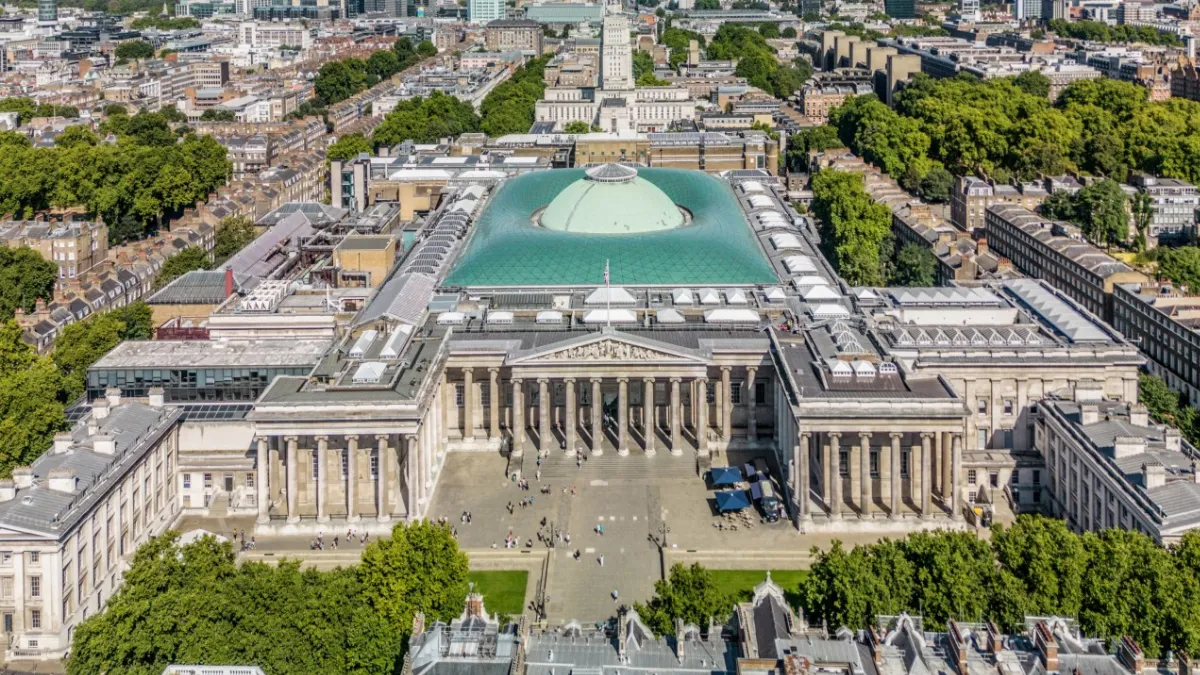
Architectural changes mirrored this growth. The iconic neoclassical façade and the later addition of the Great Court, with its vast glass roof, transformed the museum into both a scholarly institution and a public landmark. These developments reflect an ongoing effort to balance preservation with accessibility.
Collections That Shape Global Understanding
Few institutions can rival the scale and diversity of holdings found here. The museum’s collections encompass over two million years of history, representing cultures from every inhabited continent. Ancient Egypt, Mesopotamia, Greece, Rome, South Asia, East Asia, Africa, and the Americas all find space within its walls.
Among the most discussed artifacts are monumental sculptures, inscribed tablets, coins, textiles, and ceremonial objects. Each item is carefully contextualized to help visitors understand not only its aesthetic value but also its social and historical significance. This approach reinforces the idea that objects are witnesses to human experience, not isolated works of art.
At the same time, the breadth of these collections has prompted important conversations about ownership, colonial history, and cultural restitution. The museum has increasingly engaged with these debates through research, dialogue, and collaborative projects with source communities.
Knowledge, Research, and Education
Beyond its public galleries, the institution functions as a major research center. Scholars from around the world use its archives, conservation labs, and study rooms to advance understanding of ancient languages, materials, and technologies. Publications and exhibitions often emerge from this research, translating academic findings into accessible narratives.
Educational outreach is another cornerstone. Programs for schools, universities, and lifelong learners aim to connect historical material with contemporary issues. Workshops, lectures, and digital resources ensure that learning continues beyond physical visits, extending the museum’s reach worldwide.
A Simple Overview of Key Areas
| Area of Focus | What It Represents |
|---|---|
| Ancient Egypt | Beliefs, art, and daily life along the Nile |
| Greece and Rome | Foundations of Western political and artistic traditions |
| Middle East | Early writing, law, and urban civilization |
| Asia | Philosophies, religions, and artistic heritage |
| Africa | Cultural diversity, trade, and craftsmanship |
| Americas | Indigenous histories and pre-Columbian cultures |
The British Museum in the Modern World
In the 21st century, The British Museum faces both opportunities and challenges. Digital technology has transformed how collections are shared, allowing millions to explore objects online. Virtual exhibitions and open-access databases have made scholarship more transparent and inclusive.
At the same time, debates about historical accountability have intensified. Questions surrounding how objects were acquired and where they should reside are now central to public discourse. The museum’s responses, which include partnerships, loans, and shared research initiatives, reflect a shift toward dialogue rather than silence.
Sustainability and conservation also play a growing role. Preserving fragile materials in a changing climate requires constant innovation, blending traditional conservation methods with new scientific techniques.
Cultural Impact and Public Significance
What sets this institution apart is not just the scale of its collections, but its ability to connect past and present. Visitors encounter objects that illuminate ancient trade routes, early scientific thinking, and artistic expression, prompting reflection on modern global relationships.
For many, a visit becomes a personal journey through shared human heritage. The museum encourages visitors to see connections between civilizations, challenging the idea of isolated histories. This perspective fosters a deeper appreciation of cultural interdependence.
Read also: Rockefeller Center: The Beating Heart of New York City’s Culture and History
Why The British Museum Continues to Matter
The enduring relevance of The British Museum lies in its commitment to accessibility, scholarship, and dialogue. As societies grapple with questions of identity, history, and cultural ownership, institutions like this play a crucial role in facilitating informed discussion.
By preserving objects, supporting research, and inviting the public into complex conversations, the museum remains more than a repository of artifacts. It functions as a living archive, continually reshaped by new interpretations and global perspectives.
In a rapidly changing world, the stories held within its galleries remind us that human history is interconnected, contested, and constantly evolving.