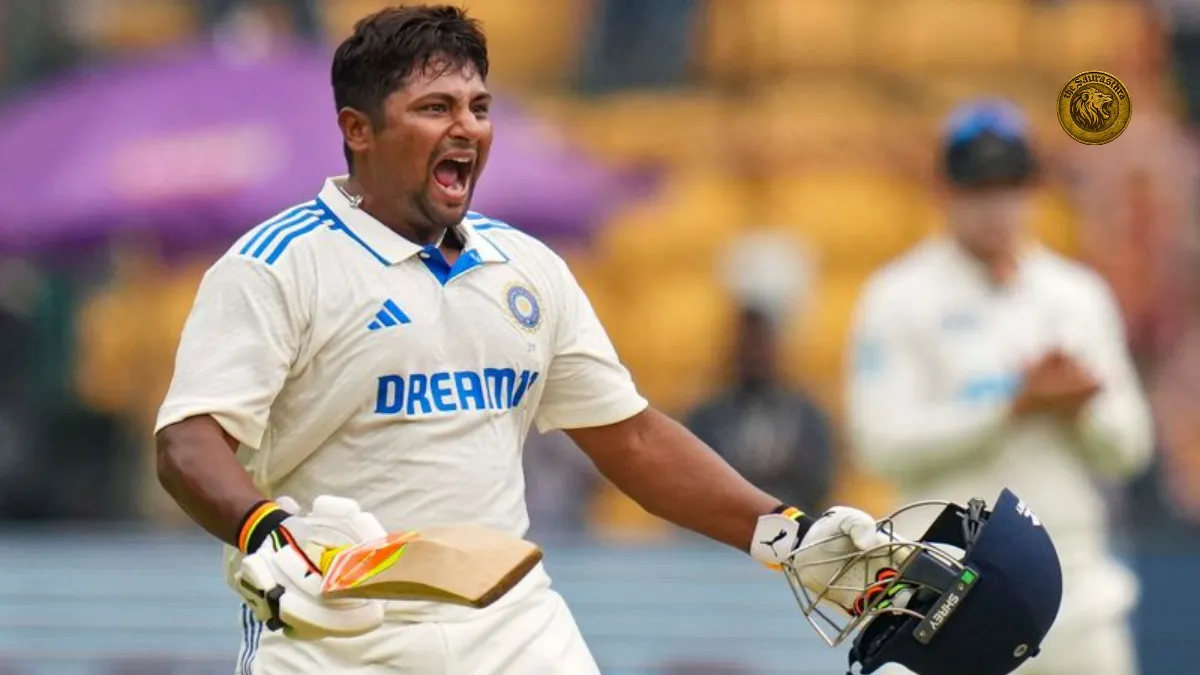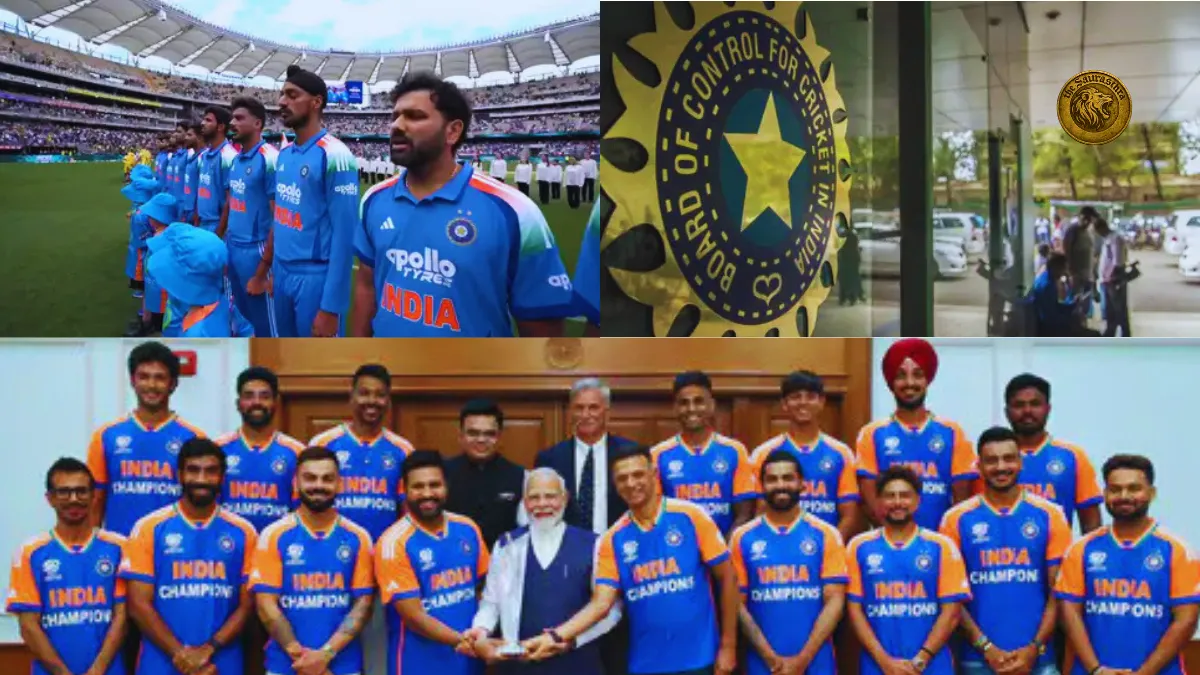
The Supreme Court of India has delivered a sharp rebuke to a petition challenging the use of the term “Team India” for the national cricket side, firmly reinforcing the legal and practical authority of the Board of Control for Cricket in India (BCCI) over the sport. In a hearing that drew strong observations from the bench, the court dismissed the plea as frivolous and warned against wasting judicial time on issues that lack substance.
During the proceedings, the Supreme Court made a striking remark about the influence and financial power wielded by cricket in India, suggesting that the situation has, at times, reached a point where “the tail appears to be wagging the dog.” The comment highlighted the extraordinary dominance of cricket and the BCCI’s unparalleled position within Indian sports administration.
The petition sought to prohibit referring to the Indian men’s cricket team as the “Indian team” or “Team India,” arguing that the BCCI is a private entity and therefore lacks the authority to project the team as a national representative. However, the Supreme Court rejected this argument outright, calling the plea unnecessary, legally unsound, and a misuse of the court’s time.
Supreme Court Bench Makes Strong Observations
The case was heard by a two-judge bench of the Supreme Court led by Chief Justice of India Justice Surya Kant, with Justice Joymalya Bagchi also on the bench. While hearing the matter on Thursday, Justice Bagchi made candid remarks about the reality of modern cricket governance in India.
Referring to the immense power and financial resources associated with cricket, Justice Bagchi observed that there are moments when it feels as though the governing body controls the ecosystem so completely that traditional power structures appear reversed. His statement — likening the situation to a tail wagging the dog — underscored concerns about how money and influence can redefine authority in sports administration.
Despite these observations, the bench made it clear that the dominance of the BCCI is not merely a matter of perception or convenience. According to the court, the BCCI’s control over Indian cricket has been acknowledged not only in practice but also within the framework of law.
Petition Challenges BCCI’s Authority
The petitioner argued that the BCCI is a private body registered under the Tamil Nadu Societies Registration Act and does not qualify as a government entity. It was further claimed that the BCCI does not fall under the definition of “State” as described in Article 12 of the Indian Constitution.
Based on this reasoning, the petitioner contended that the BCCI has no legal right to label the national cricket team as “Team India” or the “Indian cricket team,” since, according to the plea, only a government-recognised or state-controlled body should be allowed to represent the nation officially.
The petition also raised concerns about national symbolism, questioning why government-owned media platforms refer to the cricket team as India’s national side and allow the use of national emblems, such as the Indian flag, during matches, despite the BCCI’s private status.
Supreme Court Rejects the Argument
The Supreme Court was unconvinced by these submissions. Justice Joymalya Bagchi stated unequivocally that the BCCI’s role in Indian cricket is no longer ambiguous. According to the bench, the board’s authority has evolved beyond informal acceptance and now enjoys clear legal recognition.
The court emphasised that the central government extends full support to the BCCI in its role as the custodian of Indian cricket. This backing, the bench noted, further strengthens the board’s legitimacy and undermines claims that it lacks the authority to represent India in international cricket.
The Supreme Court clarified that legal definitions cannot be viewed in isolation from practical realities. Even if the BCCI is not a government body in the strictest constitutional sense, its role in selecting teams, organising international fixtures, and representing India before global cricketing organisations is universally acknowledged and accepted.
‘Do Not Waste the Court’s Time’
Chief Justice Surya Kant expressed visible displeasure with the nature of the petition. He criticised the tendency of litigants to draft and file applications without due consideration, warning that such actions burden the judicial system unnecessarily.
“Do not sit at home and file petitions like this,” the Chief Justice remarked during the hearing. He cautioned that the Supreme Court would not hesitate to impose heavy costs on litigants who bring baseless matters before the court.
The bench reminded the petitioner that India already has a National Sports Tribunal, the notification for which has been issued. The Supreme Court suggested that sports-related grievances should be addressed through appropriate forums rather than being escalated to the apex court without merit.
Ultimately, the Supreme Court dismissed the petition, categorising it as frivolous and devoid of any genuine legal issue.
Delhi High Court Had Already Rejected the Plea
This was not the first time the matter had been brought before the judiciary. In October 2025, the Delhi High Court had already dismissed the same petition, delivering similarly strong observations.
At that time, the High Court had sharply questioned the logic of the plea. Addressing the petitioner’s counsel, advocate Ripak Kansal, the court asked whether the argument implied that a team representing India across the world was somehow not India’s team.
The High Court made it clear that any team which competes internationally under India’s name and flag is, by definition, representing the nation. The court described objections to the use of “Team India” as entirely baseless.
Strong Words From the Delhi High Court
The then Chief Justice of the Delhi High Court, Justice D.K. Upadhyay, termed the petition a complete waste of judicial time. He emphasised that the functioning of national sports teams does not depend on direct government selection or funding.
Justice Upadhyay offered examples from other sports, asking whether Olympic teams, Commonwealth Games squads, or national teams in hockey, football, or tennis are personally selected by the government. Despite being chosen by sports federations, these teams unquestionably represent India on the global stage.
The High Court underscored that representation of the nation in sports does not hinge on whether a governing body is funded by the government, but on recognition, function, and international acceptance.
Argument on Government Funding Falls Flat
One of the petitioner’s key arguments was that the BCCI does not receive financial assistance from the central government. The plea cited responses obtained under the Right to Information (RTI) Act, which reportedly confirmed that the BCCI is neither recognised as a National Sports Federation nor funded by the Ministry of Youth Affairs and Sports.
The petitioner claimed that this absence of funding and formal recognition weakened the BCCI’s claim to represent India officially. It was also argued that allowing national symbols during cricket matches created a misleading impression of state endorsement.
However, both the Supreme Court and the Delhi High Court rejected this line of reasoning. The courts noted that government funding is not a prerequisite for national representation in sports, especially in disciplines that are commercially self-sustaining.
Supreme Court Affirms Practical Reality
In its ruling, the Supreme Court highlighted that cricket in India operates within a unique ecosystem. The sport’s popularity, economic scale, and international standing have shaped governance structures that differ from other disciplines.
The bench acknowledged that while debates over institutional power and accountability may be valid in broader discussions, they cannot form the basis for denying the obvious fact that the Indian cricket team represents the nation.
The court reiterated that the use of the terms “Indian team” and “Team India” has gained widespread acceptance, both domestically and internationally. Challenging such terminology, the court said, serves no legal or public interest.
Also read: First Arjuna Award Winner: India’s First National Sports Hero
Broader Implications of the Ruling
The Supreme Court’s dismissal of the petition sends a clear message about the limits of judicial intervention in matters that are settled by convention, practice, and global recognition. The ruling reinforces the idea that courts will not entertain speculative or academic challenges that do not result in tangible legal consequences.
Legal experts believe the judgment strengthens institutional stability in Indian sports governance by preventing repetitive litigation over settled issues. It also reaffirms the judiciary’s expectation that petitioners exercise restraint and responsibility before approaching constitutional courts.
Cricket’s Unique Position in India
The observations made by the Supreme Court about money and power reflect a broader societal conversation about cricket’s dominance in India. With massive commercial interests, broadcasting rights worth billions, and unparalleled public following, cricket occupies a space unlike any other sport in the country.
The BCCI, as the administrator of Indian cricket, has inevitably accumulated immense influence. While this power has often been debated, the Supreme Court’s ruling makes it clear that such discussions must occur in appropriate policy or legislative forums, not through speculative litigation.
Conclusion: From the Supreme Court
In conclusion, the Supreme Court categorically dismissed the petition seeking to bar the use of “Team India,” calling it legally untenable and unnecessary. The court affirmed that the BCCI’s control over Indian cricket is firmly established and recognised by law, government practice, and international sporting bodies.
Both the Supreme Court and the Delhi High Court have now made it abundantly clear that questioning the national identity of India’s cricket team is not only misguided but also an abuse of the judicial process.
As India’s cricket team continues to represent the country on the world stage, the judiciary has drawn a firm line against attempts to undermine established sporting realities through baseless legal challenges.