Saurashtra is a part of which state? This question often arises among students, travelers, and readers of Indian history who encounter the name frequently but may not fully understand the region’s political and cultural placement. Saurashtra is a historically rich peninsula located on the western coast of India, and it forms one of the most distinctive cultural landscapes in the country. Although it once existed as a collection of princely states and briefly operated as a separate administrative entity after India’s independence, today it is an integral region of the state of Gujarat.
Historical Background of Saurashtra
To understand Saurashtra is a part of which state?, it is essential to explore how the region’s identity evolved. Historically known as the Kathiawar Peninsula, Saurashtra has been home to some of India’s earliest settlements, with archaeological sites pointing to connections with the ancient Harappan civilization. Over centuries, it came under the influence of various dynasties, including the Mauryas, Guptas, Chudasamas, and the rulers of Junagadh and Bhavnagar. This layered history shaped the linguistic, architectural, and cultural traditions that still define the area today.
During British rule, Saurashtra consisted of over 200 princely states governed under the Kathiawar Agency. After India gained independence in 1947, these states were integrated into the Union of India, leading to the formation of the short-lived Saurashtra State in 1948. This political entity continued until the linguistic reorganization of Indian states in 1956, when it was merged with Bombay State. Finally, in 1960, when Bombay State was divided based on linguistic lines, the Gujarati-speaking districts—including Saurashtra—became part of the newly formed state of Gujarat. This historical journey clearly answers the question: Saurashtra is a part of which state? It is a core region of Gujarat.
Geography and Cultural Identity
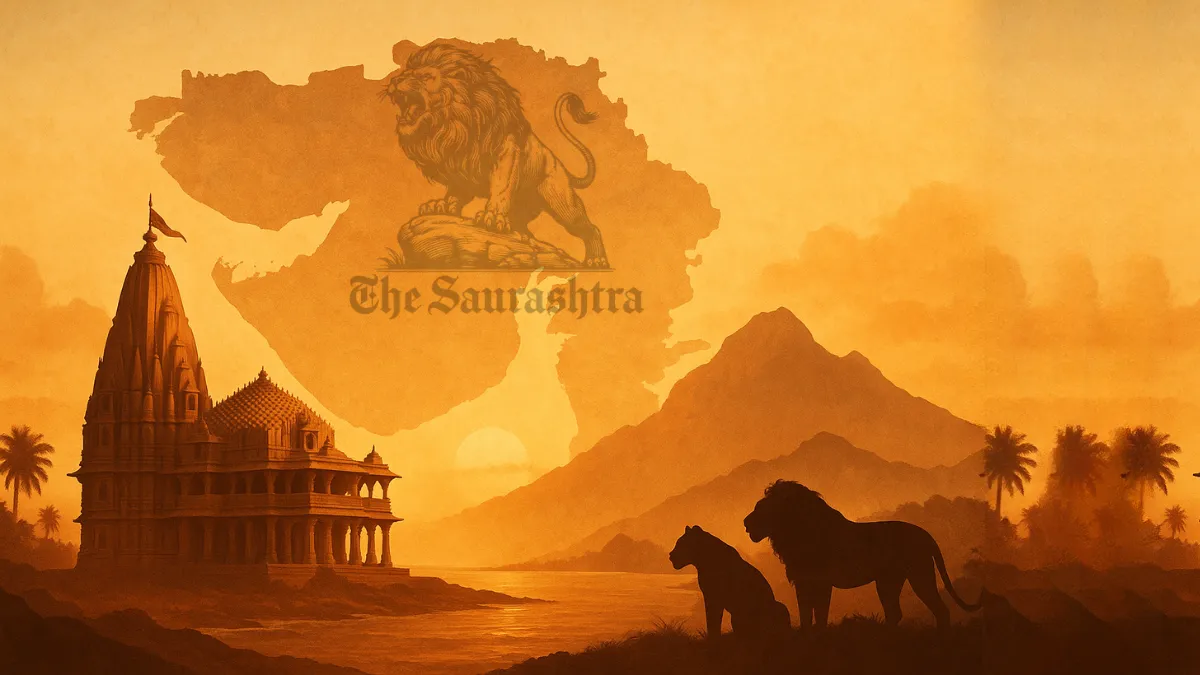
Saurashtra occupies a large portion of western Gujarat. It is bound by the Arabian Sea on three sides and features a diverse landscape of coastline, plateaus, fertile plains, and forested areas. The region includes major cities such as Rajkot, Jamnagar, Junagadh, Porbandar, Bhavnagar, and Amreli. Each contributes to the area’s economic and cultural profile, from industries and education to pilgrimage and tourism.
The region’s cultural identity is deeply rooted in Gujarati traditions. Folk music, festivals, cuisine, and crafts reflect influences from ancient maritime trade routes, pastoral communities, and royal lineages. When discussing Saurashtra is a part of which state? the answer is inseparable from its deep connection to Gujarati heritage. The dialect spoken in the region, known as Saurashtra or Kathiawadi Gujarati, adds further uniqueness to its cultural profile.
Administrative Placement of Saurashtra
At present, Saurashtra comprises several districts that fall under the administrative control of Gujarat. Below is a simple table outlining key districts considered part of the Saurashtra region and their notable characteristics:
| District | Major City | Known For |
|---|---|---|
| Rajkot | Rajkot | Industry, education, handicrafts |
| Jamnagar | Jamnagar | Ports, brass industry, coastal heritage |
| Junagadh | Junagadh | Girnar hills, wildlife sanctuaries |
| Porbandar | Porbandar | Birthplace of Mahatma Gandhi |
| Bhavnagar | Bhavnagar | Ports, cultural heritage |
| Amreli | Amreli | Agriculture, Gir Forest proximity |
| Surendranagar | Surendranagar | Salt production, textiles |
This table reflects the administrative integration that confirms the answer to Saurashtra is a part of which state?—these districts are officially within Gujarat.
Why the Question Still Creates Confusion
Although the region is firmly within Gujarat, the question Saurashtra is a part of which state? is often asked because of its distinct historical background and strong regional identity. People sometimes assume it might be separate, much like how certain regions in India have maintained historical names that differ from current state boundaries. Additionally, Saurashtra’s past as an independent state from 1948–1956 sometimes leads to misunderstanding among readers and students of Indian political history.
Another reason is that the cultural identity of Saurashtra remains strong and cohesive. Many residents identify themselves as “Saurashtrians” or “Kathiawadis” first, emphasizing regional pride in their heritage. This sometimes leads outsiders to wonder whether Saurashtra functions as a separate administrative region. However, all cultural markers and administrative divisions point clearly toward Gujarat.
Also read: What is Saurashtra Called? A Historical and Cultural Exploration of a Timeless Region
Saurashtra in Contemporary Gujarat
In modern times, Saurashtra plays a significant role in Gujarat’s economy, politics, and cultural life. The region is a major hub for industries such as petrochemicals, ports, manufacturing, textiles, and agriculture. It is also home to several important religious and natural sites, including Dwarka, Somnath, Gir National Park, and the scenic coastline stretching across districts.
Education and urban development in cities like Rajkot and Jamnagar have contributed to the region’s rapid growth. Government initiatives, infrastructure projects, and tourism development continue to make Saurashtra an influential part of Gujarat. This reinforces the answer to Saurashtra is a part of which state?—it is a central contributor to the state’s identity and progress.
Also read: Understanding the Difference Between Kathiawar and Saurashtra
Conclusion
Saurashtra is a part of which state? The answer is clear and historically grounded: Saurashtra is an integral region of the Indian state of Gujarat. Its journey from ancient civilizations to princely states, from a brief period as a separate administrative entity to full integration into Gujarat, reflects its rich and complex identity. Today, Saurashtra stands as one of Gujarat’s most important cultural, economic, and geographical regions, showcasing a blend of history, tradition, and modern growth that continues to shape western India.