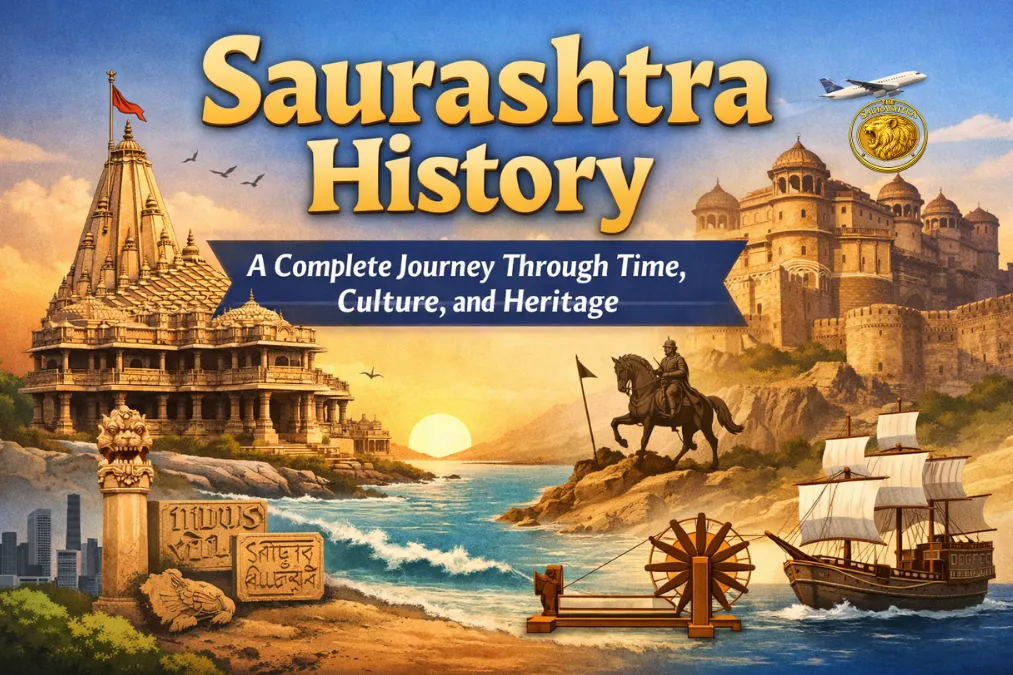
Saurashtra History is a fascinating story of ancient civilizations, powerful kingdoms, rich culture, and timeless traditions that continue to shape this region of Gujarat even today. Known for its strong identity and deep roots in Indian history, Saurashtra has witnessed the rise and fall of many dynasties, making it one of the most historically significant regions in western India.
Introduction to Saurashtra
Saurashtra, also known as Kathiawar, is a peninsula located in the western part of Gujarat. Surrounded by the Arabian Sea on three sides, this region has always been an important center for trade, culture, and political power. The land of Saurashtra is known for its temples, coastal towns, and strong warrior traditions.
Understanding Saurashtra History helps us explore how this region developed from ancient settlements to a modern part of Gujarat while preserving its unique identity.
Ancient Origins of Saurashtra History
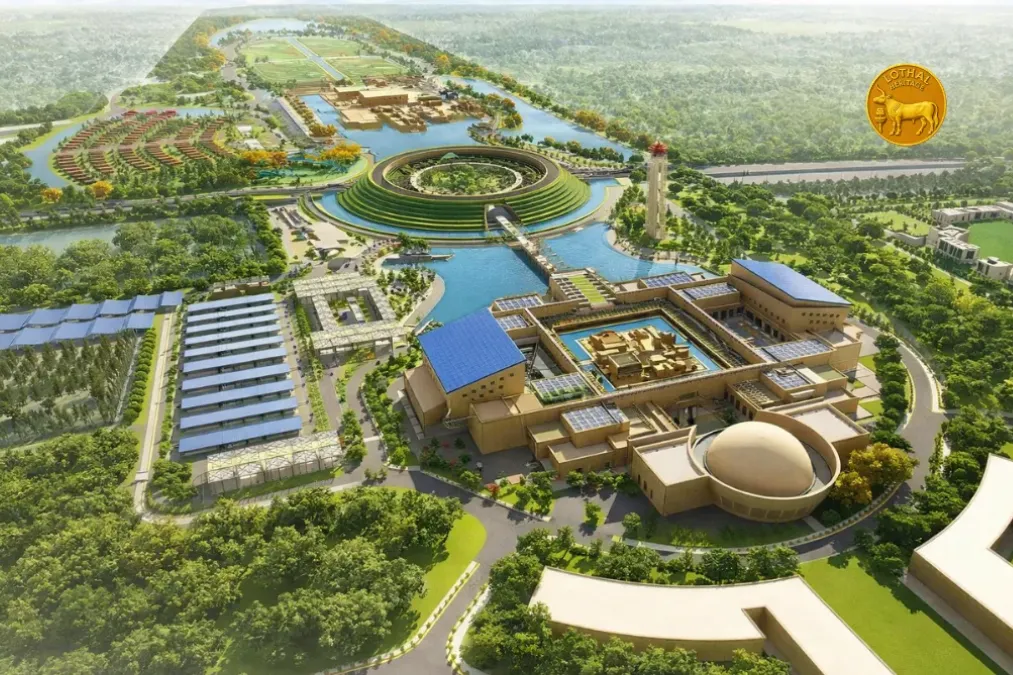
The roots of Saurashtra History go back thousands of years. Archaeological findings suggest that this region was connected to the Indus Valley Civilization. Important ancient sites like Lothal, although slightly outside the core Saurashtra region, indicate that the surrounding areas were part of a well-developed trade network.
Saurashtra was mentioned in ancient Indian texts like the Mahabharata and the Puranas. It was known as “Surashtra,” meaning a good or prosperous land. The region was famous for its agriculture, cattle wealth, and maritime trade.
The coastal location made Saurashtra a gateway for trade with countries like Egypt, Mesopotamia, and Persia. This early exposure to global trade played a major role in shaping the cultural diversity of the region.
Saurashtra History During the Maurya and Gupta Period
Saurashtra came under the rule of the Mauryan Empire during the reign of Emperor Ashoka in the 3rd century BCE. Ashoka established administrative control over the region and promoted Buddhism. The famous Girnar rock edicts near Junagadh are a key part of Saurashtra History, showing Ashoka’s influence.
After the Mauryas, the region saw the rule of several local and foreign dynasties, including the Western Satraps. These rulers contributed to trade and urban development.
During the Gupta period, Saurashtra experienced cultural and economic growth. The region became known for its art, architecture, and learning. Though the Gupta Empire had limited direct control, its cultural influence was clearly visible.
Rise of Regional Kingdoms in Saurashtra History
After the decline of large empires, Saurashtra saw the rise of powerful regional dynasties. Among them, the Maitraka dynasty of Vallabhi was one of the most important.
The Maitrakas ruled between the 5th and 8th centuries CE and made Vallabhi a major center of education and administration. It was considered one of the leading universities of ancient India, attracting students from different parts of the world.
Later, the region was ruled by various Rajput clans such as the Chudasamas, Jethwas, and Jadejas. These rulers built forts, temples, and cities that still stand today as a reminder of their legacy.
Junagadh, Porbandar, and Dwarka became important centers during this period. These cities played a significant role in shaping Saurashtra History through trade, religion, and governance.
Influence of Religion on Saurashtra History
Religion has always been an important part of Saurashtra History. The region is home to some of the most sacred Hindu temples in India.
Dwarka, believed to be the kingdom of Lord Krishna, is one of the Char Dham pilgrimage sites. The Dwarkadhish Temple attracts millions of devotees every year.
Somnath Temple, located on the coast, is another key symbol of faith and resilience. It has been destroyed and rebuilt several times throughout history, reflecting the strength and devotion of the people.
Jainism also played a major role in the region. The temples on Shatrunjaya Hills in Palitana are among the most important Jain pilgrimage sites in the world.
Buddhism had its presence during the Mauryan period, and remnants of Buddhist caves and inscriptions can still be found in places like Junagadh.
Saurashtra History During the Medieval Period
The medieval period brought significant changes to Saurashtra. The region faced invasions from various Muslim rulers, including the Delhi Sultanate and later the Gujarat Sultanate.
Despite these challenges, local rulers continued to maintain their influence in many areas. The coexistence of different cultures and religions during this time added to the diversity of Saurashtra.
Ports like Veraval and Mangrol remained active trade centers. The maritime strength of Saurashtra helped it stay connected with international markets even during times of political change.
Architecture from this period shows a blend of Hindu, Jain, and Islamic styles, which can still be seen in various monuments across the region.
Colonial Era and Saurashtra History
During the British rule, Saurashtra was not a single unified region. Instead, it was divided into several princely states, each ruled by local kings under British supervision.
Some of the prominent princely states included Bhavnagar, Junagadh, Nawanagar (Jamnagar), and Porbandar. These states had their own administrations but were indirectly controlled by the British.
This period saw the development of infrastructure such as railways, ports, and modern education systems. However, the British influence also brought economic challenges and political changes.
The princely states played a crucial role in the freedom movement. Leaders and citizens from Saurashtra actively participated in India’s struggle for independence.
Integration of Saurashtra After Independence
One of the most important chapters in Saurashtra History is its integration into independent India.
After 1947, the princely states of Saurashtra were united to form the Saurashtra State in 1948. This was a major step towards political unity.
In 1956, Saurashtra State was merged into the Bombay State, and later in 1960, it became part of the newly formed Gujarat State.
This integration helped in the administrative development and modernization of the region while preserving its cultural heritage.
Cultural Heritage in Saurashtra History
Saurashtra is known for its vibrant culture, which reflects its rich history.
The region has its own dialect, traditions, and festivals. Folk music and dance forms like Garba and Raas are an important part of local life.
Traditional crafts such as bandhani (tie-dye), embroidery, and silver jewelry showcase the artistic skills of the people.
Food in Saurashtra is simple yet flavorful, often influenced by the dry climate of the region. Dishes like bajra rotla, sev tameta, and khichdi are popular.
The culture of hospitality and strong community bonds make Saurashtra unique and welcoming.
Economic Importance in Saurashtra History
Historically, Saurashtra has been an important economic region due to its coastal location.
Fishing, agriculture, and trade have been the backbone of its economy. Ports like Pipavav and Porbandar continue to play a key role in trade.
In modern times, industries such as textiles, chemicals, and shipbreaking have developed in the region.
Rajkot has emerged as an industrial hub, known for engineering and manufacturing. This shows how Saurashtra History has evolved from traditional trade to modern industry.
Key Cities and Their Role in Saurashtra History
Several cities in Saurashtra have contributed significantly to its historical development.
Junagadh is known for its ancient forts, inscriptions, and proximity to Girnar Hills.
Dwarka is a major religious center with deep mythological significance.
Porbandar is the birthplace of Mahatma Gandhi, making it an important site in India’s freedom history.
Rajkot played a key role during the British era and continues to be a major urban center.
Bhavnagar is known for its maritime trade and progressive princely rule.
Each of these cities adds a unique chapter to Saurashtra History.
Also read: Saurashtra Tourist Places: A Complete Travel Guide to Explore the Best of Gujarat
Tourism and Historical Significance
Today, Saurashtra attracts tourists from across India and the world.
Visitors come to explore its temples, wildlife, beaches, and historical monuments. Gir National Park, the home of Asiatic lions, is one of the major attractions.
Historical sites like Uparkot Fort, Junagadh caves, and old palaces provide a glimpse into the past.
Religious tourism plays a major role, especially in places like Dwarka, Somnath, and Palitana.
Tourism not only highlights Saurashtra History but also supports the local economy.
Also read: Saurashtra: History, Culture, Geography, and Life in Gujarat’s Proud Peninsula
Conclusion
Saurashtra History is a rich blend of ancient traditions, royal heritage, religious importance, and modern development. From its early days as a trade hub to its role in India’s independence and its present-day growth, Saurashtra has always been a land of strength and culture.
Understanding Saurashtra History allows us to appreciate the depth of its legacy and the spirit of its people. Even today, the region stands as a proud symbol of Gujarat’s heritage, continuing to preserve its past while moving forward into the future.