London population 2025 is a topic of strong interest for residents, planners, students, and anyone who wants to understand how one of the world’s most important cities is changing. London has always been a global center for culture, business, education, and migration. As the city moves through 2025, its population continues to reflect these roles, showing both growth and change in structure, diversity, and distribution.
In this detailed article, we explore the estimated population of London in 2025, the reasons behind population growth or slowdown, demographic patterns, migration trends, and what the future may look like. The information is explained in very simple and clear English so that all readers can easily understand it.
Estimated London Population in 2025
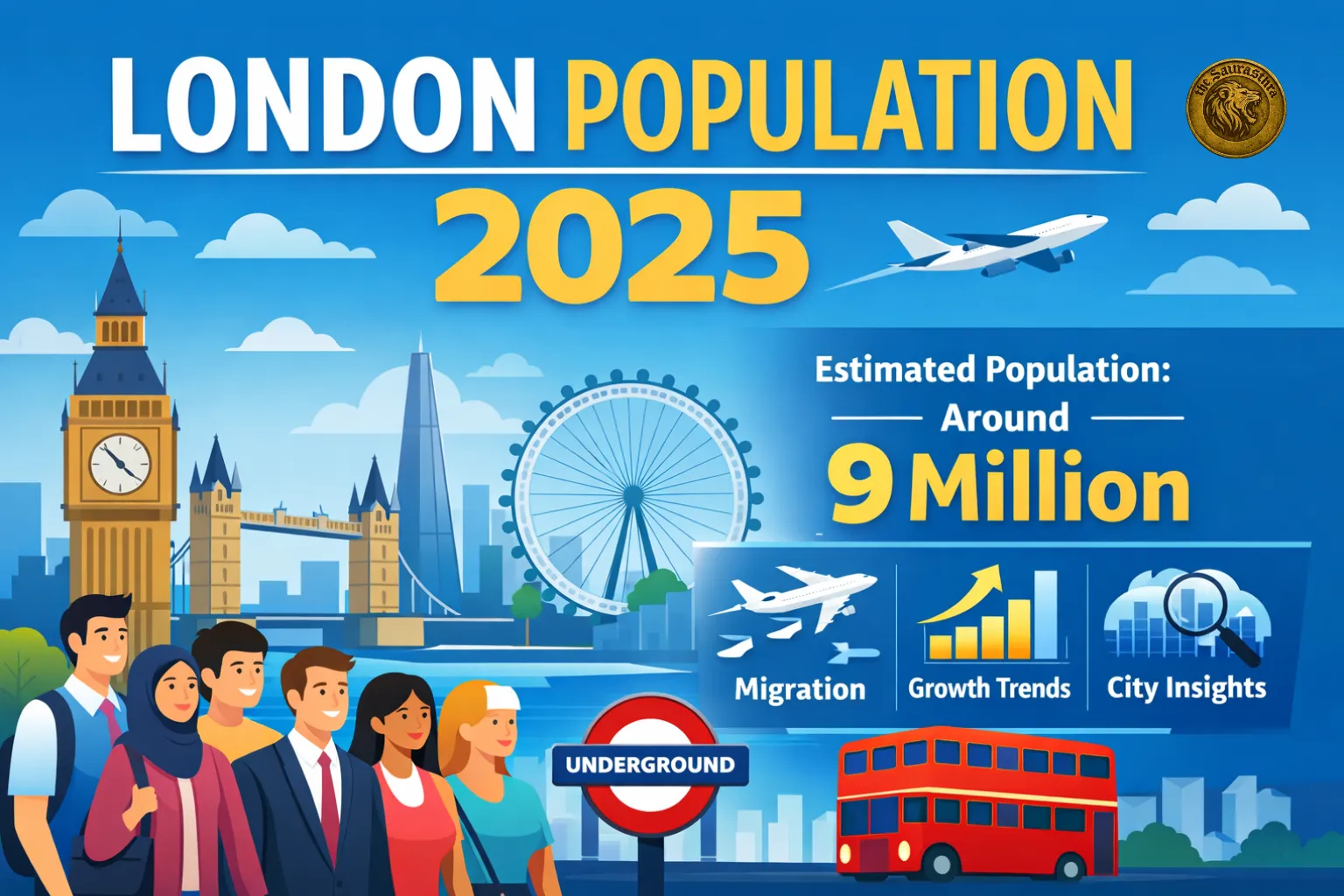
London population 2025 is estimated to be around 9 million people. This figure includes residents living across all 32 London boroughs and the City of London. While London has seen strong population growth for many decades, recent years have shown a slower and more balanced trend.
Several factors have influenced the population size in 2025. These include changes in migration after Brexit, the long-term effects of the COVID-19 pandemic, housing availability, and economic opportunities. Despite these challenges, London remains the most populated city in the United Kingdom and one of the largest cities in Europe.
How London Population Has Changed Over Time
To understand London population 2025 properly, it is helpful to look at how the city’s population has evolved over time. London’s population passed 8 million in the early 2010s and continued to grow steadily for several years. The city reached close to 9 million residents before the pandemic.
After 2020, London experienced a temporary slowdown, with some people moving out of the city due to remote work, high living costs, and health concerns. However, by 2024 and 2025, population levels stabilized again as international migration returned and economic activity improved.
This long-term growth shows London’s ability to recover and adapt, even during difficult global events.
Key Factors Influencing London Population 2025
Migration and International Movement
Migration is one of the most important drivers of London population 2025. London is known for its international character, with people from almost every country in the world living and working in the city.
In 2025, international migration continues to support population numbers. Students, skilled workers, healthcare professionals, and entrepreneurs still choose London for education and career opportunities. While migration rules have changed in recent years, London remains attractive due to its global connections and strong job market.
At the same time, some residents move out of London to other parts of the UK in search of affordable housing and a quieter lifestyle. This balance between people arriving and leaving plays a key role in shaping the population.
Birth Rate and Natural Growth
Another factor affecting London population 2025 is natural growth, which is the difference between births and deaths. London has historically had a relatively young population compared to other UK regions, which supports higher birth rates.
However, birth rates in London have been slowly declining, following a wider national trend. People are having children later in life, and some families choose to move outside the city after having children. Even so, natural growth still contributes positively to London’s overall population.
Housing and Cost of Living
Housing plays a major role in shaping London population 2025. London is known for high property prices and rent costs. For some people, especially young families and lower-income workers, these costs make long-term living in London difficult.
In response, city authorities continue to invest in new housing projects and affordable housing schemes. While progress is steady, housing supply still struggles to keep up with demand, which affects where people choose to live within or outside London.
Population Distribution Across London Boroughs
London population 2025 is not evenly spread across the city. Some boroughs are more densely populated than others, depending on housing, transport links, and employment opportunities.
Outer London boroughs have seen moderate growth as people look for more space and relatively lower housing costs. Areas with strong transport connections to central London remain popular choices for commuters.
Inner London continues to attract young professionals, students, and international residents due to its universities, cultural life, and job opportunities. This mix creates a diverse pattern of population distribution across the city.
Age Structure of London Population in 2025
The age structure is a key part of understanding London population 2025. London remains one of the youngest regions in the UK, with a large working-age population.
Young adults between the ages of 20 and 39 make up a significant share of residents. This is largely due to universities, job opportunities, and the city’s social and cultural appeal.
The number of older residents is also increasing slowly, reflecting longer life expectancy. This change is encouraging greater focus on healthcare services, accessible housing, and community support for older people.
Cultural and Ethnic Diversity in London
London population 2025 continues to be one of the most diverse in the world. The city is home to people from many cultural, ethnic, and linguistic backgrounds. This diversity is a defining feature of London’s identity.
Many residents have roots in Europe, Asia, Africa, the Middle East, and the Americas. This mix influences every part of city life, including food, festivals, education, and business.
Diversity also supports economic growth by bringing skills, ideas, and global connections to London. In 2025, this multicultural character remains one of the city’s strongest advantages.
Economic Impact of London Population 2025
London population 2025 has a direct impact on the city’s economy. A large population supports a strong workforce, consumer demand, and innovation.
London remains a major global financial center, with growing sectors in technology, healthcare, creative industries, and green energy. Population size and diversity help these industries grow by providing talent and new ideas.
However, population pressure also creates challenges, such as transport congestion and demand for public services. Managing these pressures is an important task for city planners and policymakers.
Transport and Infrastructure Needs
As London population 2025 remains high, transport and infrastructure continue to be critical issues. Millions of people rely on public transport every day, including buses, trains, and the Underground.
Investment in transport upgrades, new rail lines, and greener travel options is essential to support population needs. In 2025, London continues to focus on sustainable transport, including cycling infrastructure and electric buses.
Efficient transport systems help people access jobs, education, and services, making the city more livable despite its size.
Education and Students in London
Education is another key factor linked to London population 2025. London hosts some of the world’s top universities and colleges, attracting students from across the UK and abroad.
Students contribute significantly to population numbers, especially in inner-city areas. Many international students stay in London after graduation, joining the workforce and adding to long-term population growth.
Schools also face rising demand in some areas, while others experience stable or declining student numbers. Planning education services remains an important priority for the city.
Healthcare and Public Services
A large and diverse population means high demand for healthcare and public services. London population 2025 places pressure on hospitals, clinics, and social care services.
The city continues to invest in healthcare infrastructure and digital health solutions to meet growing needs. Preventive care, mental health support, and community health programs are gaining importance as the population becomes more complex in age and background.
Access to quality public services is essential for maintaining quality of life in a city as large as London.
Environmental Considerations and Population Growth
London population 2025 also raises environmental concerns. A high population means greater energy use, waste production, and pressure on green spaces.
In response, London is focusing on sustainability, cleaner air, renewable energy, and green urban planning. Parks and open spaces remain vital for residents’ physical and mental well-being.
Balancing population needs with environmental protection is one of the city’s biggest long-term challenges.
Read also: Protesters Rally to Remove the Regime as Pressure Mounts on Trump
Future Outlook Beyond 2025
Looking beyond London population 2025, experts expect steady but moderate growth in the coming years. The pace of growth will depend on economic conditions, migration policies, housing development, and global events.
London is likely to remain a top global city, attracting people for work, study, and culture. However, growth is expected to be more balanced than in the past, with greater focus on quality of life and sustainability.
Long-term planning will play a key role in ensuring that London remains inclusive, resilient, and livable for future generations.
Read also: India and Russia Relations: A Strategic Partnership Shaping Global Dynamics
Conclusion: Understanding London Population 2025
London population 2025 reflects a city that is large, diverse, and constantly evolving. With an estimated population of around 9 million, London continues to lead as the most populated and influential city in the United Kingdom.
While growth has slowed compared to earlier decades, the city’s population remains strong due to international migration, economic opportunities, and cultural appeal. At the same time, challenges such as housing costs, transport pressure, and environmental impact require careful planning and smart policies.
Understanding London population 2025 helps us see how the city is changing and what steps are needed to support its people. As London moves forward, its population will continue to shape its identity, economy, and role on the global stage.