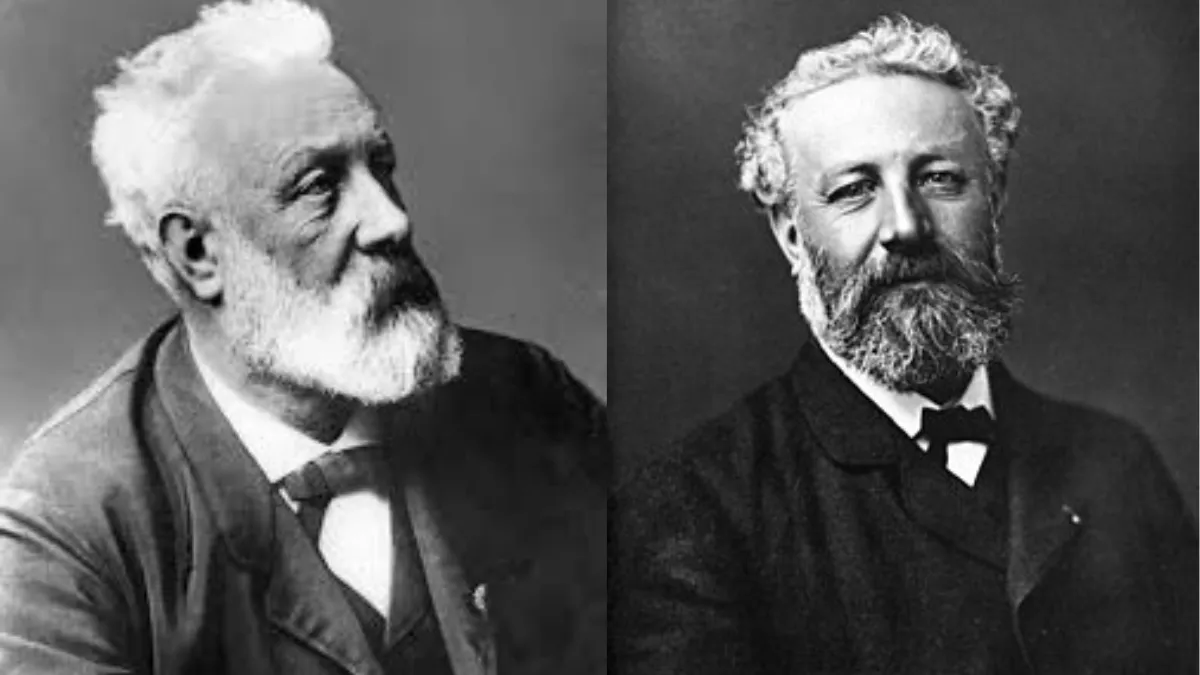
Jules Verne biography begins with the story of a curious child whose imagination changed the future of world literature. Jules Verne was not just a novelist but a visionary thinker who imagined scientific possibilities long before they became real. His stories inspired generations of readers, scientists, explorers, and writers. Through his powerful imagination and simple storytelling, he made science exciting and accessible to ordinary people.
This detailed Jules Verne biography explores his early life, personal struggles, literary career, famous works, writing style, and lasting influence on modern science fiction.
Early Life and Family Background in Jules Verne Biography
Jules Verne biography starts in the historic city of Nantes, France, where he was born on February 8, 1828. He was the eldest of five children in a well-educated family. His father was a lawyer, and his mother came from a family of ship owners, which exposed young Jules to sea stories and travel tales at an early age.
Living near the port of Nantes deeply influenced his imagination. He often watched ships arriving from distant lands and dreamed of traveling across the world. These early experiences later shaped many of his adventure novels that focused on exploration, oceans, and unknown territories.
From childhood, Jules Verne showed a strong interest in reading and writing. He loved adventure stories, geography books, and scientific texts. Even as a young boy, he tried to write plays and short stories, showing early signs of his creative talent.
Education and the Struggle Between Law and Literature
A key phase in Jules Verne biography is his education and inner conflict between family expectations and personal dreams. His father wanted him to become a lawyer, believing it was a stable and respectable profession. To fulfill this wish, Jules Verne was sent to Paris to study law.
While studying law, Verne secretly spent most of his time reading literature, attending theater performances, and writing plays. Paris exposed him to famous writers and intellectuals of the time. Although he completed his law degree, his heart was never in legal practice.
This period of struggle played an important role in shaping Jules Verne biography. Financial difficulties forced him to take several jobs, including working as a stockbroker. Despite his busy schedule, he continued writing passionately, believing that literature was his true calling.
Early Writing Career and Initial Failures
In the early years of his writing career, Jules Verne biography is marked by rejection and disappointment. His first works were mostly plays and short stories, which did not bring much success. Many publishers rejected his manuscripts, and he faced financial pressure and self-doubt.
However, Verne never gave up. He believed that patience and hard work would eventually pay off. During this period, he carefully studied science, geography, astronomy, and new technological developments. This deep research later became the foundation of his unique writing style.
His perseverance finally paid off when he met a publisher who recognized his talent and imagination.
Breakthrough and the Birth of the Voyages Extraordinaires Series
A major turning point in Jules Verne biography came when he met his publisher, who encouraged him to combine adventure with scientific knowledge. This partnership led to the creation of the famous Voyages Extraordinaires series.
His first major success was Five Weeks in a Balloon, published in 1863. The novel was an instant hit and introduced readers to a new kind of storytelling where scientific facts blended seamlessly with thrilling adventures. This success changed Verne’s life forever.
The Voyages Extraordinaires series aimed to describe all the geographical, scientific, and technological knowledge of the time through exciting stories. This concept made Jules Verne a household name and established him as a pioneer of science-based adventure fiction.
Famous Novels That Define Jules Verne Biography
Any complete Jules Verne biography is incomplete without discussing his most famous novels. His works are known for their imaginative ideas, detailed scientific explanations, and unforgettable characters.
Journey to the Center of the Earth explores a daring expedition beneath the Earth’s surface, combining geology with fantasy. Twenty Thousand Leagues Under the Sea introduces Captain Nemo and the advanced submarine Nautilus, a concept far ahead of its time. Around the World in Eighty Days tells the thrilling race against time and highlights global cultures and transportation.
Other notable works include From the Earth to the Moon, The Mysterious Island, and Michael Strogoff. Each novel reflects Verne’s deep curiosity about science and human courage.
These stories not only entertained readers but also inspired real scientific inventions and exploration missions.
Writing Style and Scientific Accuracy in Jules Verne Biography
One of the most remarkable aspects of Jules Verne biography is his unique writing style. He wrote in simple, clear language that was easy to understand, even when explaining complex scientific ideas. His stories balanced education and entertainment, making learning enjoyable.
Verne conducted extensive research before writing his novels. He studied scientific journals, maps, and technical manuals to ensure accuracy. Although some of his ideas were speculative, many later became reality, such as submarines, space travel, and underwater exploration.
His ability to predict future technology made him stand out among writers of his time and earned him the title “Father of Science Fiction.”
Personal Life, Marriage, and Challenges
Jules Verne biography also includes his personal life, which was not always easy. He married a widow with two daughters, and the marriage brought both stability and responsibility. Verne became a devoted family man while continuing his demanding writing career.
Despite his success, Verne faced health problems throughout his life, including diabetes and vision issues. He also suffered emotional setbacks, including conflicts with his son and periods of depression.
These personal struggles influenced the darker themes found in some of his later works, where human ambition and moral responsibility were explored more deeply.
Later Years and Evolution as a Writer
In the later stages of Jules Verne biography, his writing style evolved. His novels became more philosophical and reflective. While early works focused on adventure and optimism about technology, later novels questioned the impact of scientific progress on humanity.
Verne also became involved in local politics and served as a city councilor. He remained socially active and continued writing until his health declined.
Even in his later years, his imagination never faded. He continued exploring themes of human survival, ethics, and the unknown.
Death and Global Recognition
Jules Verne passed away on March 24, 1905, in Amiens, France. His death marked the end of an era, but his influence continued to grow. After his death, several unpublished works were released, further expanding his literary legacy.
This final chapter of Jules Verne biography highlights how his works gained even greater recognition in the twentieth century. His novels were translated into numerous languages and adapted into films, television series, and animated shows.
Impact of Jules Verne Biography on Science and Popular Culture
The impact of Jules Verne biography goes far beyond literature. His ideas inspired scientists, engineers, and explorers. Many space scientists have credited Verne for sparking their interest in space travel. Submarine designers and oceanographers also acknowledge his influence.
His stories shaped modern science fiction and opened the door for future writers. Without Jules Verne, the genre might not exist in its current form.
His ability to imagine the future while staying rooted in scientific logic remains unmatched.
Why Jules Verne Biography Still Matters Today
Even today, Jules Verne biography remains relevant and inspiring. His works encourage curiosity, creativity, and a love for knowledge. In a world driven by technology, his stories remind readers to balance innovation with responsibility.
Jules Verne believed that imagination could change the world, and history has proven him right. His novels continue to educate, entertain, and inspire readers of all ages.
Also read: International Day of Women and Girls in Science 2026: Empowering Minds, Shaping the Future
Conclusion: The Timeless Legacy of Jules Verne Biography
This complete Jules Verne biography shows the journey of a man who dared to dream beyond his time. From a curious child in Nantes to a global literary icon, Jules Verne transformed storytelling forever.
His legacy lives on in books, films, scientific discoveries, and the endless curiosity of readers worldwide. Jules Verne was not just a writer; he was a visionary who saw the future before it arrived.