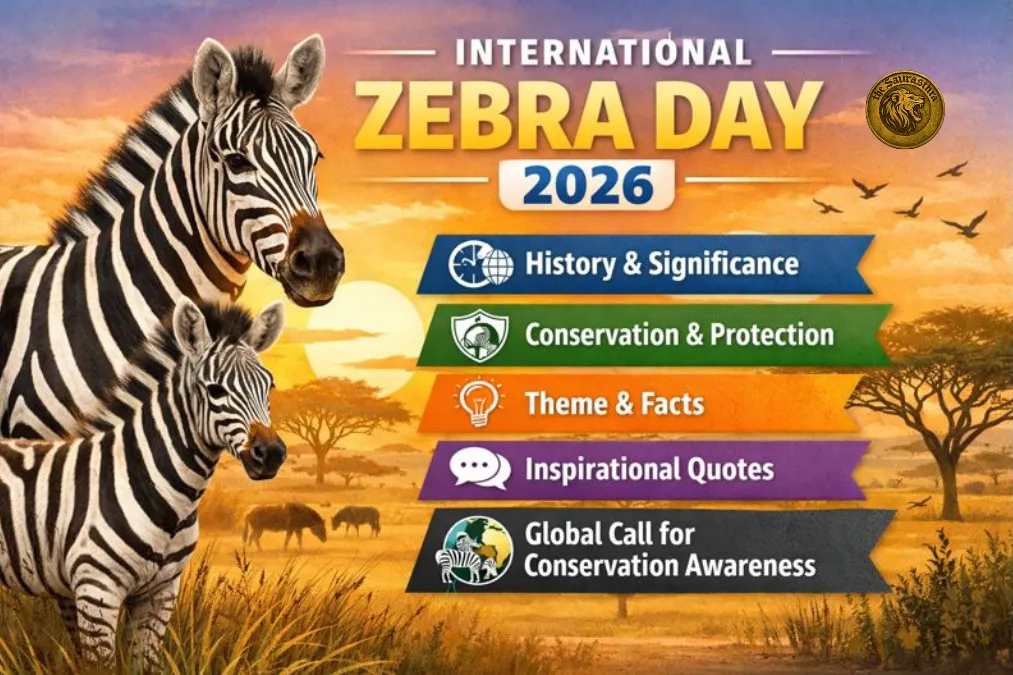
International Zebra Day is observed every year to raise awareness about zebras, their survival challenges, and the urgent need to protect them for future generations. International Zebra Day reminds people across the world that zebras are not just beautiful wild animals but an essential part of the natural ecosystem.
Zebras are among the most recognizable animals on Earth because of their black and white stripes. However, behind their striking appearance lies a serious conservation story. Over the years, zebra populations have declined due to habitat loss, climate change, and illegal hunting. This special day helps educate people and encourages global action for zebra conservation.
What Is International Zebra Day
International Zebra Day is dedicated to spreading knowledge about zebra species, their habitats, and the threats they face in the wild. The day is mainly focused on conservation awareness and supporting organizations working to protect endangered zebra populations.
Unlike many global observances linked to entertainment or celebration, International Zebra Day has a strong educational purpose. It highlights how human activities directly affect wildlife and why protecting animals like zebras is important for maintaining ecological balance.
When Is International Zebra Day Celebrated
International Zebra Day is celebrated every year on January 31. Wildlife lovers, conservation groups, schools, and environmental organizations use this day to talk about zebra protection and sustainable wildlife practices.
The date has become increasingly important as some zebra species are now classified as endangered or vulnerable.
History of International Zebra Day
International Zebra Day began as a conservation awareness initiative supported by wildlife researchers and environmental organizations. The goal was to draw attention to the rapid decline in zebra populations, especially Grevy’s zebra, which has seen a dramatic population drop over the last few decades.
As awareness grew through social media, wildlife campaigns, and educational programs, the day gained global recognition. Today, it is supported by conservation bodies, wildlife parks, and environmental activists worldwide.
Types of Zebras Found in the World
There are three main species of zebras found in Africa. Each species plays a unique role in its environment.
Plains Zebra
The plains zebra is the most common and widely distributed zebra species. It is found in grasslands and savannas across eastern and southern Africa. This species is currently near threatened due to habitat loss.
Mountain Zebra
Mountain zebras live in rocky and hilly regions of southern Africa. There are two subspecies: Cape mountain zebra and Hartmann’s mountain zebra. Conservation efforts have helped stabilize their population, but they are still considered vulnerable.
Grevy’s Zebra
Grevy’s zebra is the largest and most endangered zebra species. It has narrower stripes and a white belly. Today, most Grevy’s zebras are found in Kenya and parts of Ethiopia. Their population has dropped by more than 50 percent in the last few decades.
Why Zebras Are Important for the Ecosystem
Zebras play a vital role in maintaining healthy ecosystems.
They graze on tall grasses, which allows smaller animals to feed on new plant growth. Their movement patterns help spread seeds across large areas, supporting plant diversity.
Zebras also serve as prey for predators such as lions and hyenas. This maintains balance in the food chain and prevents overpopulation of certain species.
Without zebras, grassland ecosystems would face serious disruption.
The Meaning Behind Zebra Stripes
One of the most fascinating aspects of zebras is their stripe pattern. No two zebras have the same stripes, much like human fingerprints.
Scientists believe zebra stripes help with:
Protection from biting insects
Temperature control
Camouflage from predators
Social identification within herds
Although research continues, stripes remain one of nature’s most remarkable designs.
Major Threats Faced by Zebras Today
International Zebra Day highlights several serious threats that put zebras at risk.
Habitat Loss
Expanding agriculture, urban development, and road construction are reducing natural grazing lands. As habitats shrink, zebras struggle to find food and water.
Climate Change
Irregular rainfall and long droughts directly affect grass availability. Climate change has made survival harder for zebra populations.
Poaching and Illegal Hunting
In some regions, zebras are hunted for their skins and meat. Illegal wildlife trade remains a major concern.
Human-Wildlife Conflict
As human settlements expand, zebras often come into conflict with farmers, leading to injuries and deaths.
Conservation Status of Zebras
According to the International Union for Conservation of Nature, zebra species fall under different conservation categories.
Plains zebra is near threatened
Mountain zebra is vulnerable
Grevy’s zebra is endangered
These classifications show why International Zebra Day is becoming more important each year.
Organizations Working to Protect Zebras
Several global and local organizations are actively involved in zebra conservation.
The World Wildlife Fund supports habitat protection and anti-poaching programs.
The African Wildlife Foundation works closely with local communities to promote sustainable land use.
The Save the Elephants also contributes to protecting shared habitats used by zebras and other species.
These organizations play a crucial role in ensuring zebras survive in the wild.
How International Zebra Day Is Celebrated
International Zebra Day is marked in many meaningful ways across the world.
Wildlife organizations conduct educational webinars and awareness campaigns. Schools organize nature sessions and documentary screenings. Zoos and wildlife parks share information about zebra behavior and conservation.
Social media platforms see widespread participation where people share facts, images, and conservation messages to spread awareness.
Role of Local Communities in Zebra Protection
Local communities are essential to successful conservation.
When people benefit from wildlife tourism, they are more likely to protect animals. Community-led conservation programs create jobs, improve education, and reduce illegal hunting.
International Zebra Day emphasizes cooperation between governments, conservation groups, and local residents.
Importance of Wildlife Tourism
Responsible wildlife tourism provides funding for conservation programs.
Tourism revenue supports anti-poaching units, habitat restoration, and veterinary care for injured animals. When managed ethically, tourism helps protect zebras instead of harming them.
However, uncontrolled tourism can damage habitats, which is why sustainable practices are strongly promoted.
What You Can Do on International Zebra Day
Everyone can contribute to zebra conservation, even without visiting Africa.
You can support trusted wildlife organizations through donations. Sharing verified information helps spread awareness. Choosing eco-friendly products reduces environmental impact.
Learning about wildlife issues and teaching others is one of the most powerful ways to help.
International Zebra Day is not only about celebration but about responsibility.
Interesting Facts About Zebras
Zebras can run up to 65 kilometers per hour
Their stripes are unique to each individual
They have excellent memory and strong social bonds
Zebras communicate using facial expressions and sounds
They can sleep standing up
These fascinating traits make zebras one of the most unique animals on the planet.
Why International Zebra Day Matters Globally
International Zebra Day matters because wildlife loss affects the entire planet. When one species declines, the ecosystem weakens.
Zebras represent the health of African grasslands. Protecting them also protects hundreds of other plant and animal species.
The day encourages people to think beyond borders and understand that wildlife conservation is a shared global duty.
Read also: National Tourism Day: Importance, History, Theme, and Global Significance
Future of Zebras in the Wild
The future of zebras depends on action taken today. Strong wildlife laws, habitat protection, climate action, and community involvement can help stabilize zebra populations.
Technology such as satellite tracking and drone monitoring is improving conservation success. Awareness days like International Zebra Day continue to inspire support and funding.
With collective effort, zebras can continue roaming African landscapes for generations to come.
Read also: Monkey Day? Understanding the Global Celebration of One of Nature’s Most Fascinating Creatures
Conclusion
International Zebra Day is more than a calendar event. It is a reminder of humanity’s connection with nature and our responsibility to protect it.
By understanding the challenges zebras face and supporting conservation efforts, individuals can make a real difference. Every voice raised on International Zebra Day contributes to a safer future for these iconic striped animals and the ecosystems they depend on.
Protecting zebras today means preserving the beauty, balance, and biodiversity of our planet tomorrow.