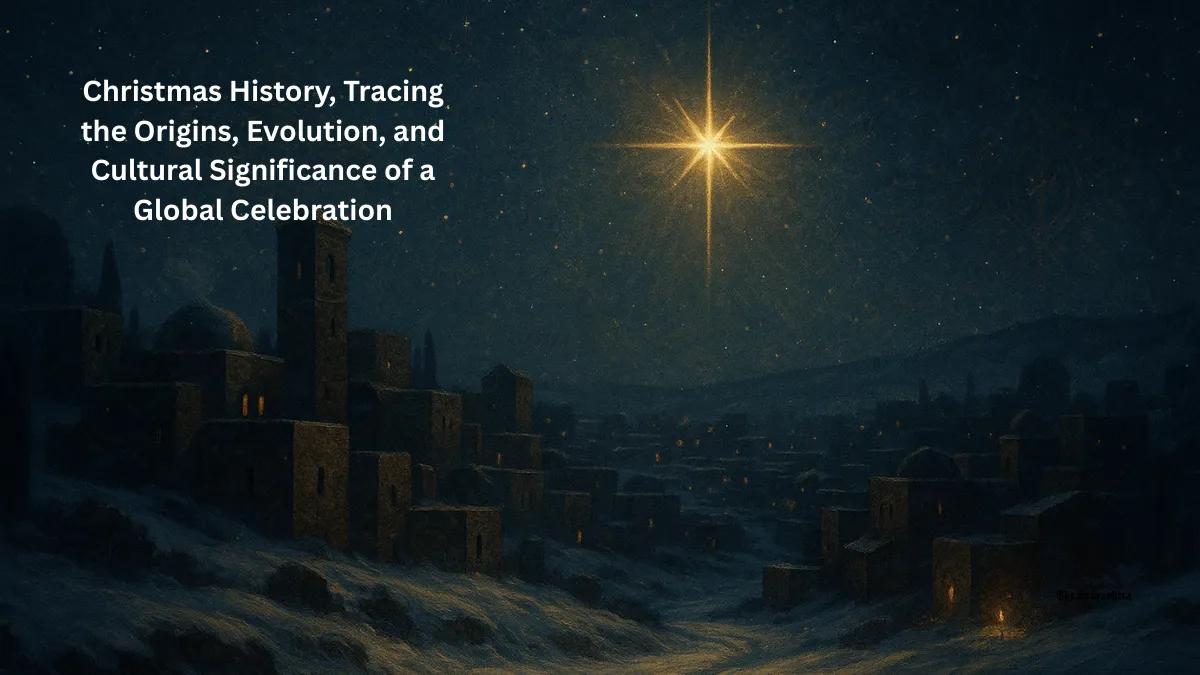
Christmas history begins as a tapestry woven from ancient traditions, early Christian faith, and centuries of cultural transformation. Over time, it has evolved from modest religious observances into one of the world’s most celebrated annual events. Understanding Christmas history offers insight into how a single day on the calendar came to represent faith, family, generosity, and the enduring human desire for light during the darkest time of the year.
The Ancient Roots Behind Modern Christmas Traditions
Long before the celebration of the birth of Jesus became central to Christian tradition, mid-winter festivals had already been part of many ancient cultures. Although these pre-Christian customs were not directly connected to Christmas history in their earliest forms, their themes of renewal, light, and community would later shape winter celebrations around the world.
Several ancient festivals were held around the winter solstice. Romans celebrated Saturnalia, a week-long event marked by feasts, gift-giving, and social merriment. For the Norse people, Yule was a time of honoring the sun’s return, lighting fires, and sharing good fortune with neighbors. These festivities, rich with symbolism, contributed to the seasonal atmosphere that would eventually merge with Christian observance.
Why December 25 Became Christmas Day
One of the most discussed elements in Christmas history is the selection of December 25 as the date of celebration. The Bible does not specify the exact date of Jesus’ birth, and early Christians did not initially celebrate it at all. By the fourth century, however, Christian leaders designated December 25 as the official date, possibly to align with existing solstice festivals and shift cultural focus toward Christian beliefs.
Some scholars believe that early theologians calculated December 25 based on symbolic connections between the Annunciation, the spring equinox, and the birth occurring nine months later. Others see the timing as a strategic choice that allowed the growing Christian community to integrate and reinterpret widely observed winter festivities. Regardless of the reasoning, the establishment of December 25 became a defining moment in Christmas history.
How Christmas Spread Across Continents
As Christianity expanded through Europe, Africa, Asia, and the Americas, the celebration of Christmas traveled with it. Missionaries, explorers, traders, and settlers introduced new regions to the festival, but it did not remain unchanged. Instead, it absorbed elements from each place it reached, leading to a remarkably diverse set of customs across different societies.
In medieval Europe, Christmas grew into a season rather than a single day, filled with church services, feasts, music, and community gatherings. Later, colonial expansions carried the tradition to the New World. In many regions, Indigenous customs blended with European rituals, enriching Christmas history with new forms of storytelling, food, and symbolism.
The Evolution of Christmas Traditions Over Time
Over centuries, the meaning and practices of Christmas continued to evolve. Early celebrations were often communal and church-centered, but the Victorian era transformed the festival into a more family-oriented occasion. This period saw the rise of many traditions recognized today, including decorated trees, greeting cards, and the exchange of gifts within households.
Writers and artists played an influential role in shaping public perception. Charles Dickens’ “A Christmas Carol,” published in 1843, shifted cultural focus toward themes of compassion and generosity. Illustrators popularized images of Santa Claus, drawing from European legends such as Saint Nicholas, Father Christmas, and Sinterklaas. These developments helped define the emotional and visual atmosphere associated with Christmas today.
A Timeline of Key Moments in Christmas History
To understand how Christmas developed into its modern form, it is helpful to view major milestones chronologically:
| Period / Year | Key Development | Significance |
|---|---|---|
| Pre-4th century | Winter solstice festivals in Rome, Norse regions, and others | Cultural foundation of seasonal observances |
| 336 AD | First recorded celebration of Christmas on December 25 in Rome | Establishes the official date |
| 4th–8th centuries | Spread of Christmas through Europe | Integration with local customs |
| Middle Ages | Rise of church services, feasts, and community festivities | Christmas becomes a major religious and social event |
| 17th century | Puritan influence restricts celebrations in some regions | Temporary decline in rituals |
| 19th century | Victorian revival of Christmas traditions | Birth of many modern customs |
| 20th century | Global expansion through media, cinema, and commerce | Christmas becomes a worldwide cultural phenomenon |
These milestones highlight how Christmas history has been shaped by both religious significance and cultural evolution.
The Religious Meaning at the Heart of Christmas
Amid the many influences that shaped Christmas history, the central religious message has remained a constant foundation. For Christians, Christmas commemorates the birth of Jesus Christ, an event that represents hope, peace, and divine love. The Nativity story, with its themes of humility and compassion, continues to inspire music, art, rituals, and reflections around the world.
Church services such as Midnight Mass, carol singing, Nativity plays, and Advent observances are rooted in centuries-old Christian tradition. These practices reflect the theological essence of Christmas and connect communities across generations.
How Culture and Commerce Transformed Christmas
Over time, Christmas became not only a religious holiday but also a cultural and social event. The rise of gift-giving industries, festive decorations, and commercial entertainment—combined with global media—helped shape contemporary traditions. From illuminated city streets to popular Christmas films, these developments added layers of creativity and celebration to the season.
However, many communities balance these cultural elements with a focus on personal reflection, spiritual observance, and charitable activities. This blend of sacred and cultural significance is one of the most distinctive aspects of Christmas history.
Global Variations in Christmas Celebrations
Around the world, Christmas is expressed in unique ways that reflect local history, climate, and cultural identity. For example:
- In parts of Europe, Christmas markets fill town squares with handcrafted goods and regional foods.
- In Latin America, processions, music, and family gatherings last for several days.
- In Australia and other southern hemisphere countries, Christmas coincides with summer, resulting in outdoor celebrations and beach gatherings.
- In East Asia, where Christmas is not traditionally religious, the festival has become associated with modern social customs, decorations, and public events.
These diverse expressions illustrate the global dimension of Christmas history and its capacity to adapt across regions and generations.
Christmas in Literature, Music, and Art
Cultural expressions have played a vital role in shaping how people understand and celebrate Christmas. Hymns and carols such as “Silent Night” and “O Come, All Ye Faithful” emerged from centuries-long musical traditions. Artists have depicted the Nativity and winter scenes in countless styles, from medieval manuscripts to modern illustration.
In literature, works ranging from ancient homilies to contemporary novels have highlighted the spiritual, moral, and emotional themes intertwined with Christmas history. Film and television further strengthened these narratives, turning certain stories into global cultural touchstones.
Why Understanding Christmas History Matters Today
In a rapidly changing world, knowing the deeper roots of Christmas creates a sense of connection between past and present. It helps people appreciate why certain traditions exist, how they developed, and what they symbolize. Understanding Christmas history also enriches our perspective on cultural diversity, illustrating how a single festival can carry multiple meanings depending on time, place, and community.
Beyond historical knowledge, these insights encourage meaningful celebration. Many people choose to focus on kindness, gratitude, and shared humanity—values that resonate strongly within the long arc of Christmas history.
Also read: The Cultural Meaning and Evolving Traditions of Christmas
The Continuing Evolution of Christmas
Christmas remains a dynamic tradition. New customs emerge, technologies influence how people share wishes and gather with loved ones, and societies reshape celebrations to reflect contemporary values. Yet, at its core, the season continues to symbolize hope and renewal.
From ancient solstice rituals to modern festivities, Christmas history reveals that the holiday has always been more than a date on the calendar. It is a reflection of human creativity, faith, and resilience.
Also read: Happy Christmas Wishes: Meaningful Messages to Share This Holiday Season
Conclusion
A journey through Christmas history shows how deeply intertwined the holiday is with global culture, religious tradition, and shared values. Its origins stretch back to ancient civilizations, its growth spans continents, and its meaning continues to evolve. Whether celebrated for faith, family, or community, Christmas remains an enduring symbol of light during the darkest season and a reminder of the timeless human desire for connection and hope.