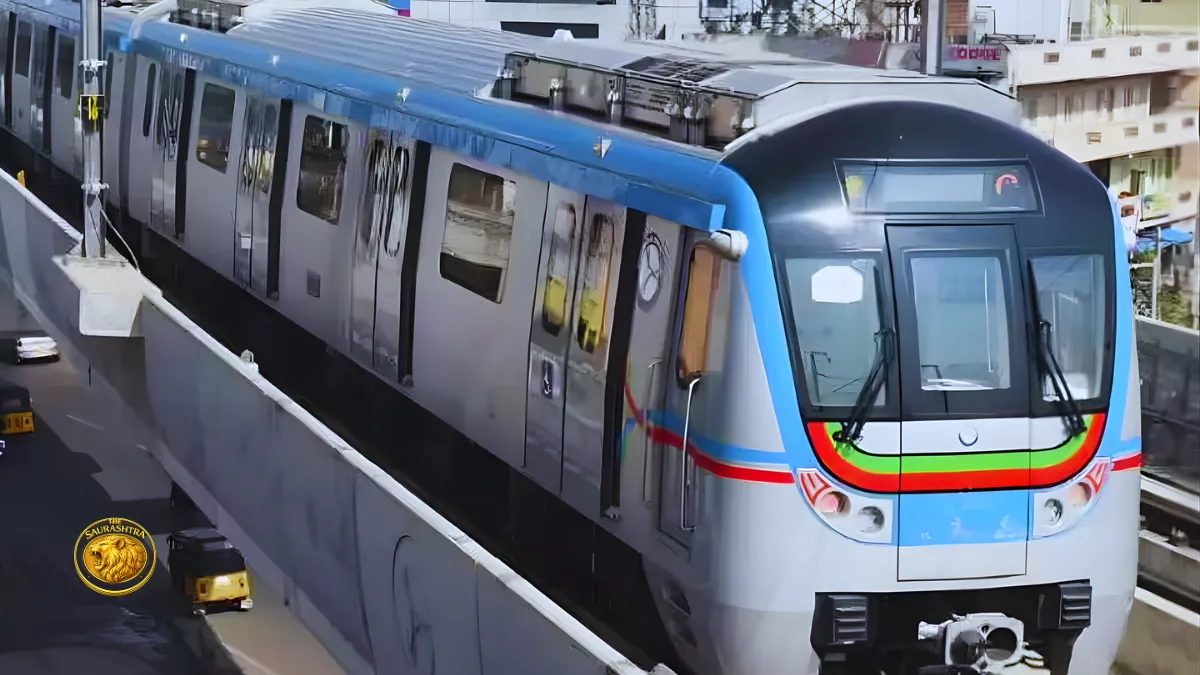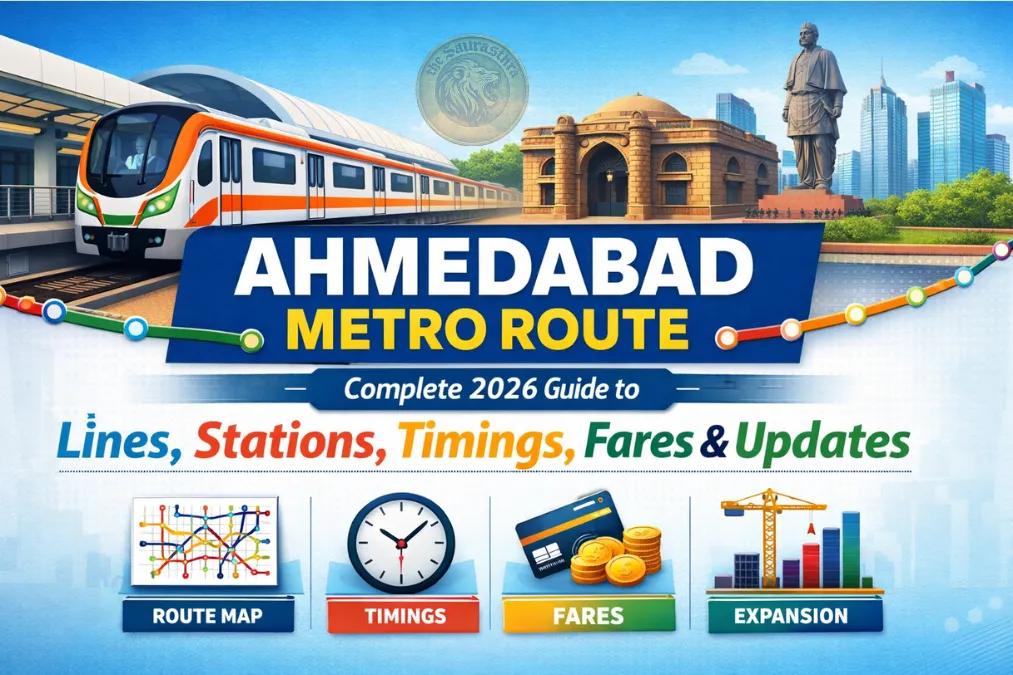
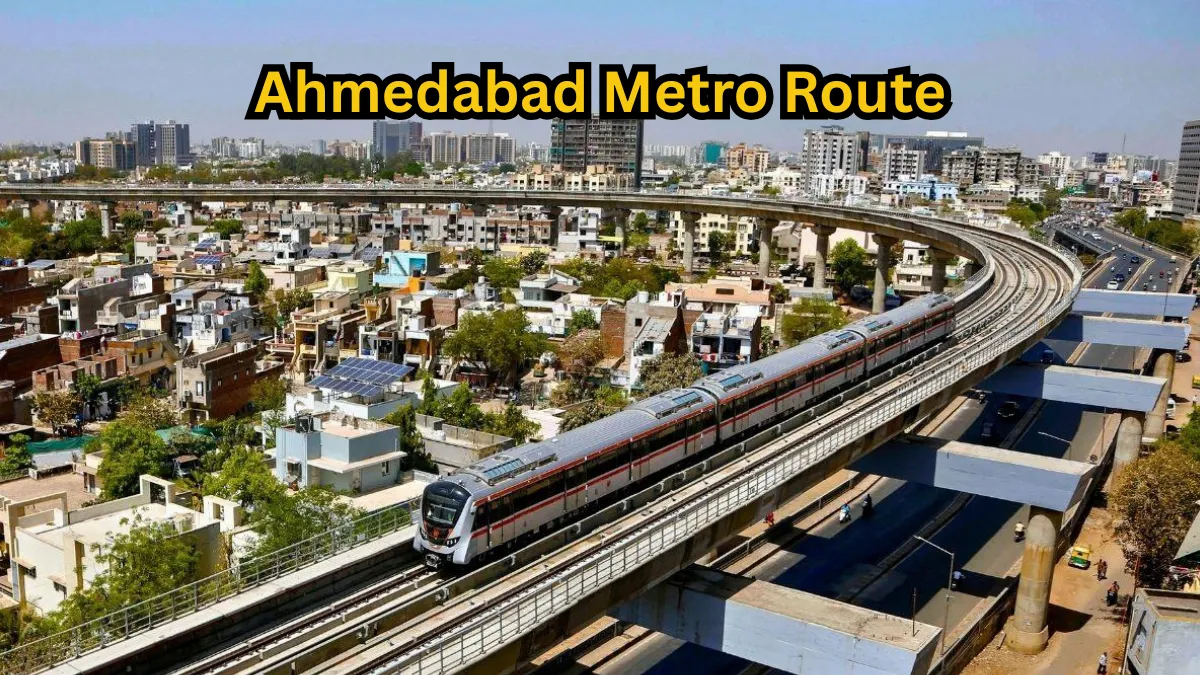
The Ahmedabad metro route has transformed public transportation in Gujarat, offering a faster, cleaner and more reliable way to travel between Ahmedabad and Gandhinagar. What began as an ambitious urban mobility plan has now evolved into one of India’s most important metro rail networks.
Operated by Gujarat Metro Rail Corporation (GMRC), the system connects residential zones, business districts, educational institutions and government hubs through a growing network of modern metro lines. Since opening to the public in March 2019, the metro has steadily expanded in coverage, passenger numbers and operational efficiency.
This in-depth news-style report provides everything you need to know about the Ahmedabad metro route in 2026 — including its history, lines, stations, fare structure, expansion projects, latest updates and frequently asked questions.
Ahmedabad Metro: Key Operational Details
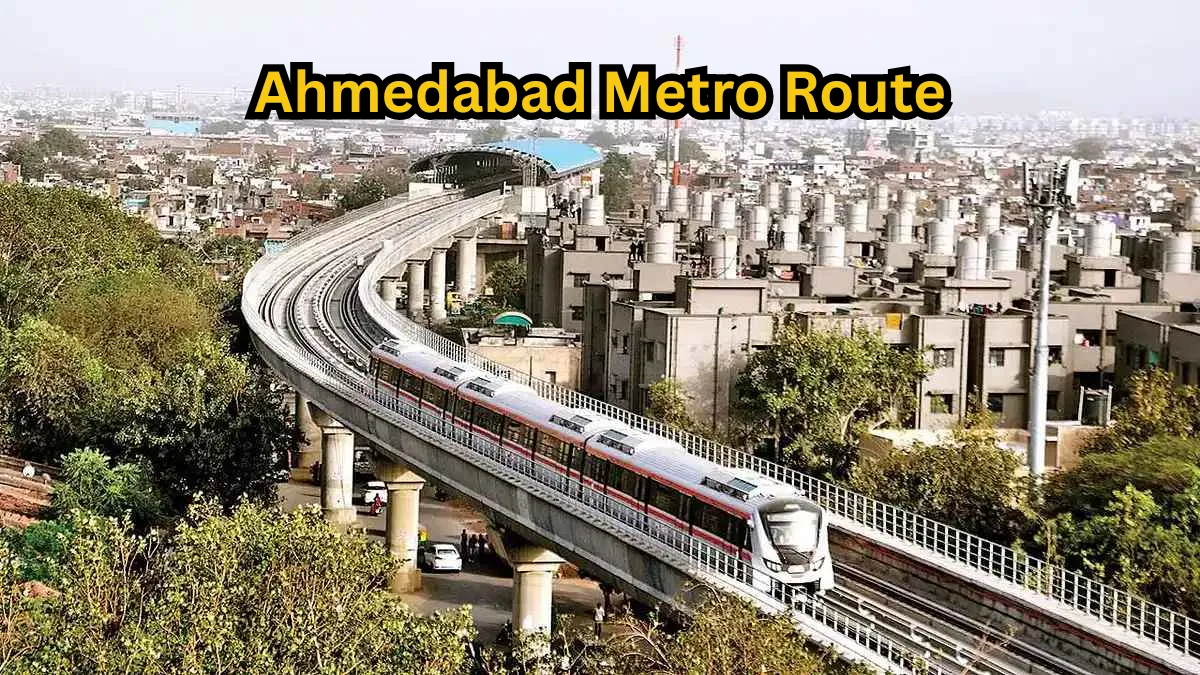
Here is a quick snapshot of the current Ahmedabad metro route network:
| Category | Details |
|---|---|
| Operator | Gujarat Metro Rail Corporation (GMRC) |
| Operations Started | 6 March 2019 |
| Total Active Stations | 54 |
| Total Active Lines | 4 |
| Train Configuration | 3 Coaches |
| Metro Timings | 06:00 AM – 10:00 PM |
| Helpline Number | 079 22960123 |
| Network Coverage | Ahmedabad & Gandhinagar |
The system is designed to reduce traffic congestion, cut pollution and offer commuters a predictable travel schedule across major corridors.
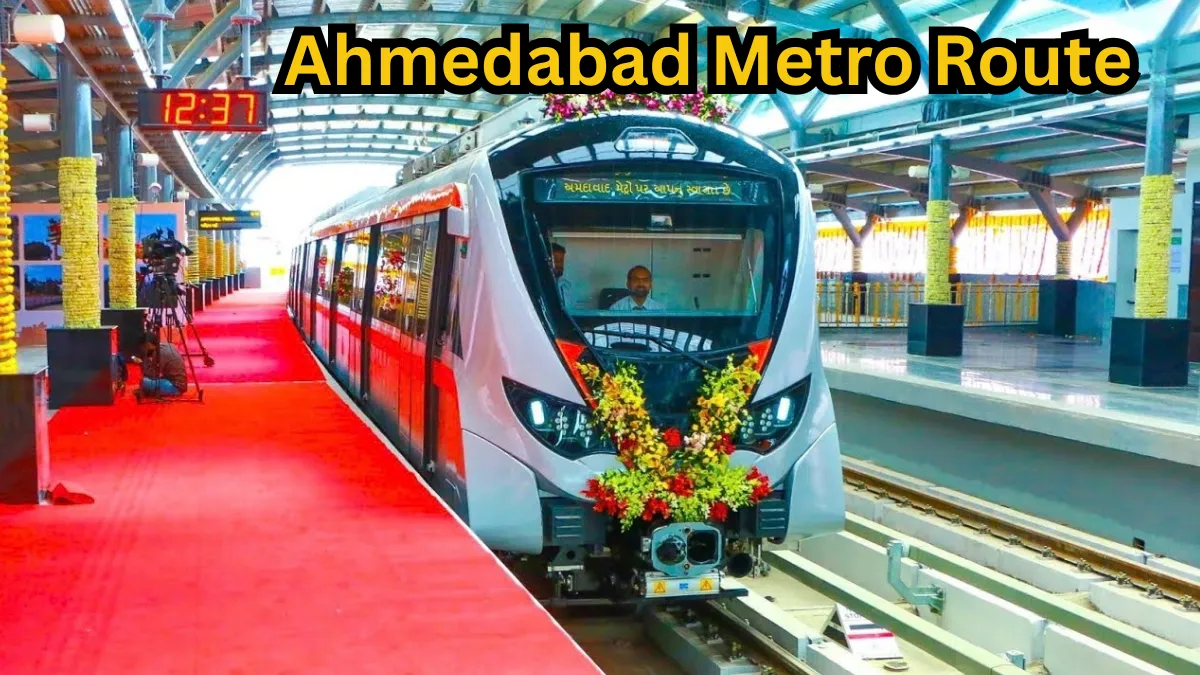
Overview of the Ahmedabad Metro Route Network
The Ahmedabad metro route serves two major urban centres — Ahmedabad and Gandhinagar — through a structured and expanding rapid transit system. It is designed to provide seamless intercity and intra-city connectivity.
As of 2026:
- Total operational network: Approximately 68 km
- Total stations: 54
- Underground stations: 4
- Major corridors: North–South and East–West
The metro connects commercial zones, IT hubs, educational campuses, government complexes and residential neighbourhoods.
History and Development of Ahmedabad Metro
The journey of the Ahmedabad metro route began more than two decades ago.
Early Planning Phase (2003–2008)
In 2003, the Gujarat Infrastructure Development Board initiated a study to improve urban connectivity between Ahmedabad and Gandhinagar. As traffic congestion increased rapidly, authorities began exploring a mass rapid transit system.
In June 2005, the Delhi Metro Rail Corporation submitted a Detailed Project Report (DPR). Although the project received central approval in 2005, it was temporarily paused to prioritise the Bus Rapid Transit System (BRTS) and suburban rail improvements.
The project was redesigned in 2008 to better meet growing urban demands.
Cabinet Approval and Construction (2014–2016)
On 19 October 2014, the Union Cabinet approved the ₹10,773 crore metro project. Land approvals followed, including railway land near Sabarmati.
Key milestones:
- March 2015: Groundbreaking ceremony for the first 6.5 km stretch
- January 2016: North–South corridor foundation ceremony
- March 2016: Full-scale construction began
Trial Runs and Inauguration (2019)
Trial operations were conducted in February 2019 on the Vastral–Apparel Park section.
On 4 March 2019, the metro was officially inaugurated by Prime Minister Narendra Modi.
Public operations began on 6 March 2019.
Ahmedabad Metro Lines and Terminal Stations
The Ahmedabad metro route currently operates four active lines:
| Metro Line | Status | Terminal Stations |
|---|---|---|
| Blue Line | Active | Thaltej Gam ⇄ Vastral Gam |
| Red Line | Active | Motera Stadium ⇄ APMC |
| Violet Line | Active | GNLU ⇄ GIFT City |
| Yellow Line | Active | Mahatma Mandir ⇄ Motera Stadium |
Each line serves distinct corridors, ensuring balanced connectivity across east-west and north-south directions.
Phase I and Phase II Expansion
Phase I
Phase I covered approximately 40 km and laid the foundation for Ahmedabad’s metro operations. It included the East-West and North-South corridors.
Phase II
Phase II expanded the Ahmedabad metro route toward Gandhinagar, covering an additional 28 km.
The extension provides direct connectivity to:
- Gujarat National Law University (GNLU)
- Pandit Deendayal Energy University (PDEU)
- Infocity
- GIFT City
- Mahatma Mandir
- State Secretariat
With Phase II completed, the Ahmedabad metro route now forms a 68-km network across two major corridors.
Latest Ahmedabad Metro News and Updates (2025–2026)
Phase II Completion
Prime Minister Narendra Modi flagged off services on the final section between Secretariat and Mahatma Mandir in January 2026, completing Phase II.
Passenger Growth
Daily ridership has increased dramatically:
| Year | Average Daily Ridership |
|---|---|
| 2019 | 35,000 |
| 2025 | 1.5 lakh (150,000) |
Over 10.38 crore passengers have travelled on the Ahmedabad metro route, with punctuality reported at 99.84%.
Trial Runs in Gandhinagar
Trial operations successfully covered new stations including:
- Akshardham
- Old Secretariat
- Sector 16
- Sector 24
- Mahatma Mandir
Ahmedabad Metro Timings
Current operational hours:
First Train: 06:00 AM
Last Train: 10:00 PM
Timings may vary slightly on special days or public holidays.
Ahmedabad Metro Fare Structure
The Ahmedabad metro route offers affordable fares for daily commuters.
| No. of Stations | Token Fare | Smart Card Fare |
|---|---|---|
| 0 – 3 | ₹5 | ₹4.50 |
| 4 – 7 | ₹10 | ₹9 |
| 8 – 11 | ₹15 | ₹13.50 |
| 12 – 15 | ₹20 | ₹18 |
| Above 15 | ₹25 | ₹22.50 |
Fare Media Options
Passengers can travel using:
- Single journey token
- Smart card
- Provisional paper ticket (in case of system failure)
Children under 3 feet (90 cm) can travel free with an adult.
Payments are accepted via cash and POS (Debit/Credit Card).
Speed and Train Specifications
- Train coaches: 3 per train
- Average operating speed: 18 km/h
- Top speed: 25 km/h
The system is designed for urban travel efficiency rather than long-distance speed.
Why the Ahmedabad Metro Route Matters
The metro has significantly improved mobility across Gujarat’s economic and administrative centres.
Key benefits include:
- Reduced road congestion
- Lower carbon emissions
- Reliable commute times
- Better connectivity to business districts
- Boost to real estate near metro corridors
- Improved access to educational institutions
The Ahmedabad metro route is especially critical for daily commuters travelling between Ahmedabad and Gandhinagar.
Safety and Passenger Guidelines
The metro follows strict safety and security measures.
Common FAQs include:
Is photography allowed?
Photography is generally restricted inside stations and trains without prior permission.
Can passengers carry luggage?
Moderate luggage is allowed, subject to security checks.
Are bicycles allowed?
Bicycles are not typically permitted inside metro coaches.
What if someone falls on the track?
Passengers should immediately alert station staff and avoid attempting rescue themselves.
Is there first class seating?
No separate first-class compartments are available.
Ahmedabad Metro Route Map 2026
The complete 2026 Ahmedabad metro route map includes:
- All four operational lines
- Interchange stations
- Underground sections
- Gandhinagar extension
- Direct connectivity to GIFT City
The route map is designed for easy navigation and improved commuter convenience.
Economic and Environmental Impact
The Ahmedabad metro route has delivered measurable improvements:
- Reduced fuel consumption
- Lower traffic congestion
- Improved air quality
- Increased commercial development near stations
- Enhanced property values
The metro is also aligned with India’s sustainable urban mobility goals.
Also read: Vadodara Metro Route: Full Details of Lines, Stations, Connectivity and System Features
Future Outlook
Although Phase II has been completed, planning for further expansion continues. Proposed extensions aim to:
- Increase suburban coverage
- Add more interchange points
- Improve integration with bus and rail networks
- Enhance digital ticketing systems
GMRC is also inviting bids for design consultancy for future extensions under Phase 2A and Phase 2B.
Conclusion
The Ahmedabad metro route has rapidly become the backbone of public transportation in Gujarat. From its early conceptual phase in 2003 to full-scale expansion into Gandhinagar by 2026, the project reflects long-term urban planning and infrastructural growth.
With 54 operational stations, four active lines, affordable fares and expanding ridership, the metro continues to redefine daily commuting for millions. As further expansions unfold, the Ahmedabad metro route is set to play an even greater role in shaping the region’s economic and social mobility landscape.
For residents, professionals, students and visitors alike, the Ahmedabad metro route stands as a symbol of modern Gujarat — efficient, connected and future-ready.
Disclaimer
The information provided in this article about the Ahmedabad metro route is intended for general informational and educational purposes only. While every effort has been made to ensure accuracy, reliability, and up-to-date details at the time of publication, metro routes, station numbers, timings, fares, operational schedules, and expansion plans may change without prior notice.
Readers are advised to verify the latest updates directly from the official sources of Gujarat Metro Rail Corporation (GMRC) or relevant government authorities before making travel decisions. The article does not claim to represent any official government body or metro authority.
All fares, schedules, ridership figures, project costs, and development timelines mentioned are based on publicly available information and news reports. The content does not provide legal, financial, transportation, or official advisory services.
The publisher and author shall not be held responsible for any loss, inconvenience, or damages arising from the use of information related to the Ahmedabad metro route contained in this article. Readers are encouraged to use official metro helplines and verified platforms for real-time travel assistance.