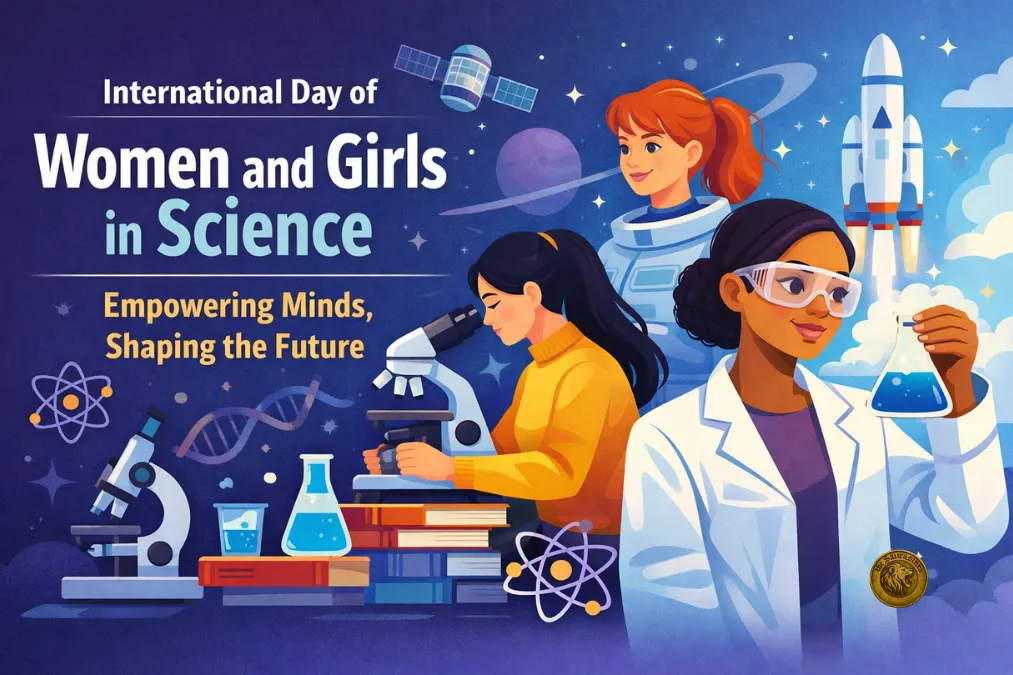
The international day of women and girls in science is a global reminder that equal access to science, technology, engineering, and mathematics is essential for building a better and more balanced world. This special day highlights the achievements of women and girls in scientific fields and also draws attention to the barriers that still prevent many from fully participating in science and innovation.
Science shapes every part of modern life, from healthcare and education to climate solutions and digital technology. When women and girls are included equally in science, societies become stronger, ideas become richer, and progress becomes more sustainable. The international day of women and girls in science encourages governments, institutions, communities, and families to support gender equality in scientific education and careers.
What Is the International Day of Women and Girls in Science
The international day of women and girls in science is observed every year on 11 February. It is dedicated to recognizing the critical role women and girls play in science and technology. The day also promotes full and equal access to participation in science at all levels, from classrooms to research labs and leadership positions.
This day is not only about celebration but also about awareness. It brings global attention to the fact that women are still underrepresented in many scientific fields. By focusing on education, policy changes, and social attitudes, the day aims to create long-term change that benefits everyone.
Why the International Day of Women and Girls in Science Matters
The importance of the international day of women and girls in science lies in its message of inclusion and fairness. Science thrives on diversity. When people from different backgrounds, genders, and experiences work together, they ask better questions and find better solutions.
Despite progress over the years, women and girls continue to face challenges in science-related fields. These challenges include limited access to quality education, lack of encouragement, social stereotypes, and fewer leadership opportunities. This international day helps highlight these issues and encourages action to overcome them.
The Role of Women and Girls in Scientific Progress
Women have made major contributions to science throughout history, even when their work was often ignored or undervalued. From medical breakthroughs to space exploration, women scientists have played a key role in shaping the modern world.
Today, women and girls are contributing to research in health, environment, technology, and many other areas. The international day of women and girls in science reminds us that supporting their participation is not just about fairness, but about advancing knowledge and innovation for the benefit of all.
Gender Gaps in Science Education and Careers
One of the main reasons the international day of women and girls in science is so important is the ongoing gender gap in science education and careers. In many parts of the world, girls are less likely to choose science subjects in school or pursue careers in science-related fields.
This gap is often caused by social expectations, lack of role models, and limited access to resources. When girls do not see women scientists in textbooks, media, or leadership roles, they may feel that science is not meant for them. Addressing these gaps requires effort at every level of society.
International Day of Women and Girls in Science and Education
Education plays a central role in the goals of the international day of women and girls in science. Early exposure to science subjects can spark curiosity and confidence in young girls. When schools provide equal opportunities and supportive learning environments, girls are more likely to develop an interest in science.
Teachers and parents also play a key role. Encouraging girls to ask questions, experiment, and explore scientific ideas helps build a strong foundation. The international day of women and girls in science promotes education systems that are inclusive, supportive, and free from gender bias.
Breaking Stereotypes in Science and Technology
Stereotypes remain one of the biggest barriers for women and girls in science. Many people still believe that science and technology are more suitable for men. These ideas can discourage girls from pursuing scientific interests and careers.
The international day of women and girls in science challenges these stereotypes by showing that talent and curiosity are not defined by gender. Highlighting successful women scientists and sharing their stories helps change public perceptions and inspire future generations.
The Importance of Role Models and Mentors
Role models and mentors are essential for encouraging women and girls in science. Seeing someone with a similar background succeed in a scientific field can be very motivating. Mentors can provide guidance, support, and confidence during critical stages of education and career development.
The international day of women and girls in science emphasizes the need for strong mentoring networks. These networks help women and girls navigate challenges, develop skills, and build professional connections that support long-term success.
International Day of Women and Girls in Science and Innovation
Innovation depends on creativity, collaboration, and diverse perspectives. The international day of women and girls in science highlights how gender equality in science leads to better innovation. When women are involved in research and development, products and solutions are more likely to meet the needs of diverse communities.
In fields like healthcare, women scientists often bring valuable insights into issues that affect women and families. In technology, diverse teams can design tools that are more inclusive and user-friendly. Supporting women and girls in science strengthens innovation across all sectors.
Challenges Faced by Women in Scientific Careers
Even when women enter scientific careers, they often face challenges that limit their progress. These challenges include unequal pay, limited access to leadership roles, and work environments that are not always supportive.
The international day of women and girls in science brings attention to these issues and encourages organizations to create fair and inclusive workplaces. Policies that support work-life balance, equal pay, and career advancement are essential for retaining talented women in science.
Global Efforts Supporting the International Day of Women and Girls in Science
Around the world, governments, universities, and organizations use the international day of women and girls in science to launch programs and initiatives. These efforts include scholarships for girls, training programs for women scientists, and public awareness campaigns.
Workshops, conferences, and community events held on this day help spread knowledge and inspire action. By working together globally, societies can make meaningful progress toward gender equality in science.
The Role of Families and Communities
Families and communities have a powerful influence on the choices girls make about their education and careers. Supportive parents who encourage curiosity and learning can make a big difference. Communities that value education and equality create environments where girls feel confident pursuing science.
The international day of women and girls in science reminds families and communities that their support is essential. Small actions, such as encouraging girls to participate in science activities or celebrating their achievements, can have a lasting impact.
How Media and Culture Shape Attitudes Toward Science
Media and popular culture play an important role in shaping how people view science and scientists. When women scientists are visible in books, films, news, and online platforms, it helps normalize their presence in these fields.
The international day of women and girls in science encourages positive representation of women in science. Accurate and inspiring portrayals can challenge stereotypes and help young girls imagine themselves as scientists, engineers, or researchers.
International Day of Women and Girls in Science and Sustainable Development
Science is essential for addressing global challenges such as climate change, public health, and sustainable development. The international day of women and girls in science highlights the link between gender equality and sustainable progress.
When women participate fully in scientific research and decision-making, solutions are more inclusive and effective. Gender equality in science supports long-term development goals that benefit communities and future generations.
Encouraging Girls to Choose Science Careers
Encouraging girls to choose science careers requires consistent effort and support. Schools can offer science clubs, hands-on experiments, and career guidance. Governments can provide scholarships and create policies that promote equality in education and employment.
The international day of women and girls in science serves as a call to action. It reminds society that talent exists everywhere and that opportunities should be open to all, regardless of gender.
The Future Vision of the International Day of Women and Girls in Science
The long-term vision of the international day of women and girls in science is a world where gender no longer determines access to scientific education or careers. This vision includes equal representation in classrooms, research institutions, and leadership positions.
Achieving this future requires commitment from everyone. Education systems must be inclusive, workplaces must be fair, and social attitudes must continue to evolve. The international day of women and girls in science provides a platform to measure progress and renew commitment each year.
Also read: World Pulses Day 2026: Why World Pulses Day Matters for Health, Farmers, and the Planet
How Individuals Can Support the International Day of Women and Girls in Science
Individuals can play a role in supporting the goals of the international day of women and girls in science. Simple actions such as sharing stories of women scientists, encouraging young girls, and challenging stereotypes can make a difference.
Teachers, parents, employers, and students all have a part to play. By promoting respect, curiosity, and equality, individuals help create a culture where women and girls can thrive in science.
Conclusion: Building an Equal Scientific World
The international day of women and girls in science is more than a date on the calendar. It is a powerful reminder that science belongs to everyone. By supporting women and girls in science, societies unlock greater potential, stronger innovation, and more sustainable solutions.
As the world continues to face complex challenges, the need for diverse scientific voices becomes even more important. Celebrating and supporting the international day of women and girls in science helps build a future where knowledge, opportunity, and progress are shared equally by all.