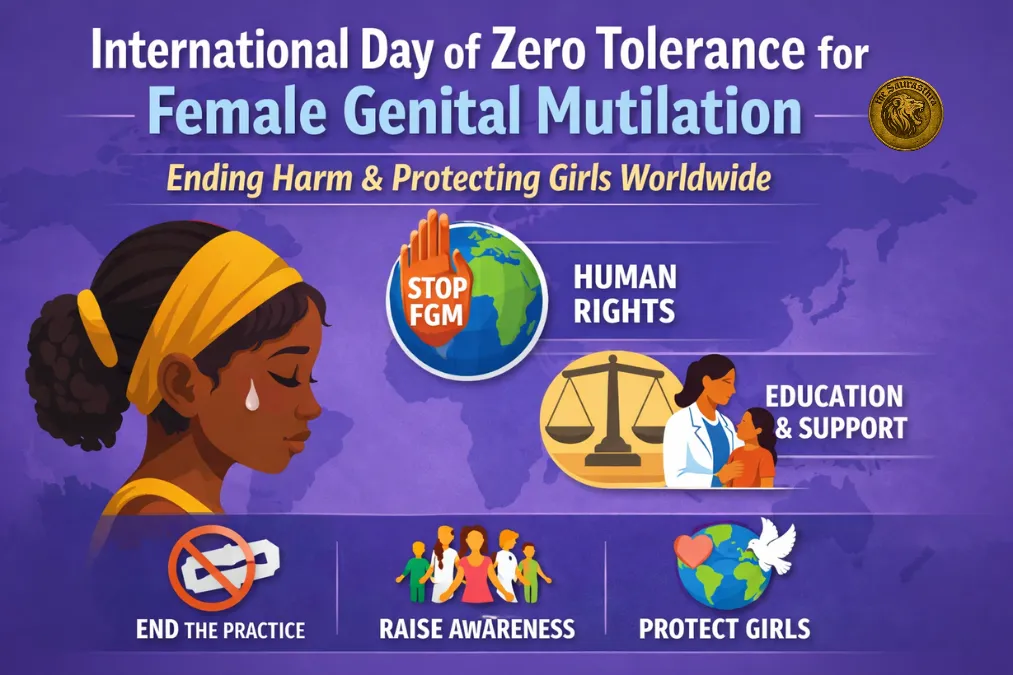
International day of zero tolerance for female genital mutilation is observed every year to raise global awareness about a harmful practice that affects millions of girls and women. This day reminds the world that female genital mutilation is a serious human rights violation and that ending it requires education, strong laws, and community action.
Understanding the International Day of Zero Tolerance for Female Genital Mutilation
The international day of zero tolerance for female genital mutilation is marked annually on February 6. It was created to encourage governments, communities, health workers, and families to speak openly against this practice and work together to protect girls. The day highlights the urgent need to stop female genital mutilation and support survivors with care, respect, and dignity.
This global observance focuses on prevention, awareness, and long-term change. It emphasizes that female genital mutilation has no health benefits and causes lifelong physical and emotional harm. By promoting open discussion, the day helps break silence and challenge deep-rooted traditions that continue to harm girls.
What Is Female Genital Mutilation
Female genital mutilation, often called FGM, refers to procedures that intentionally alter or injure female genital organs for non-medical reasons. It is usually carried out on young girls, often before the age of 15, but sometimes on infants or adult women.
FGM is practiced in many parts of the world, especially in parts of Africa, the Middle East, and Asia. Due to migration, it is also found in communities across Europe, North America, and other regions. Despite growing awareness, millions of girls are still at risk each year.
Why Female Genital Mutilation Continues
Female genital mutilation continues mainly because of strong social pressure and traditional beliefs. In many communities, it is seen as a cultural requirement or a way to prepare girls for marriage. Some believe it controls a girl’s behavior or ensures purity, even though there is no scientific or religious basis for these claims.
Poverty, lack of education, and gender inequality also play a major role. When women and girls have limited access to education and economic opportunities, harmful practices are more likely to continue. Fear of social rejection often prevents families from refusing the practice, even when they know it is harmful.
Health Risks and Long-Term Effects of Female Genital Mutilation
Female genital mutilation causes serious health problems that can last a lifetime. Immediate risks include severe pain, excessive bleeding, infection, and even death. Because the procedure is often done without medical care, the danger increases significantly.
Long-term effects include chronic pain, urinary problems, complications during childbirth, and sexual health issues. Many women also suffer from anxiety, depression, and trauma related to their experience. These physical and emotional effects show clearly why the international day of zero tolerance for female genital mutilation is so important.
Female Genital Mutilation as a Human Rights Issue
Female genital mutilation violates basic human rights, including the right to health, safety, and bodily integrity. It also violates the rights of children, as most victims are girls who cannot give informed consent.
The international day of zero tolerance for female genital mutilation highlights that this practice is a form of gender-based violence. It reflects deep inequality between men and women and limits the ability of girls to live healthy, free, and independent lives.
The Role of Education in Ending Female Genital Mutilation
Education is one of the most powerful tools to end female genital mutilation. When girls stay in school longer, they are less likely to undergo the practice. Education helps girls understand their rights and builds confidence to speak up for themselves.
Educating boys and men is equally important. When entire communities learn about the harmful effects of FGM, attitudes begin to change. Schools, community programs, and public awareness campaigns play a key role in spreading accurate information and challenging harmful beliefs.
Community Action and Cultural Change
Lasting change happens when communities themselves decide to abandon female genital mutilation. Community leaders, elders, women’s groups, and religious figures have a strong influence on social norms. When they speak openly against the practice, others are more likely to follow.
The international day of zero tolerance for female genital mutilation encourages community-led discussions. These conversations allow people to reflect on traditions, understand the harm caused, and find safer ways to celebrate culture without hurting girls.
Legal Measures Against Female Genital Mutilation
Many countries have passed laws that ban female genital mutilation. These laws send a clear message that the practice is unacceptable and punishable. Strong legal frameworks also help protect girls who are at risk and support survivors seeking justice.
However, laws alone are not enough. Enforcement must be fair and sensitive, and communities must be informed about legal consequences. The international day of zero tolerance for female genital mutilation stresses the need to combine legal action with education and social support.
Supporting Survivors of Female Genital Mutilation
Survivors of female genital mutilation need access to healthcare, counseling, and emotional support. Many women live with pain and trauma in silence because they fear stigma or lack services.
Healthcare providers play a critical role in offering respectful and confidential care. Psychological support helps survivors heal and rebuild confidence. On the international day of zero tolerance for female genital mutilation, attention is also given to improving services for survivors and ensuring they are treated with dignity.
The Role of Healthcare Workers
Healthcare workers are key partners in preventing female genital mutilation. They can educate families about health risks and refuse to perform the practice under any circumstances. Their voices carry authority and trust within communities.
Training healthcare workers to recognize and respond to FGM-related complications is essential. They can also help identify girls at risk and connect families with support services. Their involvement strengthens the message of the international day of zero tolerance for female genital mutilation.
Media and Awareness Campaigns
Media plays a powerful role in shaping public opinion. Television, radio, newspapers, and online platforms can spread awareness about the dangers of female genital mutilation and share real stories of survivors.
Responsible reporting helps reduce stigma and encourages open discussion. Awareness campaigns linked to the international day of zero tolerance for female genital mutilation reach global audiences and inspire action at local and national levels.
The Importance of Men and Boys in the Movement
Ending female genital mutilation is not only a women’s issue. Men and boys have an important role to play in challenging harmful norms and supporting change. When men speak out against the practice, it reduces social pressure on families.
Engaging men in education programs helps promote respect, equality, and healthy relationships. The international day of zero tolerance for female genital mutilation encourages inclusive efforts that involve everyone in the community.
Global Progress and Remaining Challenges
Over the years, progress has been made in reducing the number of girls affected by female genital mutilation. Awareness has increased, laws have been passed, and many communities have chosen to abandon the practice.
Despite this progress, challenges remain. Population growth, conflict, and lack of resources can slow efforts. The international day of zero tolerance for female genital mutilation serves as a reminder that continued commitment is needed to protect future generations.
How Individuals Can Make a Difference
Individuals can play a meaningful role in ending female genital mutilation. Learning about the issue and sharing accurate information helps challenge myths. Supporting organizations and community programs strengthens prevention efforts.
Speaking openly about the harm caused by FGM encourages others to do the same. On the international day of zero tolerance for female genital mutilation, individuals are encouraged to stand up for the rights and safety of girls everywhere.
Also read: World Cancer Day 2026: Raising Awareness, Inspiring Action, and Saving Lives
Looking Toward a Future Without Female Genital Mutilation
A world free from female genital mutilation is possible. It requires patience, respect for culture, and strong commitment to human rights. Change happens step by step, through education, dialogue, and collective action.
The international day of zero tolerance for female genital mutilation is not just a date on the calendar. It is a call to protect girls, support survivors, and build societies where every woman and girl can live without fear or harm.