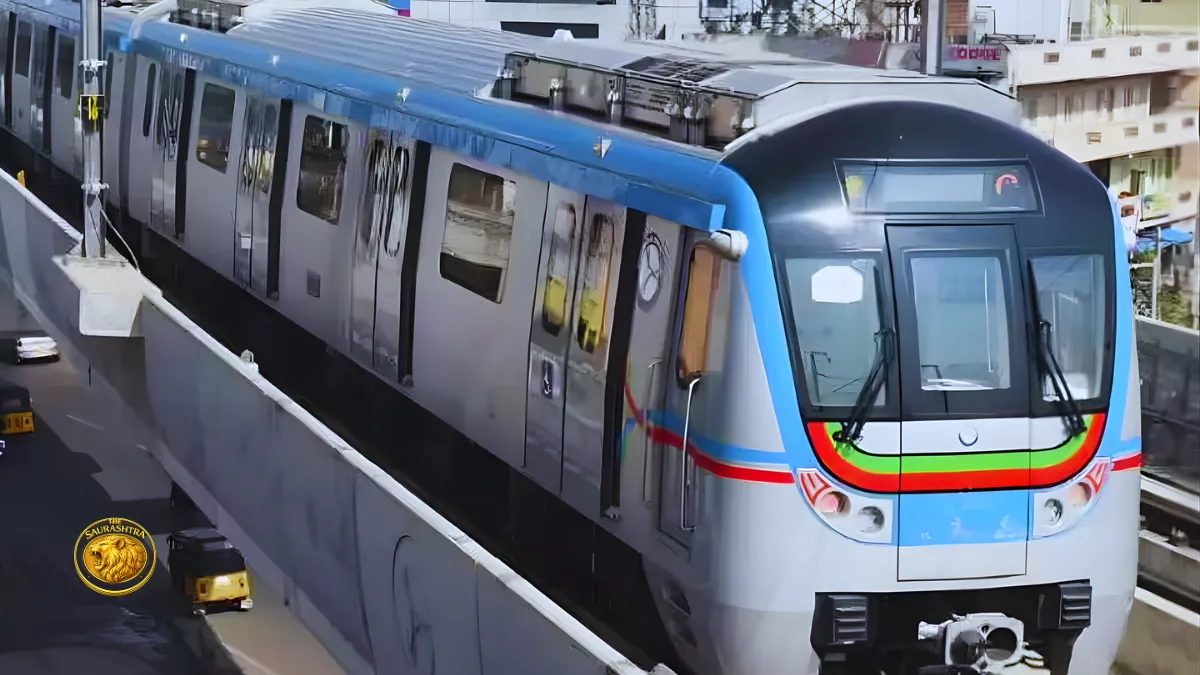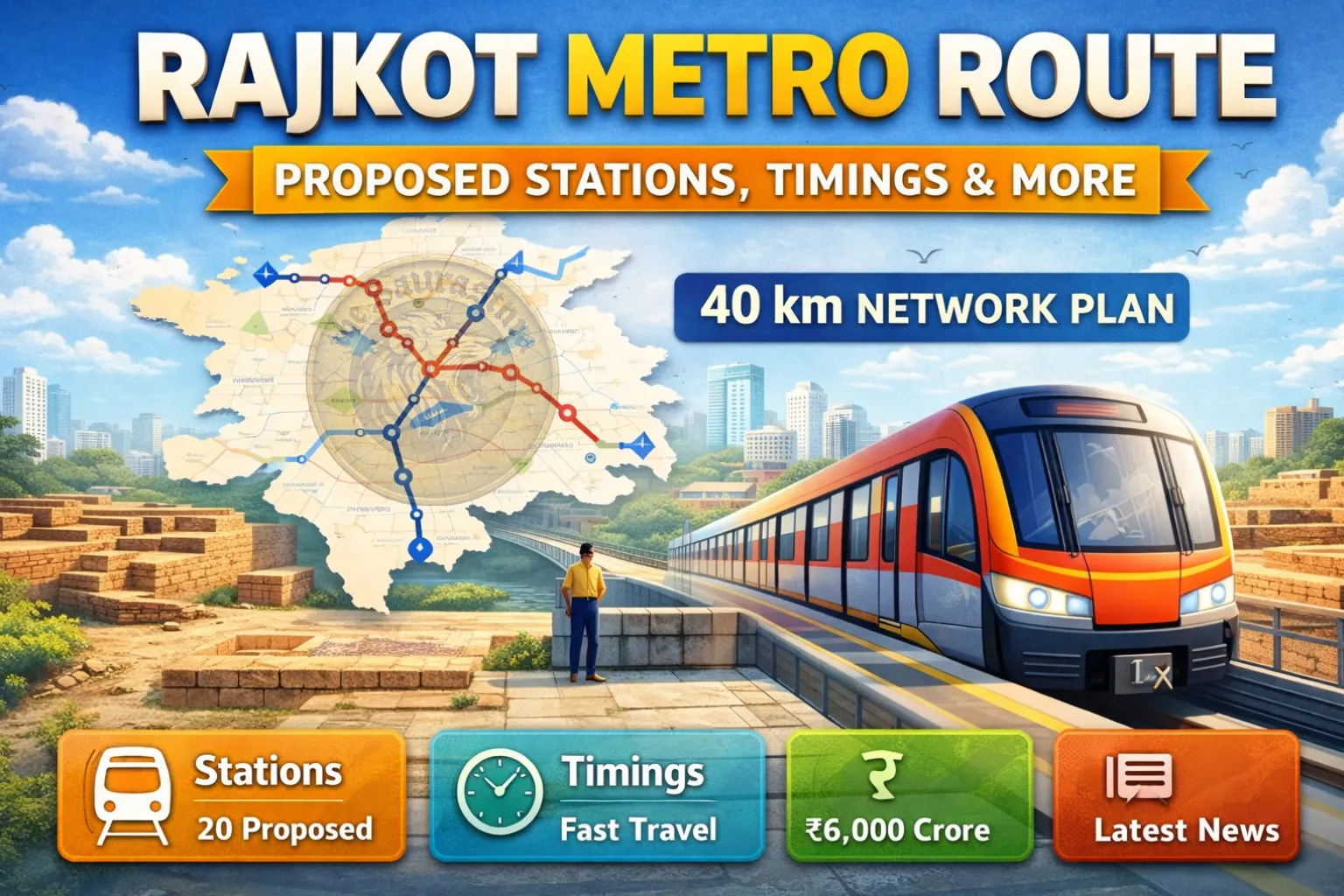
Rajkot Metro Route: Rajkot, one of Gujarat’s fastest-growing urban centres, is preparing for a major leap in public transportation with the proposed launch of its first metro rail system. After receiving approval from the Gujarat government, the detailed project proposal has now been sent to the central government. Once the Centre gives its formal clearance, construction work on the ambitious Rajkot metro route is expected to begin at a rapid pace.
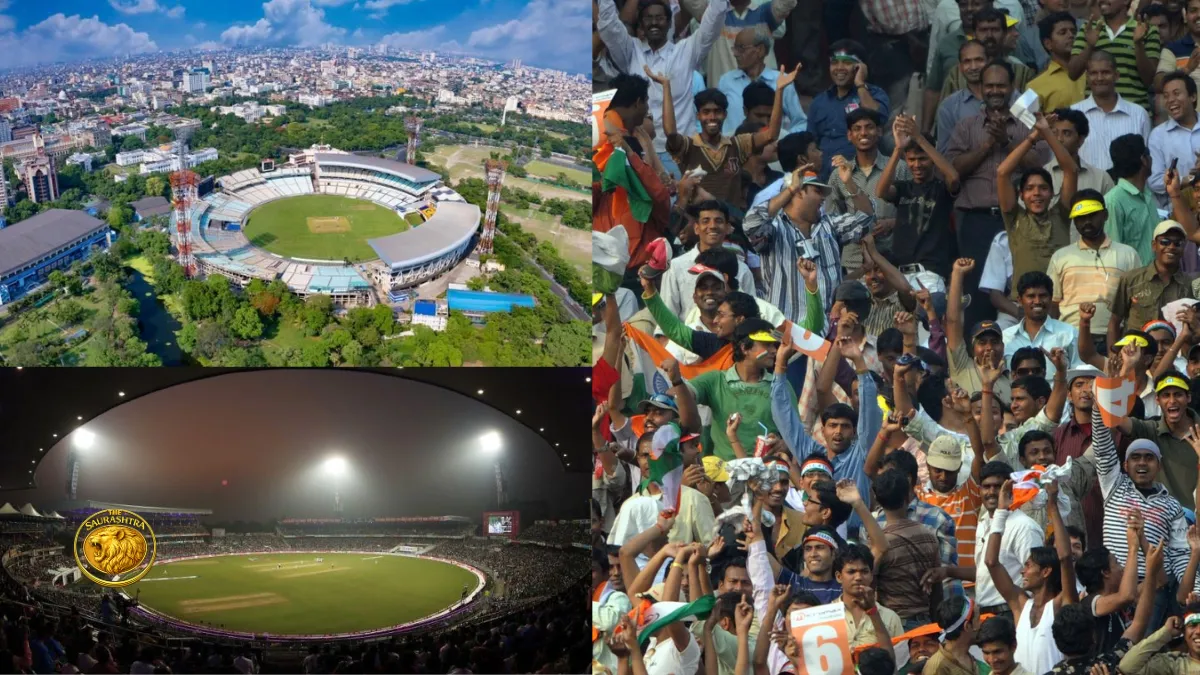
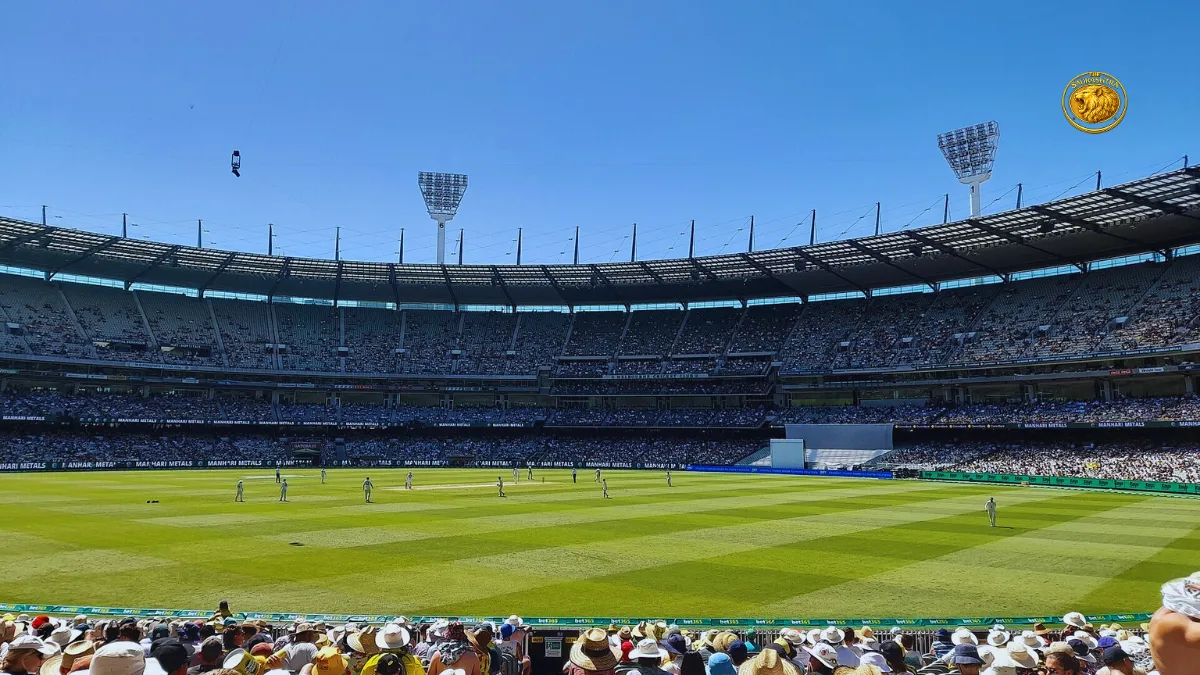
The development comes at a time when Rajkot is undergoing significant infrastructural expansion. In recent years, the city has secured key national-level facilities such as AIIMS, a modern international cricket stadium, and an upgraded international airport. The addition of a metro rail network is being seen as the next logical step in Rajkot’s journey towards becoming a fully modern, globally connected city.
Gujarat Metro Rail Corporation to Execute the Project
The responsibility for planning and executing the Rajkot metro project has been entrusted to the Gujarat Metro Rail Corporation Limited (GMRC), which operates from its headquarters in Gandhinagar. Officials from the metro rail authority have already visited Rajkot multiple times to carry out on-ground surveys and technical assessments. These surveys covered major residential, commercial, and developing zones across the city to evaluate feasibility, passenger demand, and route alignment.
Based on these surveys, the metro authorities prepared a comprehensive Detailed Project Report (DPR), outlining technical specifications, estimated costs, proposed alignments, station locations, and expected ridership. After reviewing the DPR, the Gujarat government approved the project and forwarded it to the Centre for final approval.
According to officials, once the central government grants its green signal, the Rajkot metro route will move swiftly from the planning phase to execution.
Estimated Cost and Coverage Area
The Rajkot metro rail project is expected to involve an investment of approximately ₹10,000 crore. The proposed network is designed to cover an estimated distance of 38 to 40 kilometres, spanning key parts of the city as well as certain surrounding growth corridors.
Although the final alignment is yet to be officially announced, preliminary planning suggests that the Rajkot metro route may include areas such as Shapar–Veraval industrial belt, the 150 Feet Ring Road corridor, Khandheri, and the All India Institute of Medical Sciences (AIIMS) campus. These areas were identified based on traffic density, population growth, industrial activity, and future urban expansion potential.
Metro officials have clarified that the exact start and end points, along with station locations, will be finalised only after central approval is secured. However, the feasibility study has reportedly delivered positive results, strengthening confidence that Rajkot is ready for a metro rail system both technically and economically.
Positive Feasibility Report Strengthens the Case
Before any large-scale urban rail project is approved, authorities conduct a detailed feasibility study to assess factors such as passenger demand, construction challenges, environmental impact, and long-term financial sustainability. In Rajkot’s case, the feasibility report is said to have returned encouraging findings.
Officials involved in the assessment indicated that Rajkot’s rising population, expanding urban limits, and increasing number of daily commuters make it a suitable candidate for a metro network. With road traffic steadily increasing and pressure mounting on existing public transport systems, a metro rail system is seen as a future-ready solution.
While the final blueprint will depend on central clearance, the positive feasibility outcome reflects a strong policy intent to bring metro connectivity to Rajkot in the near future.
Major Relief for Traffic and Travel Time
One of the biggest advantages of the Rajkot metro route will be the reduction in traffic congestion. As the city grows, private vehicle ownership has increased significantly, leading to frequent traffic bottlenecks on major roads. Although services such as city buses and BRTS have helped improve mobility, they are increasingly stretched during peak hours.
The introduction of metro rail is expected to ease this pressure by offering a fast, reliable, and high-capacity alternative. Commuters will be able to travel from one end of the city to the other in significantly less time, avoiding traffic delays and road congestion.
By connecting key residential areas with business districts, educational institutions, hospitals, and industrial zones, the metro network will improve overall connectivity and make daily commuting more efficient.
Environmental and Economic Benefits
Apart from easing traffic, the Rajkot metro project is expected to deliver notable environmental benefits. Metro systems typically operate on electricity or cleaner energy sources, which helps reduce dependence on fossil fuels. As more commuters shift from private vehicles to metro trains, emissions from road traffic are likely to decrease, contributing to better air quality.
Noise pollution is also expected to reduce, especially along busy road corridors where traffic congestion currently leads to frequent honking and slow-moving vehicles. In the long term, this shift towards cleaner mass transit can significantly improve the city’s overall environmental footprint.
From an economic perspective, metro rail offers affordable and predictable travel costs. Daily commuters can save money on fuel and vehicle maintenance while enjoying faster and safer journeys. Improved connectivity also boosts local businesses, increases property values near metro stations, and encourages investment in surrounding areas.
Expected Daily Ridership and Public Impact
Estimates suggest that once operational, the Rajkot metro route could benefit around 20,000 to 25,000 passengers every day. This number is expected to grow steadily as the city expands and people adapt to the new mode of transport.
At present, a large section of Rajkot’s population relies on city buses, BRTS, auto-rickshaws, and private vehicles to commute. The metro will complement existing public transport systems by providing a high-speed backbone for urban travel.
Covering a 38 to 40 kilometre stretch, the metro network will make it easier for residents to travel longer distances within the city at a lower cost, without the stress of traffic congestion. For students, office-goers, patients visiting hospitals, and workers commuting to industrial zones, the metro is expected to become a preferred option.
Government Confirmation on Project Status
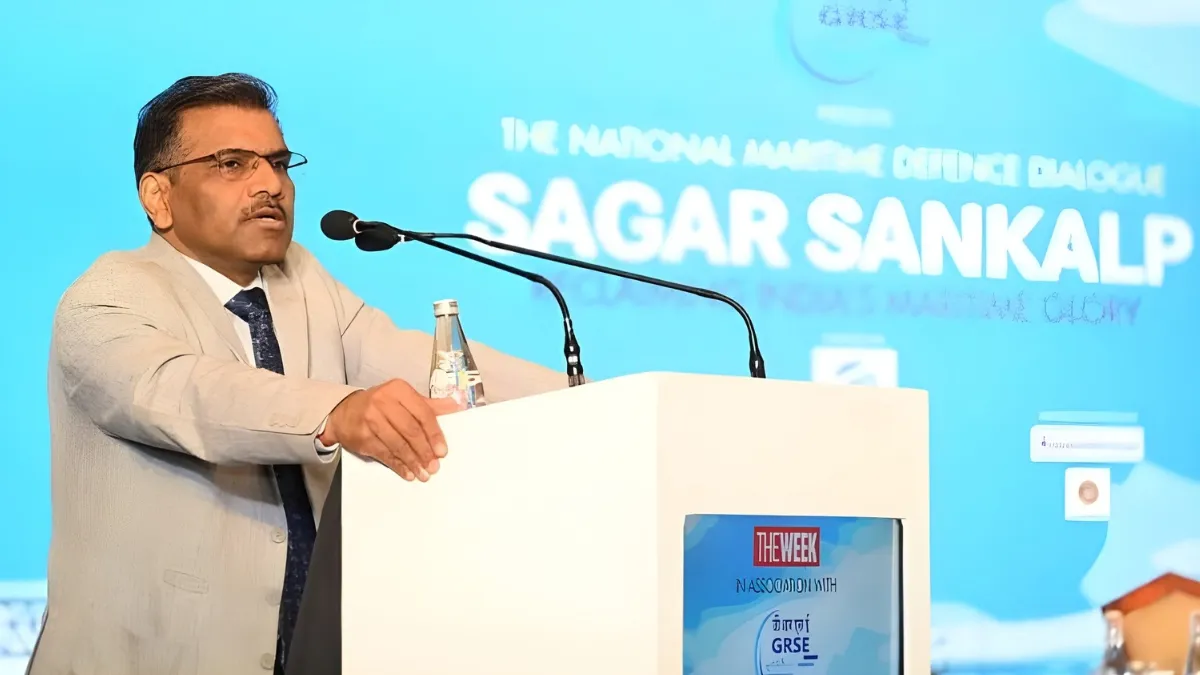
Confirming the current status of the project, Pushkar Singla, Chief of Corporate Communication at GMRC, stated that the Gujarat government has already approved the Rajkot metro rail proposal. All required details and documentation have been forwarded to the central government for consideration.
He added that once approval is received from the Centre, the project will move into the next phase, which includes finalising alignments, initiating land-related procedures, and beginning construction work. Officials have emphasised that preparations are in place to ensure minimal delay once the clearance is granted.
A Step Towards Rajkot’s Urban Future
The proposed Rajkot metro route is being widely viewed as a landmark project that will shape the city’s future growth. With major institutions, improved air connectivity, and now a planned metro network, Rajkot is positioning itself as a modern urban hub in western India.
Urban planners believe that metro connectivity will not only improve daily life for residents but also support long-term economic development by attracting new businesses, industries, and investments. As cities across India expand, integrated mass transit systems are becoming essential, and Rajkot’s inclusion in this league reflects its growing importance on the national map.
While residents await the Centre’s final decision, expectations are high that approval will come soon, paving the way for construction to begin. Once operational, the Rajkot metro rail is expected to redefine mobility in the city and offer a faster, cleaner, and more efficient way to travel.
As Rajkot continues its transformation, the metro project stands as a symbol of progress, promising to connect people, places, and opportunities like never before.