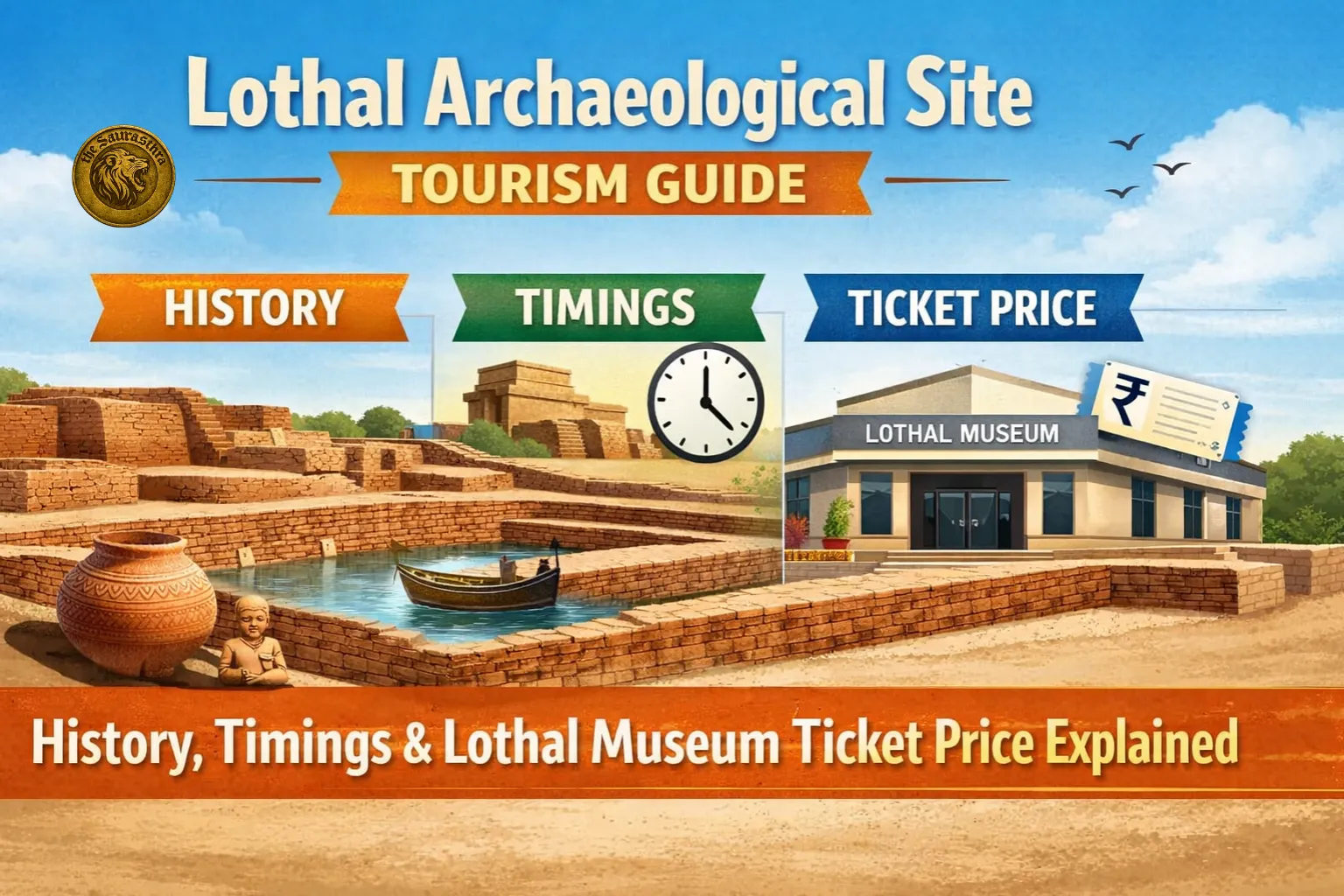
Lothal Museum Ticket Price: Lothal, one of the most remarkable urban centres of the ancient Indus Valley Civilization, continues to attract historians, archaeologists, and curious travellers from across the world. Located in the Bhal region of present-day Gujarat, India, Lothal offers a rare and fascinating glimpse into a civilization that flourished more than 4,000 years ago. Discovered in 1954, the site stands as powerful evidence of the advanced planning, trade networks, and cultural sophistication of the Harappan people.
Today, Lothal is not just an archaeological site but a key heritage tourism destination, drawing visitors keen to understand early human ingenuity. From its legendary dockyard to its well-planned drainage system, the ruins tell a compelling story of innovation long before the modern age.
Historical Significance of Lothal
Lothal was one of the southernmost cities of the Indus Valley Civilization and played a vital role in maritime trade. Archaeologists believe the city was strategically built near an ancient course of the Sabarmati River, allowing ships to travel between inland settlements and the Arabian Sea. This connection helped Lothal emerge as a major trading hub, linking the Indus region with Mesopotamia and other distant lands.
One of Lothal’s most celebrated discoveries is its dockyard, considered among the earliest known in the world. Carefully engineered with baked bricks, the dockyard reflects a deep understanding of tides, water management, and ship movement. Its presence confirms that maritime trade was not accidental but a planned economic activity of the civilization.
Urban Planning and Architecture
The city of Lothal was divided into two main sections: a raised citadel and a lower residential town. This layout highlights the advanced town-planning principles of the Harappans. Streets were laid out in a grid pattern, intersecting at right angles, and were equipped with a covered drainage system that remains impressive even by modern standards.
Homes were built using standardized baked bricks, pointing to uniform construction practices and strong civic control. The underground drainage channels ensured efficient waste disposal, keeping the city hygienic and organized. Such attention to public health and infrastructure places Lothal far ahead of many later civilizations.
Craftsmanship and Trade Economy
Lothal was also a thriving centre of craftsmanship, particularly famous for its bead-making industry. Excavations have uncovered bead factories, tools, and unfinished ornaments made from semi-precious stones like carnelian. These beads were highly valued and traded extensively across regions.
In addition to beads, archaeologists found terracotta figurines, pottery, seals, and standardized weights, which indicate a regulated trade system. The use of uniform weights suggests a strong commercial framework and an early understanding of measurement and accountability.
Lothal Archaeological Museum
Adjacent to the excavation site is the Lothal Archaeological Museum, which houses a rich collection of artifacts recovered during excavations. Visitors can view pottery, beads, tools, seals, and ornaments that once formed part of daily life in the ancient city. The museum provides essential context, helping visitors connect the ruins with the people who lived there thousands of years ago.
For anyone interested in history, the museum is an integral part of the Lothal experience. Understanding the exhibits also helps visitors appreciate the value behind the Lothal Museum ticket price, which remains highly affordable.
Opening and Closing Timings of Lothal Archaeological Site
Visitors planning a trip to Lothal should take note of the official visiting hours:
- Sunday: 10:00 AM – 5:00 PM
- Monday: 10:00 AM – 5:00 PM
- Tuesday: Closed
- Wednesday: 10:00 AM – 5:00 PM
- Thursday: 10:00 AM – 5:00 PM
- Friday: 10:00 AM – 5:00 PM
- Saturday: 10:00 AM – 5:00 PM
It is always advisable to verify the latest timings before visiting, as hours may change due to maintenance work, special events, or administrative decisions. Checking with local tourism authorities or official sources can help avoid inconvenience.
Lothal Museum Ticket Price and Entry Fees
One of the most appealing aspects of visiting Lothal is its budget-friendly entry fee, making the site accessible to a wide audience. The current Lothal Museum ticket price and site entry charges are as follows:
- Indian Adults: INR 5
- Indian Children: Free
- Foreign Adults: INR 100
- Foreign Children: INR 50
These prices make Lothal one of the most affordable world-class heritage sites to explore. However, visitors should note that ticket prices are subject to revision, and it is recommended to cross-check the latest rates before planning a visit.
Also read: What Is Kathiawar? A Complete and Simple Guide to the Historic Region of Gujarat
Why Lothal Matters Today
Lothal is more than an ancient ruin—it is a symbol of early human progress, innovation, and global connectivity. Its dockyard reshapes our understanding of early maritime trade, while its urban design challenges assumptions about ancient societies being primitive.
For travellers from the UK, US, and other parts of the world, Lothal offers a unique opportunity to witness the roots of urban civilization in South Asia. With minimal entry costs, a well-maintained museum, and immense historical value, the site continues to hold global relevance.
Also read: Is the National Maritime Museum Worth Visiting? A Complete and Honest Guide for Visitors
Conclusion
A visit to Lothal Archaeological Site is both educational and inspiring. Whether you are a history enthusiast, a student, or a curious traveller, Lothal delivers a rare window into one of humanity’s earliest advanced civilizations. With its affordable Lothal Museum ticket price, organized visiting hours, and rich archaeological heritage, the site remains a must-visit destination for anyone exploring India’s ancient past.