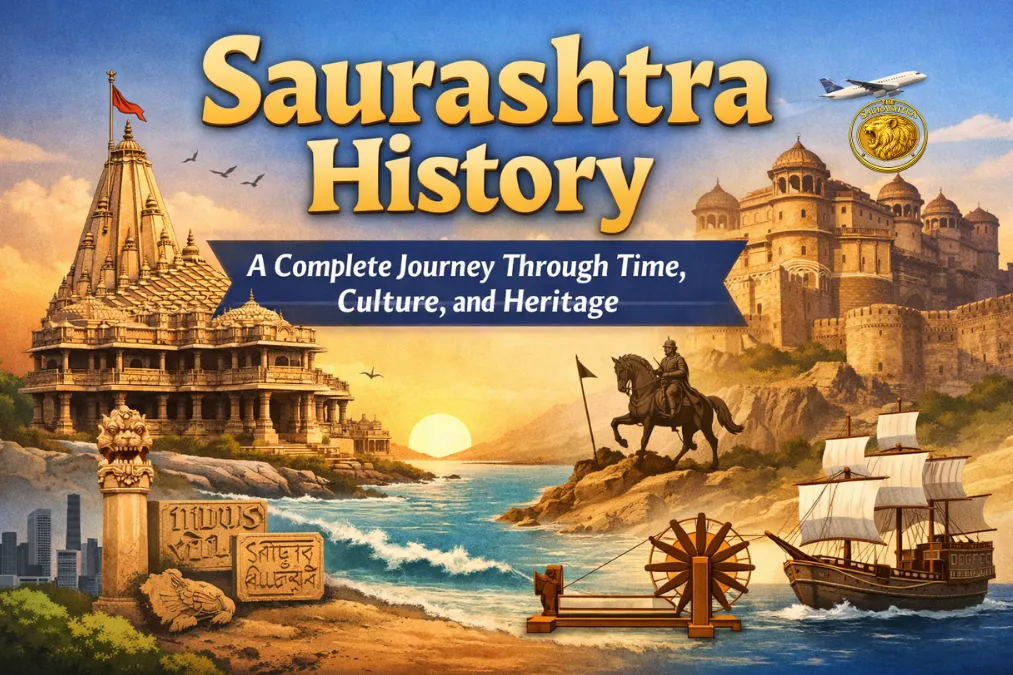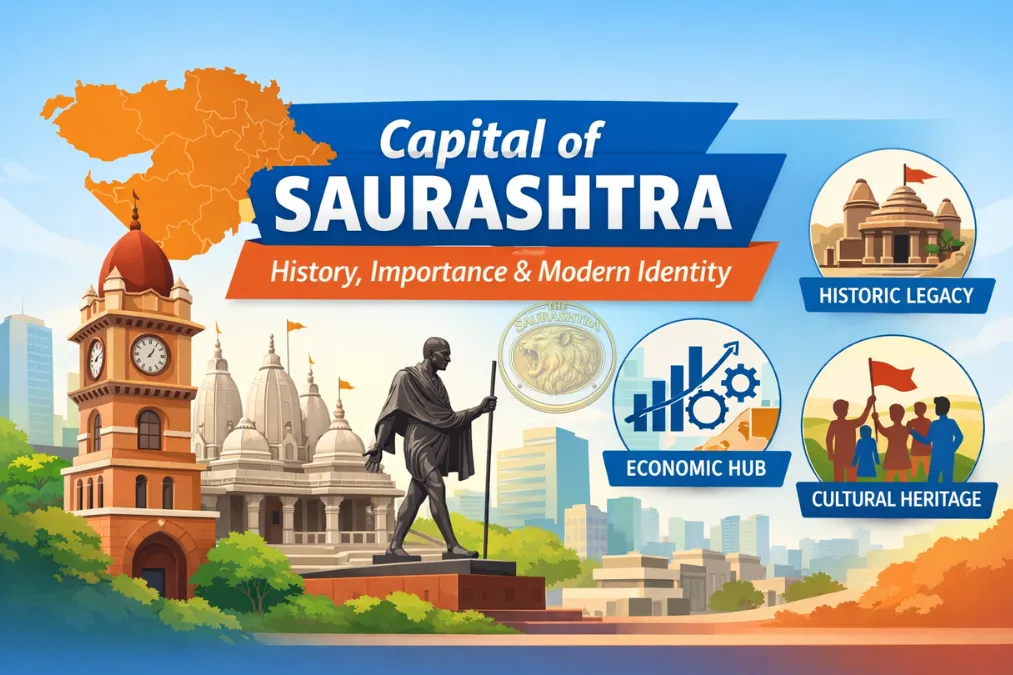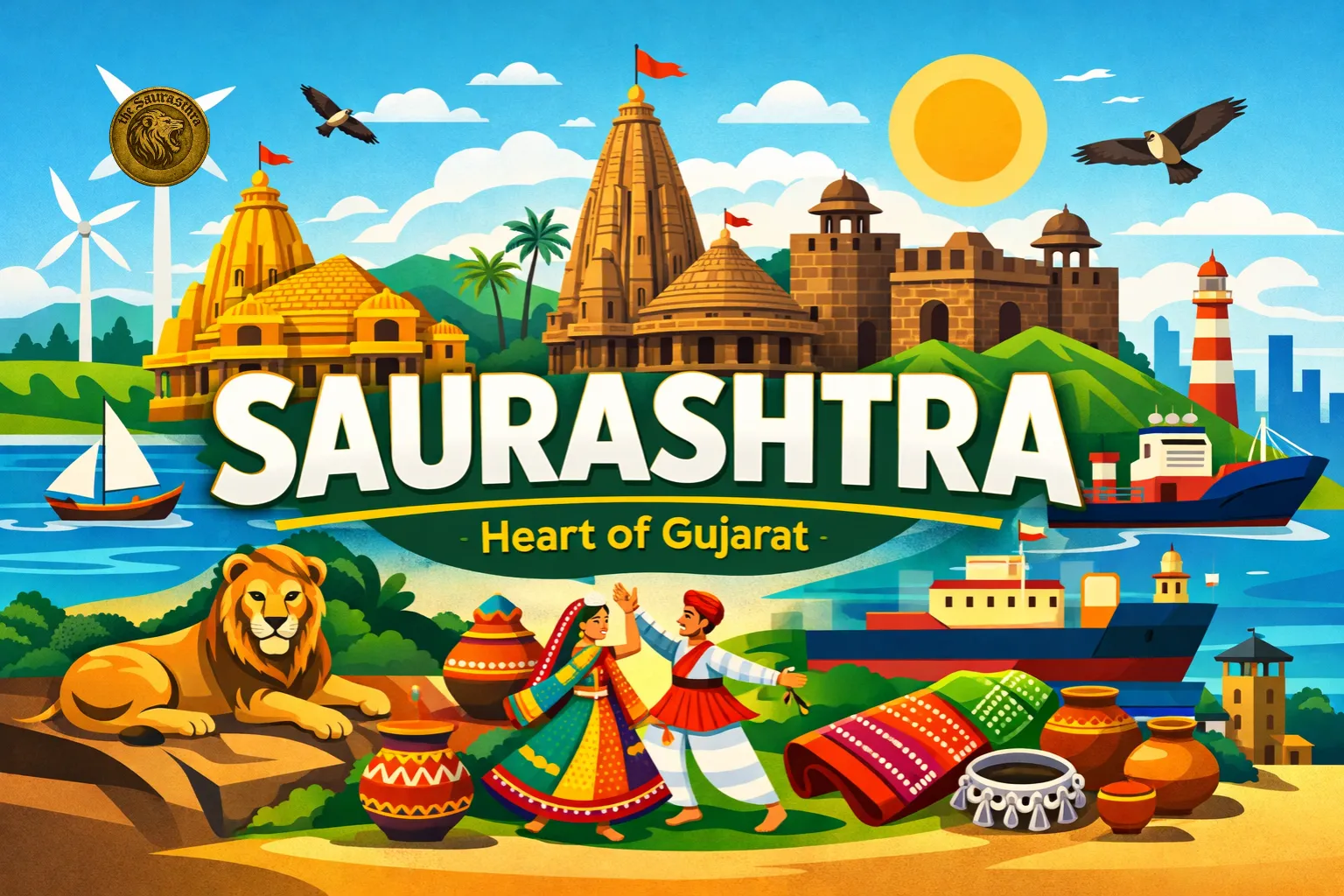
Saurashtra is a historic and culturally rich region of western India that holds a special place in the heart of Gujarat. Known for its strong traditions, unique language style, ancient kingdoms, and long coastline, Saurashtra represents a deep connection between history, culture, and everyday life. Saurashtra has shaped Gujarat’s identity for centuries and continues to influence its social, economic, and cultural landscape in modern times.
Where Is Saurashtra Located
Saurashtra is located in the western part of India and forms a large peninsula in the state of Gujarat. It is surrounded by the Arabian Sea on three sides, which gives the region a long coastline and a strong connection with maritime trade and fishing. The region is also known as the Kathiawar Peninsula, a name that comes from the Kathi community that once ruled many parts of this land.
The geographical position of Saurashtra has played a major role in its development. Being close to the sea helped the region grow as a center of trade with the Middle East, Africa, and other parts of Asia from ancient times. Today, ports like Porbandar and Veraval continue this legacy.
Historical Importance of Saurashtra
Saurashtra has a long and fascinating history that goes back thousands of years. Archaeological evidence suggests that parts of this region were connected to the Indus Valley Civilization. Over time, Saurashtra became home to many powerful dynasties, including the Mauryas, Guptas, Maitrakas, Solankis, and later the Rajput rulers.
During medieval times, Saurashtra was divided into many princely states such as Junagadh, Bhavnagar, Gondal, and Porbandar. Each state had its own rulers, forts, palaces, and administrative systems. This political diversity gave Saurashtra a rich and layered history that can still be seen in its architecture and traditions.
Saurashtra in the Freedom Movement
Saurashtra played an important role in India’s freedom struggle. Many leaders from this region actively participated in movements against British rule. Mahatma Gandhi, one of the greatest leaders of India, was born in Porbandar, a coastal town in Saurashtra. His early life and values were deeply influenced by the culture of this region.
Several princely states of Saurashtra were among the first to join independent India after 1947. The integration of these states helped shape modern Gujarat and strengthened national unity.
Language and Identity of Saurashtra
The people of Saurashtra mainly speak Gujarati, but the region has its own distinct dialect known as Saurashtri or Kathiawadi Gujarati. This dialect has a bold tone, expressive style, and unique vocabulary that reflects the strong and proud nature of the people.
Language in Saurashtra is more than just communication. It is a symbol of regional identity and emotional connection. Folk songs, stories, and everyday conversations carry the essence of Saurashtra’s culture and values.
Culture and Traditions of Saurashtra
Saurashtra is famous for its vibrant culture and deep-rooted traditions. The region celebrates festivals with great enthusiasm, blending religious devotion with community spirit. Navratri, Diwali, Janmashtami, and Makar Sankranti are celebrated with music, dance, and traditional rituals.
Garba and Raas, popular folk dances of Gujarat, are widely performed in Saurashtra. These dances reflect joy, unity, and respect for tradition. Folk music in Saurashtra often tells stories of bravery, devotion, and everyday life.
Art and Handicrafts of Saurashtra
Saurashtra is well known for its traditional arts and handicrafts. The region produces beautiful items such as bandhani textiles, embroidery, beadwork, and silver jewelry. These crafts are not only sources of income for local artisans but also expressions of cultural heritage passed down through generations.
Wood carving, stone carving, and metalwork are also important art forms in Saurashtra. Temples, havelis, and old palaces display fine craftsmanship that reflects the artistic skills of the region.
Religious and Spiritual Significance of Saurashtra
Saurashtra holds great religious importance for people of different faiths. The region is home to many ancient temples, mosques, churches, and sacred sites. One of the most famous religious places in Saurashtra is the Somnath Temple, which is one of the twelve Jyotirlingas of Lord Shiva. This temple has been destroyed and rebuilt several times, symbolizing faith and resilience.
Dwarka, another sacred city in Saurashtra, is associated with Lord Krishna and attracts millions of pilgrims every year. The region also has important Jain temples, Sufi shrines, and places of spiritual learning.
Natural Landscape of Saurashtra
The natural beauty of Saurashtra is diverse and impressive. The region has dry plains, rolling hills, fertile agricultural areas, and a long coastline. One of the most famous natural landmarks in Saurashtra is the Gir Forest, which is the only natural home of the Asiatic lion in the world.
The presence of wildlife sanctuaries, beaches, and coastal ecosystems makes Saurashtra ecologically important. Conservation efforts in the region focus on protecting wildlife, forests, and marine life while supporting local communities.
Climate and Agriculture in Saurashtra
Saurashtra has a semi-arid climate with hot summers, moderate winters, and seasonal rainfall during the monsoon. Agriculture plays a major role in the region’s economy. Farmers in Saurashtra grow crops such as groundnut, cotton, wheat, millet, and pulses.
The region is especially famous for groundnut production and dairy farming. The cooperative dairy movement has helped farmers improve their livelihoods and strengthen rural economies in Saurashtra.
Economy and Industries of Saurashtra
The economy of Saurashtra is based on a mix of agriculture, industry, and trade. In recent years, the region has seen growth in industries such as cement, textiles, chemicals, shipbreaking, and renewable energy.
Ports in Saurashtra support exports and imports, making the region an important part of Gujarat’s industrial development. Cities like Rajkot and Bhavnagar have become centers for manufacturing, education, and business.
Urban Life and Cities in Saurashtra
Saurashtra has several important cities that combine tradition with modern development. Rajkot is one of the largest cities in the region and serves as an educational and commercial hub. Bhavnagar is known for its port, industries, and cultural institutions.
Junagadh, located near the Gir Forest, is rich in history and religious heritage. Porbandar, besides being Mahatma Gandhi’s birthplace, is an important coastal town with historical and cultural value.
Education and Social Development in Saurashtra
Education has steadily improved in Saurashtra over the years. The region has many schools, colleges, universities, and technical institutions that provide quality education. Medical colleges, engineering colleges, and research centers attract students from across Gujarat and India.
Social development programs focus on healthcare, women empowerment, rural development, and skill training. Community values and strong family bonds continue to shape social life in Saurashtra.
Food and Culinary Traditions of Saurashtra
The food of Saurashtra reflects its climate, culture, and lifestyle. Traditional Saurashtra cuisine is simple, flavorful, and nutritious. Popular dishes include bhakri, shaak, dal, kadhi, and various types of pickles.
Spices are used carefully to create balanced flavors rather than extreme heat. Dairy products like buttermilk and ghee are common in daily meals. Food in Saurashtra is closely connected to hospitality, and guests are always welcomed warmly.
Read also: What is Saurashtra Called? A Historical and Cultural Exploration of a Timeless Region
Festivals and Community Life in Saurashtra
Community life in Saurashtra is built on cooperation, respect, and shared traditions. Festivals bring people together and strengthen social bonds. Villages and towns organize cultural programs, fairs, and religious events that involve people of all ages.
These gatherings help preserve traditions and pass cultural values to younger generations. Even in cities, people of Saurashtra maintain close community connections.
Modern Challenges and Growth of Saurashtra
Like many regions, Saurashtra faces modern challenges such as water scarcity, climate change, urbanization, and migration. However, the people of Saurashtra are known for their resilience and adaptability.
Development projects related to water management, renewable energy, and infrastructure aim to support sustainable growth. The balance between tradition and modernization remains an important focus for the future of Saurashtra.
Read also: Understanding the Difference Between Kathiawar and Saurashtra
The Lasting Spirit of Saurashtra
Saurashtra is more than just a geographical region. It is a living heritage shaped by history, culture, faith, and the strength of its people. From ancient temples and royal palaces to busy cities and quiet villages, Saurashtra offers a unique blend of past and present.
The spirit of Saurashtra lies in its courage, hospitality, and pride in identity. As the region continues to grow and evolve, it remains deeply rooted in its traditions while embracing new opportunities. Saurashtra stands as a powerful example of how history and modern life can exist together in harmony.