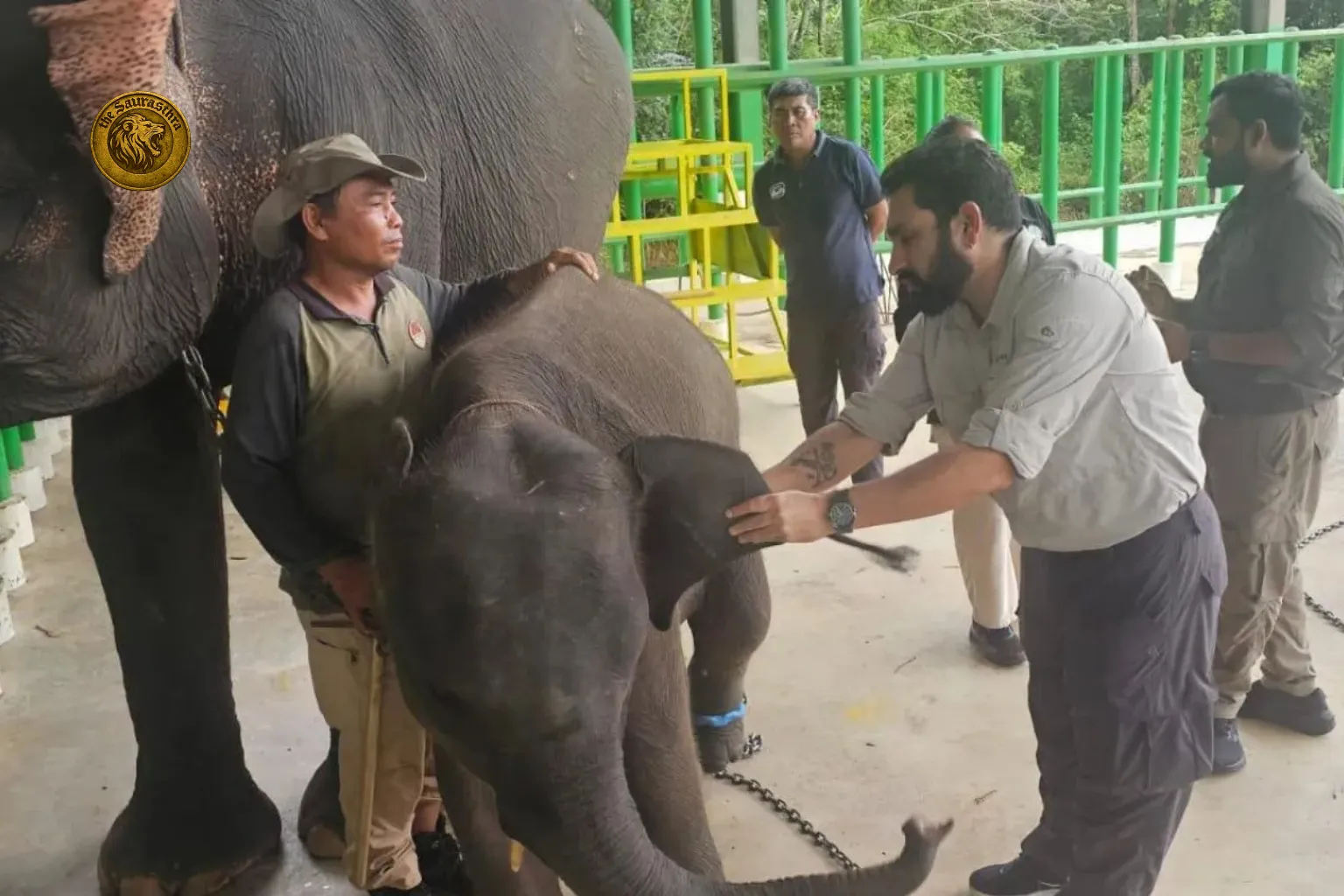
Jakarta — Indonesia Vantara-has taken a significant step toward protecting one of its most threatened wildlife species by strengthening cooperation with India in elephant conservation. The Ministry of Forestry has formally partnered with India-based wildlife conservation centre Vantara to revitalise elephant hospitals in Sumatra, starting with the facility at Way Kambas National Park. The initiative is part of a broader national strategy to rescue the critically endangered Sumatran elephant and restore its rapidly shrinking habitat.
The collaboration reflects Indonesia’s growing commitment to safeguarding the future of the Sumatran elephant (Elephas maximus sumatranus), a subspecies whose survival is under severe threat due to habitat loss, fragmentation, and human-wildlife conflict. Officials say the partnership combines Indonesia’s on-ground conservation efforts with Vantara’s advanced technical expertise in elephant healthcare and rehabilitation.
Government Reaffirms Commitment to Sumatran Elephant Protection
In a statement confirmed in Jakarta on Wednesday, Ahmad Munawir, Director of Species and Genetic Conservation at the Ministry of Forestry’s Directorate General of Natural Resources and Ecosystem Conservation (KSDAE), said the government is intensifying its efforts to protect the Sumatran elephant, whose population has reached a critical level.
Munawir emphasised that the cooperation with Vantara is not symbolic but action-oriented, beginning with direct assessments of existing facilities and the formulation of concrete plans to improve elephant medical care in Sumatra.
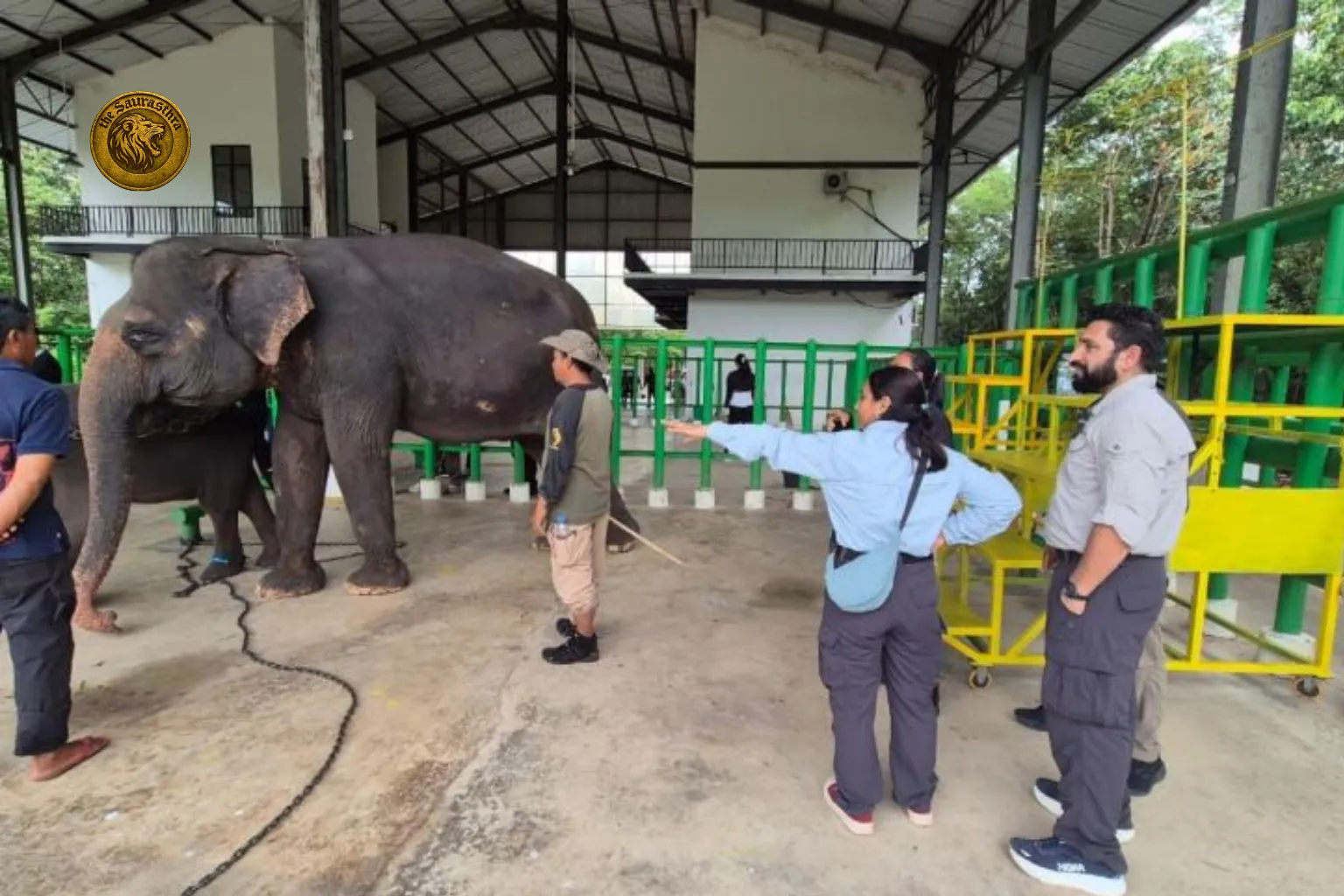
“One of our immediate efforts is a joint visit to the Elephant Hospital at Way Kambas National Park together with Faunaland Indonesia and our international partner, Vantara,” Munawir said. “This collaboration will help us revitalise the hospital and raise the standard of elephant care in Indonesia.”
According to Munawir, Vantara has expressed readiness to support the construction or full revitalisation of the Way Kambas Elephant Hospital. Beyond that, the Indian conservation centre may also assist in establishing additional elephant hospitals in other parts of Sumatra, particularly in Riau and Aceh—two regions that still host remaining elephant populations but lack adequate veterinary infrastructure.
Aligning With National Conservation Directives
The initiative aligns closely with conservation directives issued by President Prabowo Subianto and Minister of Forestry Raja Juli Antoni, both of whom have prioritised ecosystem restoration and wildlife protection as part of Indonesia’s environmental agenda.
Munawir explained that restoring elephant hospitals is inseparable from restoring the ecosystems that serve as the animals’ natural habitats. “Our visit to Way Kambas with teams from Faunaland Indonesia and Vantara reflects the Ministry of Forestry’s strong commitment—especially under Minister Raja Juli Antoni—to improving ecosystems that function as core habitats for the Sumatran elephant,” he said.
Way Kambas National Park, located in Lampung Province, is one of Indonesia’s most important conservation areas for elephants. It has long served as a centre for elephant training, care, and conflict mitigation. However, like many conservation facilities in developing regions, its infrastructure and resources have struggled to keep pace with growing challenges.
A Species on the Brink of Extinction
The urgency of the partnership is underscored by alarming data from the International Union for Conservation of Nature (IUCN). The Sumatran elephant is currently listed as Critically Endangered on the IUCN Red List, the highest risk category before extinction in the wild.
Over the past few decades, the species has suffered drastic population declines, primarily driven by deforestation, agricultural expansion, illegal logging, and infrastructure development. As forests have been cleared or fragmented, elephants have been forced into smaller and increasingly isolated pockets of land.
Munawir revealed that elephant habitat areas in Sumatra have shrunk dramatically. “In the past, we recorded more than 44 elephant habitat pockets across Sumatra,” he said. “Today, that number has fallen to around 21 fragmented areas.”
This fragmentation not only reduces available space and food for elephants but also increases the likelihood of human-elephant conflict, which often results in injuries or deaths on both sides. Injured elephants frequently require urgent medical care—care that is difficult to provide without well-equipped hospitals and trained personnel.
Multi-Stakeholder Collaboration Seen as Key
Recognising the scale and complexity of the crisis, the Ministry of Forestry is encouraging a multi-stakeholder approach to conservation. This includes cooperation between government agencies, conservation organisations, private partners, and international experts.
One critical component of the strategy is the creation of ecological corridors to reconnect fragmented habitats. These corridors allow elephants to move safely between forest areas, reducing stress, genetic isolation, and conflict with human settlements.
However, officials stress that habitat restoration must go hand in hand with improved veterinary and rehabilitation facilities. Injured, displaced, or sick elephants cannot be saved without access to specialised medical treatment—a gap that the partnership with Vantara aims to address.
Faunaland Indonesia Welcomes the Collaboration
Faunaland Indonesia, a key domestic partner in the initiative, has welcomed the trust placed in it by the Ministry of Forestry. CEO Danny Gunalen said his organisation is fully committed to supporting national conservation goals, particularly in protecting the Sumatran elephant.
“We are honoured by the confidence shown by the Ministry of Forestry,” Danny said. “Through our partnership with Vantara, we aim to strengthen conservation efforts and protect Indonesia’s biodiversity, with a special focus on the Sumatran elephant.”
Danny explained that initial field surveys at the Way Kambas Elephant Hospital revealed several urgent needs that must be addressed immediately if the facility is to function effectively.
Urgent Need for an Elephant Ambulance
One of the most pressing requirements identified during the assessment is the lack of a specialised elephant ambulance. According to Danny, the hospital currently has no dedicated vehicle capable of safely transporting injured or sick elephants from remote locations to medical facilities.
“In the short term, an animal ambulance is urgently needed,” he said. “At present, there is no proper vehicle available to transport elephants. This poses serious risks to both the animals and the rescue teams.”
The proposed ambulance, which Vantara has experience designing and operating in India, is far more advanced than conventional transport vehicles. It is expected to be equipped with heavy-duty lifting systems such as forklifts, reinforced flooring, climate control, and safety mechanisms specifically designed for large animals like elephants.
Such equipment can mean the difference between life and death for an injured elephant, particularly in emergency situations where time and safe handling are critical.
Long-Term Vision: Revitalisation or New Construction
Beyond immediate interventions, Faunaland Indonesia and Vantara are working with the Ministry of Forestry on long-term plans to either comprehensively revitalise the existing Way Kambas Elephant Hospital or construct a new, modern facility altogether.
“We are preparing long-term plans,” Danny said. “This could involve revitalising the current hospital or even building a new one that meets international standards for elephant care.”
A modern elephant hospital would include advanced diagnostic tools, surgical facilities, quarantine areas, rehabilitation zones, and training centres for veterinarians and animal handlers. Such a facility would significantly enhance Indonesia’s capacity to respond to elephant health emergencies and support conservation breeding and rehabilitation programmes.
Vantara’s Global Expertise in Elephant Care
Vantara’s involvement brings considerable international expertise to the project. Located in Jamnagar, Gujarat, India, Vantara is one of the world’s largest wildlife rescue, rehabilitation, and conservation centres. It operates one of the most advanced elephant hospitals globally, known for its state-of-the-art medical infrastructure and animal welfare standards.
The centre has extensive experience in treating rescued, injured, and elderly elephants, as well as in managing large-scale conservation programmes. Its collaboration with Indonesia represents a growing trend of cross-border cooperation in wildlife conservation, where expertise and resources are shared to address global biodiversity challenges.
Officials believe that Vantara’s technical support will help elevate elephant healthcare standards in Indonesia and set a benchmark for conservation facilities across Southeast Asia.
Strengthening Indonesia–India Conservation Ties
The partnership also highlights strengthening ties between Indonesia and India in the field of environmental protection. Both countries are home to Asian elephants and face similar challenges related to habitat loss, human-wildlife conflict, and resource constraints.
By working together, Indonesia and India hope to develop shared solutions that can be adapted to local conditions while benefiting from collective experience.
“This cooperation is not just about infrastructure,” one conservation expert noted. “It’s about knowledge exchange, capacity building, and creating sustainable systems that protect elephants for generations to come.”
A Critical Step Toward Saving the Sumatran Elephant
As conservationists warn that time is running out for the Sumatran elephant, initiatives like the partnership with Vantara are seen as vital interventions. While revitalising elephant hospitals alone cannot solve all the challenges facing the species, it is a crucial component of a broader, integrated conservation strategy.
With improved medical facilities, better emergency response capabilities, and stronger habitat protection, Indonesia hopes to stabilise elephant populations and prevent further declines.
For now, the focus remains on Way Kambas National Park, where the first phase of collaboration will take shape. If successful, the model could be replicated across Sumatra, offering renewed hope for one of the world’s most endangered elephants.
As Indonesia moves forward with this ambitious effort, the partnership with vantara stands as a powerful example of how international cooperation and shared commitment can play a decisive role in protecting the planet’s most vulnerable wildlife.