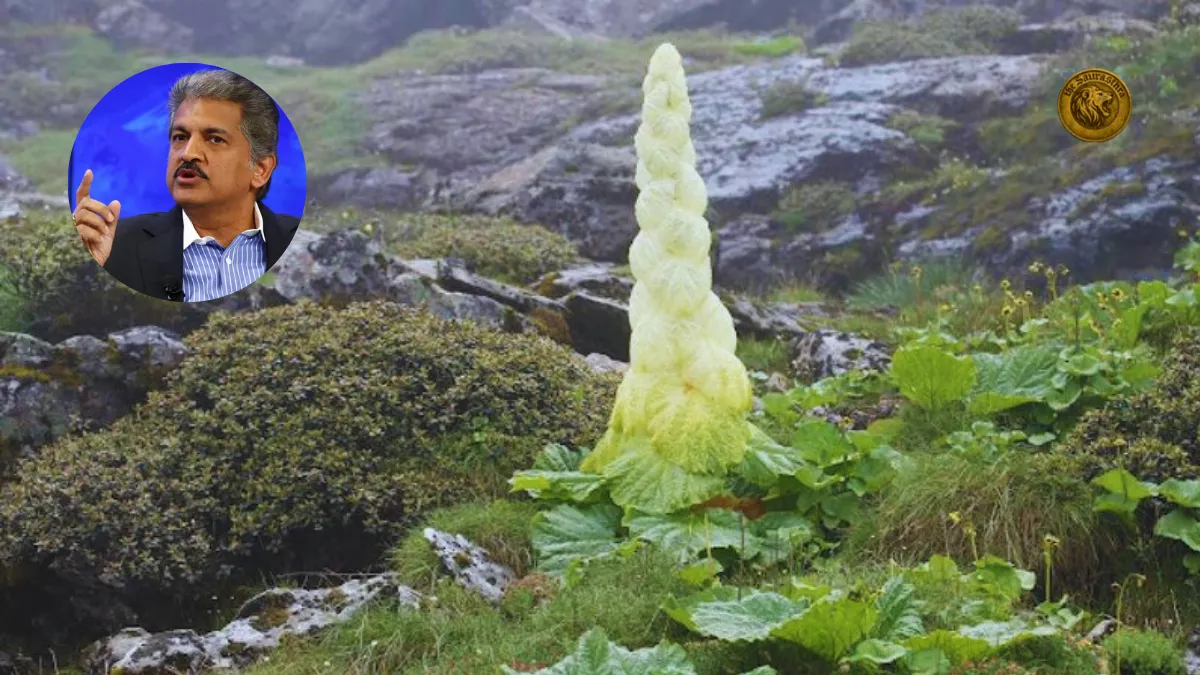
Sikkim Sundari: In an age dominated by rapid technological change and urban living, a single social media post has managed to redirect public attention toward one of India’s most extraordinary yet lesser-known natural wonders. Industrialist Anand Mahindra recently sparked widespread curiosity by sharing insights about a rare Himalayan plant known as Sikkim Sundari, revealing a story that has long remained absent from textbooks and mainstream discussions.
Mahindra’s post did more than showcase a beautiful plant—it reignited interest in India’s rich but often overlooked ecological heritage. The response was immediate and widespread, with nature enthusiasts, scientists, educators, and everyday users coming together to learn about this remarkable species that thrives where survival itself is a daily battle.
I knew nothing about this extraordinary marvel: the ‘Sikkim Sundari’
— anand mahindra (@anandmahindra) December 21, 2025
Thriving at staggering altitudes of 4,000–4,800 meters, this "Glasshouse Plant" stands like a glowing tower against the mountains.
Its life is a masterclass in patience.
It is monocarpic, which means that… pic.twitter.com/keoMSmGcUl
What Is Sikkim Sundari?
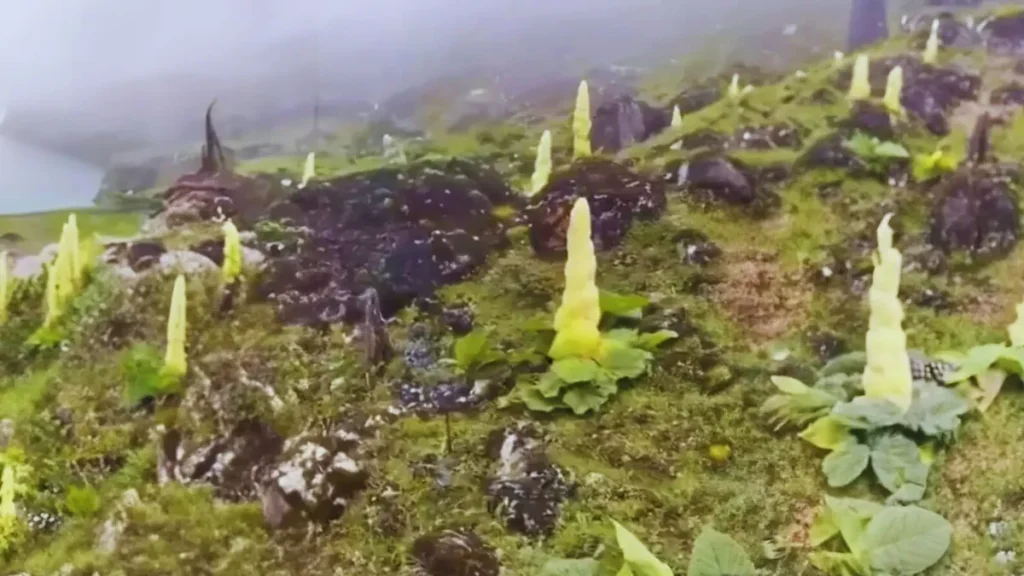
Sikkim Sundari, scientifically known as Rheum nobile, is one of the rarest high-altitude plants found in the eastern Himalayas, particularly in regions of Sikkim, Arunachal Pradesh, Bhutan, and parts of Tibet. This extraordinary plant grows at elevations ranging from approximately 4,000 to 4,800 meters above sea level, an environment marked by freezing temperatures, intense ultraviolet radiation, thin air, and extreme winds.
At such heights, even basic plant survival is challenging. Yet Sikkim Sundari not only survives—it flourishes, standing tall like a glowing beacon amid rocky Himalayan slopes.
The “Glasshouse Plant” of the Himalayas
One of the most striking features of Sikkim Sundari is its unique physical structure, which has earned it the nickname “Glasshouse Plant.” Locally, it is also known as “Chuka.”
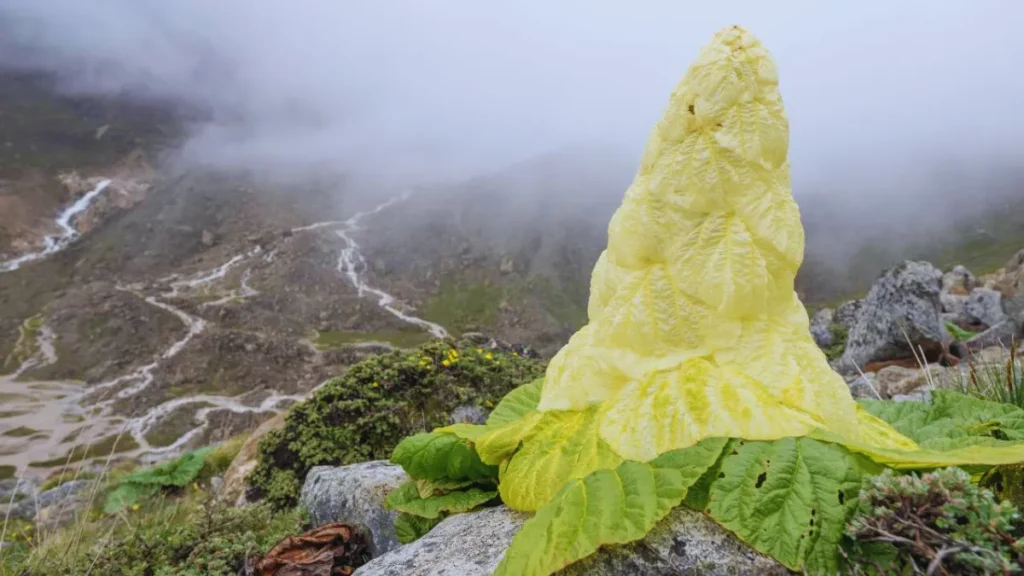
The plant is distinguished by its tall, cone-like formation made up of large, translucent bracts-specialized leaves that surround the flowering spike. These bracts act like a natural greenhouse:
- They allow visible sunlight to pass through, warming the plant’s interior.
- At the same time, they block harmful ultraviolet rays, protecting delicate reproductive parts.
- The structure helps retain heat and shields the plant from harsh mountain winds.
From a distance, Sikkim Sundari appears almost luminous, its pale golden-brown bracts edged with soft pink hues reflecting sunlight against the stark Himalayan landscape. Botanists often describe it as resembling a natural lantern glowing among snow-covered peaks.
A Life Cycle That Teaches Patience
Anand Mahindra described the life cycle of Sikkim Sundari as a “masterclass in patience,” a phrase that resonated deeply with readers.
For years—sometimes decades-the plant exists quietly as a small cluster of leaves close to the ground. During this prolonged phase, it stores energy, enduring extreme climatic conditions without any dramatic outward growth.
Then, in a single growing season, something extraordinary happens.
The plant rapidly shoots upward, growing up to two meters tall, forming its iconic cone-like structure. It flowers, produces seeds, and completes its reproductive mission. Shortly after releasing its seeds, the plant dies.
This phenomenon is known as monocarpy, a biological process in which a plant flowers only once in its lifetime before dying. While monocarpy exists in other species, it is exceptionally rare and dramatic in plants living at such high altitudes.
Why Isn’t Sikkim Sundari in Our Schoolbooks?
Mahindra also raised an important and thought-provoking question: Why do Indian school curricula often highlight exotic plants from around the world while ignoring rare and remarkable native species like Sikkim Sundari?
Despite being a botanical marvel admired by scientists globally, Sikkim Sundari remains largely unknown to the general public. Its absence from textbooks reflects a broader gap in how local biodiversity is documented, taught, and celebrated.
Educators and environmentalists echoed this concern online, calling for stronger representation of India’s own ecological treasures in academic material. Many argued that learning about plants like Sikkim Sundari could foster environmental awareness, regional pride, and a deeper understanding of climate resilience.
Medicinal Properties and Traditional Uses
Beyond its visual beauty, Sikkim Sundari holds significant medicinal and cultural value, particularly among Himalayan communities.
Experts and educators participating in the online discussion highlighted several traditional uses:
- The plant is believed to aid digestion.
- It has been used to help manage inflammation and pain.
- Some traditional practices associate its roots with liver health.
- Local communities consume parts of its stem and use its roots in herbal remedies.
While modern scientific research on Rheum nobile is still evolving, its long-standing role in traditional medicine underscores its importance beyond aesthetics.
Comparisons With Brahma Kamal
As interest grew, many users compared Sikkim Sundari to Brahma Kamal, another iconic high-altitude Himalayan plant found primarily in Uttarakhand.
The comparison is natural:
- Both grow at extreme elevations.
- Both have cultural and medicinal significance.
- Both bloom under harsh environmental conditions.
- Both symbolize endurance and purity in Himalayan ecology.
However, botanists emphasize that while the two plants share similarities in habitat and reverence, Sikkim Sundari is unique in its translucent bracts and monocarpy-driven life cycle.
A Living Symbol of Himalayan Biodiversity
According to botanical experts, Sikkim Sundari represents one of the most sophisticated natural adaptations found in alpine plant life. Its ability to create a self-regulating microclimate using its bracts is often cited as an example of evolutionary brilliance.
Local communities view the plant not merely as a species, but as a living symbol of harmony between nature and survival. Its presence indicates an ecosystem that, while fragile, is deeply balanced.
In a time when climate change threatens high-altitude ecosystems, plants like Sikkim Sundari serve as crucial indicators of environmental health. Any disruption to their habitat could signal broader ecological consequences.
Why Sikkim Sundari Matters Today
The renewed attention on Sikkim Sundari goes beyond viral curiosity. It highlights several urgent themes:
- The need to document and protect rare native species
- The importance of integrating local biodiversity into education
- The role of influential voices in raising environmental awareness
- The urgency of conserving fragile Himalayan ecosystems
Anand Mahindra’s post acted as a catalyst, reminding millions that some of India’s greatest natural wonders are not monuments or megastructures-but quiet survivors rooted in remote mountain soil.
Read also: Redwood National Park: The Ultimate Travel Guide to California’s Ancient Giants
A Hidden Heritage Worth Preserving
Sikkim Sundari is more than a rare plant. It is a testament to nature’s intelligence, patience, and resilience. It tells a story of survival against odds, of beauty born from adversity, and of knowledge waiting to be rediscovered.
As global audiences, especially in the UK and US, increasingly look toward sustainable living and ecological conservation, stories like that of Sikkim Sundari offer powerful lessons. They remind us that true heritage is not always written in books-it often grows silently, waiting for someone to notice.
And sometimes, all it takes is a single post to bring a forgotten Himalayan marvel back into the light.