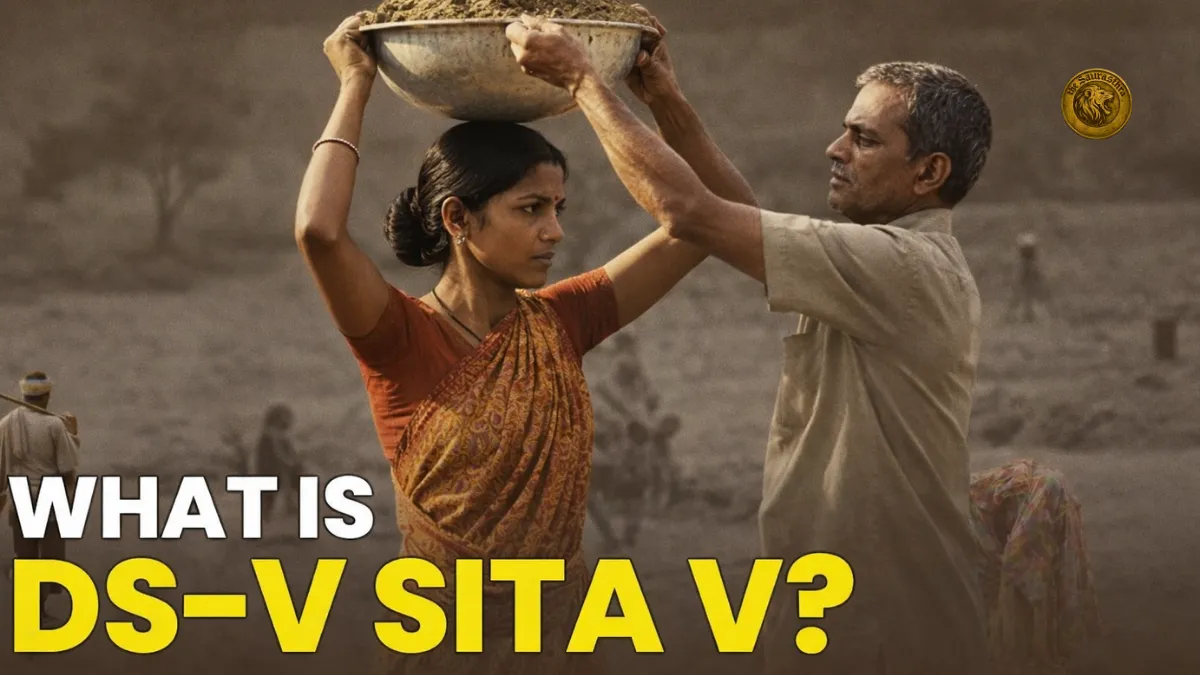
VB–G RAM G Bill 2025 Explained: The introduction of the Viksit Bharat–Guarantee for Rozgar and Ajeevika Mission (Gramin) Bill, 2025, widely referred to as the VB–G RAM G Bill, marks one of the most ambitious and contentious reforms in India’s rural policy landscape in the last two decades. Positioned by the government as a future-ready replacement for the Mahatma Gandhi National Rural Employment Guarantee Act (MGNREGA), 2005, the proposed law seeks to fundamentally reshape how rural employment, livelihoods, and infrastructure development are planned, funded, and monitored across the country.
This in-depth report-VB–G RAM G Bill 2025 Explained-examines how the Bill proposes to dismantle and rebuild India’s flagship rural employment guarantee, the motivations behind the overhaul, the sweeping statutory changes involved, and the far-reaching economic, administrative, and federal implications for States, farmers, and rural workers. While the government argues that the new framework is better aligned with India’s evolving rural economy, critics warn that the Bill could dilute the rights-based foundation of rural employment and significantly shift fiscal responsibility to States.
From MGNREGA to VB–G RAM G: A Historic Policy Shift
For nearly 20 years, MGNREGA has stood as the cornerstone of India’s rural social safety net. Enacted in 2005, it legally guaranteed at least 100 days of wage employment per financial year to every rural household willing to undertake unskilled manual work. Over time, it became both a lifeline during agrarian distress and a powerful counter-cyclical tool during economic slowdowns, including the COVID-19 pandemic.
The VB–G RAM G Bill, 2025, however, seeks to replace this demand-driven, rights-based framework with a centrally structured, normatively funded, and technology-intensive mission. According to the government, rural India has changed dramatically since 2005-poverty levels have declined, digital infrastructure has expanded, and the focus must now shift from short-term employment to durable assets, productivity, and climate resilience.
Yet, for many economists, policy analysts, and State governments, the proposed transition raises fundamental questions: Is India moving away from guaranteed employment as a legal right? Will States be able to shoulder the increased financial burden? And does the new system strengthen or weaken federal balance?
VB–G RAM G Bill Latest News: What the Government Is Proposing
The Viksit Bharat–Guarantee for Rozgar and Ajeevika Mission (Gramin) Bill, 2025 proposes a comprehensive overhaul of rural employment governance by repealing MGNREGA, 2005. The Bill is structured as a mission-mode programme with a strong emphasis on planning discipline, fiscal predictability, and technology-led oversight.
According to the government, MGNREGA in its current form has become inefficient, prone to misuse, and poorly aligned with contemporary development priorities. Official data cited in the Bill’s rationale points to persistent challenges: misappropriation of funds amounting to ₹193.67 crore in FY 2024–25, weak asset quality, and the fact that only 7.61% of registered households completed the full 100 days of employment in that year.
The VB–G RAM G framework, policymakers argue, seeks to address these gaps by redesigning the system from the ground up — increasing guaranteed employment days, integrating rural works with national infrastructure planning, and introducing stricter accountability mechanisms.
Key Structural Changes Under the VB–G RAM G Bill 2025
1. Expansion of Guaranteed Employment Days
One of the most headline-grabbing provisions in the VB–G RAM G Bill 2025 Explained is the increase in guaranteed employment days.
Under Section 3(1) of the Bill, every eligible rural household will be entitled to 125 days of wage employment per financial year, replacing the “not less than 100 days” guarantee under MGNREGA.
While MGNREGA legally allowed flexibility beyond 100 days in specific circumstances, such as droughts or disasters, in practice the 100-day limit became a ceiling due to software and administrative constraints. Existing provisions under MGNREGA included:
- An additional 50 days in drought or disaster-notified areas.
- Up to 150 days for certain Scheduled Tribe households in forest regions.
The VB–G RAM G Bill standardises 125 days as the statutory norm, rather than an exception triggered by special conditions. On paper, this represents a 25% increase in guaranteed employment, which the government presents as a major gain for rural workers.
However, critics caution that the increased entitlement may remain largely theoretical due to other constraints introduced by the Bill, including capped funding and seasonal work pauses.
2. A Fundamental Shift in Centre–State Funding Responsibilities
Perhaps the most controversial aspect of the VB–G RAM G Bill 2025 Explained lies in its reconfiguration of Centre–State financial responsibilities.
Under MGNREGA, the Central Government bore 100% of unskilled wage costs, making it one of the most generous centrally sponsored schemes in India. States were responsible mainly for:
- Unemployment allowance if work was not provided.
- One-fourth of material costs.
- Administrative expenses at the State level.
The VB–G RAM G Bill proposes a sharp departure from this model. Under Section 22(2), the new cost-sharing formula is as follows:
- 90:10 (Centre:State) for Northeastern States, Himalayan States, and Union Territories with legislatures such as Uttarakhand, Himachal Pradesh, and Jammu & Kashmir.
- 60:40 for all other States and Union Territories with legislatures.
- 100% Central funding only for Union Territories without legislatures.
This change transfers a substantial portion of wage liability directly to State governments. For fiscally stressed States, particularly those with large rural populations, this could translate into a significant budgetary strain.
Several States have already expressed concern that the revised funding pattern undermines cooperative federalism and could force them to either curtail employment provision or divert funds from other critical sectors.
3. Normative Allocation Replaces Demand-Driven Labour Budgets
Another transformative provision under the VB–G RAM G Bill is the replacement of MGNREGA’s demand-driven funding model with a normative allocation system.
Under Sections 4(5) and 4(6) of the Bill:
- The Central Government will determine State-wise normative allocations each financial year based on prescribed objective parameters.
- Any expenditure beyond the allocated amount must be borne entirely by the State Government.
In simple terms, normative allocation means that funding is capped in advance according to centrally defined norms, rather than responding to actual demand for work.
Under MGNREGA, States submitted annual labour budgets and work plans by January 31 each year. Funding was theoretically open-ended, with the Centre obligated to release funds based on demand. This design reinforced MGNREGA’s character as a legal entitlement rather than a discretionary welfare scheme.
By contrast, the VB–G RAM G framework effectively converts rural employment into a budget-capped, supply-driven programme, raising concerns that work demand exceeding allocations may go unmet, particularly during economic shocks or agricultural downturns.
4. Statutory Pause During Peak Agricultural Seasons
The Bill introduces a legally mandated pause in public works during peak agricultural seasons — a provision aimed at addressing long-standing complaints from farmers about labour shortages.
Under Sections 6(1) and 6(2):
- No work under the scheme may be commenced or executed during notified peak sowing and harvesting periods.
- States must notify, in advance, up to 60 days per financial year during which public works will be paused.
- These notifications can vary by district, block, gram panchayat, or agro-climatic zone, reflecting local cropping patterns.
While this provision is expected to ease pressure on farm labour markets and prevent wage inflation during critical agricultural periods, it also significantly narrows the window in which workers can actually claim their 125-day entitlement.
Labour economists argue that this creates a structural contradiction: a higher statutory guarantee coupled with fewer working days available for execution.
5. Viksit Gram Panchayat Plans and the National Rural Infrastructure Stack
A defining feature of the VB–G RAM G Bill 2025 Explained is its integration of rural employment with long-term infrastructure planning.
Under Schedule I, all works must originate from Viksit Gram Panchayat Plans, which are then consolidated upward through:
- Block-level plans
- District-level plans
- State-level plans
These are ultimately aggregated into the Viksit Bharat National Rural Infrastructure Stack, aligned with national development priorities and integrated with the PM Gati Shakti National Master Plan.
The Stack focuses on four thematic domains:
- Water security and water-related works
- Core rural infrastructure such as roads and markets
- Livelihood-supporting infrastructure
- Extreme weather and climate resilience works
This approach aims to ensure that public works under the scheme create durable, economically productive assets rather than short-lived or low-quality structures — a persistent criticism of MGNREGA in the past.
Why the Government Wants to Replace MGNREGA
The government’s rationale for replacing MGNREGA rests on the argument that the scheme, while groundbreaking in 2005, no longer reflects the realities of rural India in 2025.
Officials point to several structural challenges:
- Persistent fund misuse and leakages.
- Weak monitoring and delayed wage payments.
- Low completion rates of full employment entitlements.
- Creation of assets that often fail to contribute meaningfully to productivity or resilience.
With digital connectivity now widespread in rural areas, the government argues that technology can be used to improve targeting, transparency, and accountability — something MGNREGA’s original design could not fully anticipate.
The VB–G RAM G Bill is thus presented as a shift from a fragmented employment programme to a mission-oriented rural development framework.
Expected Impact on the Rural Economy
Supporters of the Bill argue that the new law could have a transformative impact on India’s rural economy.
By prioritising water conservation, climate-resilient infrastructure, rural roads, and market access, the scheme aims to:
- Improve agricultural productivity.
- Reduce distress migration to urban areas.
- Strengthen local value chains.
- Build long-term resilience against climate shocks.
Digitised planning, payments, and monitoring are expected to reduce delays, eliminate ghost beneficiaries, and improve overall efficiency.
What the VB–G RAM G Bill Means for Farmers
Farmers are expected to be among the key beneficiaries of the proposed changes.
With the statutory pause on public works during sowing and harvesting, farmers may experience:
- Improved availability of agricultural labour during peak seasons.
- Reduced wage inflation when labour demand is highest.
- Better water management and irrigation infrastructure.
- Improved rural roads, storage facilities, and market access, lowering post-harvest losses.
The focus on climate-resilient works could also help farmers adapt to increasingly erratic weather patterns.
Implications for Rural Workers
For rural workers, the Bill offers both opportunities and uncertainties.
On the positive side:
- Guaranteed employment rises to 125 days.
- Aadhaar-linked digital wage payments aim to reduce delays and wage theft.
- Unemployment allowance remains mandatory if work is not provided.
- Panchayat-led planning could make job availability more predictable.
However, concerns remain that capped funding, seasonal pauses, and increased State liability could limit actual access to work, especially during periods of high demand.
Accountability, Monitoring, and Technology
To address longstanding governance issues, the VB–G RAM G Bill introduces an extensive accountability framework:
- AI-driven fraud detection systems.
- GPS- and mobile-based monitoring of worksites.
- Weekly public disclosure of scheme data.
- Mandatory social audits twice a year at the gram panchayat level.
- Central and State-level steering committees for oversight.
The government argues that these measures will significantly reduce corruption and improve public trust.
Federal and Fiscal Concerns
Despite its ambitions, the VB–G RAM G Bill 2025 Explained has triggered serious debate over federal balance.
States fear that:
- Increased financial responsibility could strain already tight budgets.
- Normative allocations may not reflect real-world demand.
- The dilution of demand-driven funding weakens the legal guarantee of work.
Several experts warn that the Bill represents a shift from a rights-based framework to a managed welfare programme, potentially altering the social contract between the State and rural citizens.
Conclusion: A Defining Moment for Rural Policy-VB–G RAM G Bill 2025 Explained
The VB–G RAM G Bill, 2025 represents a defining moment in India’s rural development journey. By seeking to replace MGNREGA, it challenges one of the most influential social legislations in the country’s history.
Whether the Bill ultimately strengthens rural livelihoods or undermines employment security will depend on how its provisions are implemented, how States respond to the new fiscal realities, and whether the promise of higher guarantees translates into real work on the ground.
As Parliament debates the Bill and States weigh its implications, one thing is clear: the future of rural employment in India is at a crossroads.