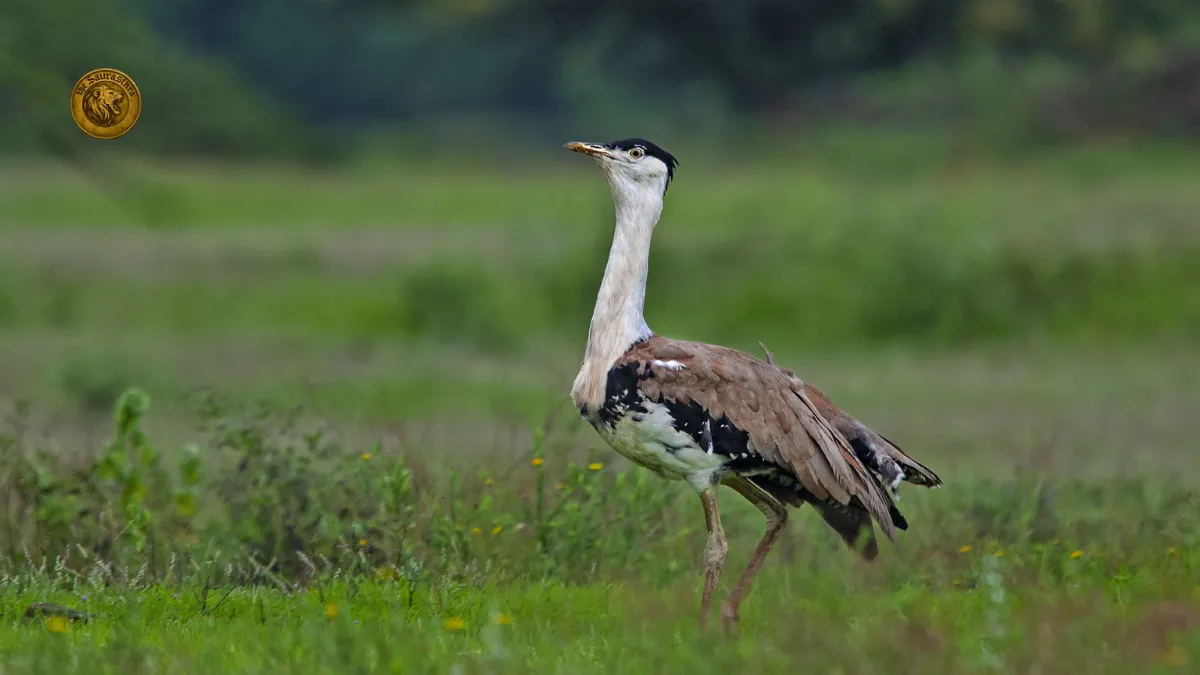
Great Indian Bustard Facts: The Great Indian Bustard, once a familiar sight across the open grasslands of the Indian subcontinent, is now fighting for survival. With an estimated global population of barely 200 individuals, this majestic bird has become a symbol of India’s biodiversity crisis and one of the most critically endangered bird species on Earth.
Known for its impressive size, distinctive appearance, and deep booming mating call, the Great Indian Bustard has witnessed a dramatic decline over the past century. Conservationists warn that without urgent, coordinated action, the species could disappear from the wild within a few decades.
This detailed report explores Great Indian bustard Facts, including its physical features, habitat, behavior, threats, and the conservation efforts currently underway to save this iconic species from extinction.
Introduction to the Great Indian Bustard
The Great Indian Bustard (Ardeotis nigriceps) is among the heaviest flying birds in the world. Endemic to the Indian subcontinent, it primarily inhabits dry grasslands, scrublands, and semi-arid regions. Historically, its range extended across large parts of India and into present-day Pakistan. Today, however, the species survives in small, fragmented pockets.
The bird’s steep population decline has placed it at the center of national and international conservation discussions. Its plight highlights the broader challenges faced by grassland ecosystems, which are often undervalued and rapidly converted for agriculture and infrastructure development.
Key Great Indian Bustard Facts at a Glance
Understanding the basic facts about the Great Indian Bustard helps explain why the species is so vulnerable.
Common Name
Great Indian Bustard
Scientific Name
Ardeotis nigriceps
Global Population
Approximately 200 individuals worldwide
Average Height
Around 100 centimeters (1 metre)
Wingspan
Between 210 and 250 centimeters
Average Weight
15 to 18 kilograms
Conservation Status
- Listed in Schedule I of the Indian Wildlife (Protection) Act, 1972
- Included in the Convention on Migratory Species (CMS)
- Protected under Appendix I of CITES
- Classified as Critically Endangered on the IUCN Red List
- Recognized under India’s National Wildlife Action Plan (2002–2016)
- Selected for recovery under the Integrated Development of Wildlife Habitats programme of the Ministry of Environment and Forests, Government of India
These figures underline the urgency of conservation efforts and place the bird among the most threatened avian species globally.
Physical Characteristics and Identification
One of the most striking Great Indian bustard Facts is how easily the bird can be identified due to its unique appearance.
The Great Indian Bustard has a robust body with long legs and a heavy, upright posture. Its plumage is predominantly brown, blending seamlessly with dry grassland landscapes. The wings display a combination of black, brown, and grey markings, which become especially visible during flight.
Distinctive Features
- A black crown on the forehead that contrasts sharply with the pale neck and head
- Long, powerful legs adapted for walking long distances
- Broad wings that allow short but strong flights
Males and females grow to nearly the same height and weight, which is unusual among large birds. However, males can be distinguished by:
- A larger, darker black crown
- A prominent black band across the breast
These features become more pronounced during the breeding season, when males engage in elaborate courtship displays.
Breeding Behaviour and Reproduction
The breeding habits of the Great Indian Bustard are closely linked to seasonal changes, particularly the monsoon.
Breeding Season
Most breeding activity occurs during the monsoon months, when food availability is relatively high and conditions are favorable for raising chicks.
Courtship and Mating Calls
Male bustards possess a unique anatomical feature known as a gular pouch. This pouch inflates and helps produce a deep, resonant booming call that can travel up to 500 metres across open landscapes. This sound plays a crucial role in attracting females.
Nesting and Egg Laying
- Females lay only one egg per breeding season
- The egg is laid directly on open ground, without a constructed nest
This reproductive strategy makes the species extremely vulnerable. With only one egg produced at a time, the loss of even a single chick can have a significant impact on population recovery.
Parental Care
One of the more surprising Great Indian bustard Facts is that males play no role in incubation or chick-rearing. After mating, the male withdraws entirely. The female alone:
- Incubates the egg
- Protects the chick from predators
- Guides the young bird until the next breeding season
This heavy burden on females further limits the species’ ability to rebound.
Diet and Feeding Habits
The Great Indian Bustard is an opportunistic feeder, adapting its diet to whatever food is available throughout the year.
Primary Food Sources
- Grass seeds
- Insects such as grasshoppers and beetles
Occasional Prey
- Small rodents
- Reptiles
This varied diet reflects the bird’s adaptability, but it also ties its survival closely to healthy grassland ecosystems. As these habitats shrink, food availability becomes increasingly unpredictable.
Natural Habitat and Range
The Great Indian Bustard prefers open landscapes with minimal tree cover, which allow it to detect predators from a distance.
Preferred Habitat
- Dry grasslands
- Semi-arid plains
- Scrublands
Historically, these habitats were widespread across India. Today, however, many have been reclassified as “wastelands” and repurposed for agriculture, infrastructure, or industrial projects.
The bird’s current strongholds are limited and fragmented, increasing the risk of inbreeding and local extinction.
Major Threats to Survival
Despite strict legal protection, the Great Indian Bustard faces numerous threats that continue to push it closer to extinction.
1. Hunting and Poaching
Hunting remains one of the most serious threats, particularly in Pakistan, where enforcement is weaker. Occasional poaching also occurs outside protected areas in India.
2. Collision with Power Lines
One of the deadliest but less visible threats is collision with high-tension electric wires. Due to their heavy bodies and limited frontal vision, bustards often fail to detect wires while flying, resulting in fatal accidents.
3. Road Accidents
Fast-moving vehicles pose a significant danger, especially in areas where highways cut through traditional bustard habitats.
4. Free-Ranging Dogs
In villages near grasslands, free-ranging dogs often prey on eggs and chicks, dramatically reducing breeding success.
5. Habitat Loss and Fragmentation
Large-scale agricultural expansion and mechanized farming have transformed open grasslands into croplands. Additional pressures include:
- Irrigation projects
- Roads and highways
- Electric poles
- Mining activities
- Industrial development
Together, these factors have reduced both the quality and quantity of suitable habitat.
Legal Protection and Conservation Status
The Great Indian Bustard receives the highest level of legal protection available under Indian law. Its inclusion in Schedule I of the Wildlife Protection Act places it on par with iconic species such as tigers and elephants.
Internationally, its listing under CMS and CITES underscores the need for cross-border cooperation, particularly given its historical range extending beyond India.
The species’ classification as Critically Endangered by the IUCN signals an extremely high risk of extinction in the wild.
Conservation Efforts in India
Recognizing the severity of the situation, the Indian government and conservation organizations have initiated several recovery programmes.
National Recovery Initiatives
The Great Indian Bustard has been identified as a priority species under the Integrated Development of Wildlife Habitats scheme. This programme focuses on:
- Habitat protection
- Scientific monitoring
- Species recovery planning
Role of WWF-India
WWF-India has played a significant role in shaping conservation strategies for the species.
Key initiatives include:
- Providing expert input for the State Action Plan for Resident Bustard Recovery Programme
- Raising public and policy-level awareness about declining bustard populations
- Advocating for focused, species-specific conservation measures
WWF-India is actively involved in conservation work in and around Desert National Park, one of the last strongholds of the species.
Expansion Plans
Looking ahead, WWF-India plans to expand its conservation efforts to Gujarat, another historically important region for the Great Indian Bustard. Fundraising initiatives are underway to support long-term protection and monitoring efforts.
Why the Great Indian Bustard Matters
Beyond its rarity, the Great Indian Bustard plays a vital ecological role. As a grassland species, it serves as an indicator of ecosystem health. Protecting the bustard also helps safeguard numerous other species that depend on the same habitats.
For India, the bird holds cultural and symbolic significance. It represents the urgent need to rethink how grasslands are valued and managed.
The Road Ahead
Saving the Great Indian Bustard will require sustained political will, scientific research, community involvement, and international cooperation. Measures such as burying power lines in critical habitats, controlling feral dog populations, and preventing further habitat fragmentation are essential.
The future of the species remains uncertain, but informed action can still make a difference.
Conclusion
The story of the Great Indian Bustard is a stark reminder of how quickly even the most powerful and majestic species can be pushed to the edge. These Great Indian bustard Facts reveal not only the bird’s remarkable biology but also the scale of the challenges it faces.
With fewer than 200 individuals left in the wild, the clock is ticking. Whether the Great Indian Bustard survives or becomes another entry in the list of extinct species will depend on the actions taken today.
Protecting this bird is not just about saving a species—it is about preserving an entire ecosystem and redefining conservation priorities for future generations.