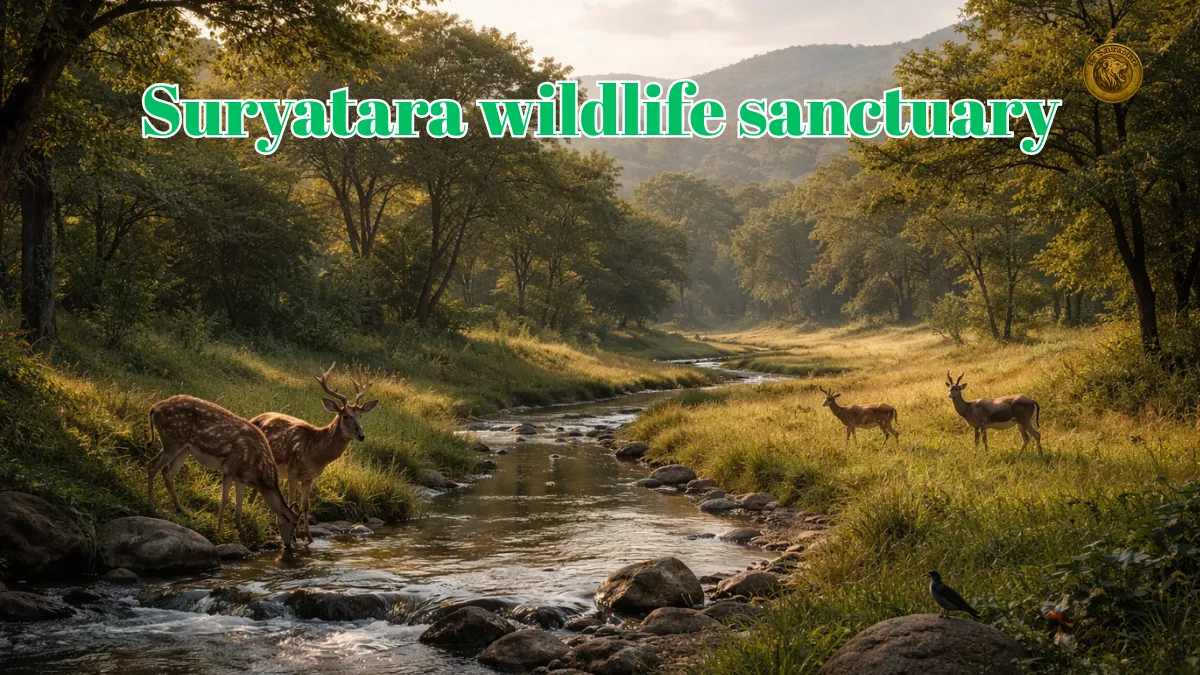
Suryatara wildlife sanctuary stands as a rare example of how nature protection, local livelihoods, and long-term ecological thinking can coexist within a single living landscape. Set away from the rush of expanding cities and highways, the sanctuary unfolds slowly, revealing forests shaped by sunlight, seasonal water, and the movement of animals that have followed these routes for generations. Rather than presenting itself as a spectacle, it offers something more enduring: a working ecosystem where protection is measured not by fences alone but by continuity.
The Geography That Shapes Life
The sanctuary occupies a varied terrain where gentle hills merge into lowland forests and seasonal grasslands. This geographical diversity creates a mosaic of habitats that change subtly across short distances. Shaded slopes support moisture-loving trees, while sunlit clearings allow grasses and shrubs to thrive. During the monsoon months, shallow streams emerge across the forest floor, feeding wetlands that briefly become centers of activity for birds, amphibians, and insects.
These geographic layers are not static. Over decades, erosion, regrowth, and water movement have reshaped the land in ways that benefit biodiversity. Fallen trees create microhabitats, while old riverbeds turn into corridors for animal movement. This natural dynamism has been one of the sanctuary’s greatest strengths, allowing it to absorb environmental pressures without losing its ecological balance.
Climate and Seasonal Rhythms
Life within the sanctuary is guided by predictable yet delicate seasonal patterns. Summers are warm and dry, pushing animals toward permanent water sources and shaded areas. The arrival of monsoon rains transforms the landscape, reviving dormant grasses and filling streams that had dwindled to narrow channels.
Winter brings cooler temperatures and clearer skies, creating ideal conditions for migration and breeding. Birds arrive from distant regions, insects emerge in large numbers, and predators take advantage of increased prey visibility. These seasonal shifts are not disruptions but essential cycles that sustain the sanctuary’s ecological rhythm.
A Forest Built Over Time
The forest cover within the sanctuary is the result of both natural regeneration and careful protection. Decades ago, sections of the area showed signs of degradation caused by excessive grazing and unregulated wood collection. Rather than imposing abrupt restrictions, conservation planners worked with local communities to reduce pressure gradually.
Native tree species were allowed to regenerate naturally, supported by targeted planting where soil conditions required assistance. Over time, canopy cover increased, stabilizing the microclimate and improving soil moisture retention. Today, the forest stands as evidence that patience and local cooperation can restore ecosystems without drastic intervention.
Mammals of the Sanctuary
Large mammals often capture public attention, but their presence within the sanctuary is best understood through their interactions rather than their numbers. Herbivores such as deer and antelope move in loosely structured groups, grazing selectively and shaping vegetation patterns. Their movement prevents any single plant species from dominating, encouraging diversity.
Predators play an equally vital role. Their hunting behavior regulates herbivore populations and influences how prey species use the landscape. This balance, maintained over time, has reduced instances of overgrazing and allowed forest regeneration to proceed without artificial controls.
Smaller mammals, including rodents and insectivores, are less visible but no less important. They aerate soil, disperse seeds, and provide a crucial food source for birds and reptiles. Their presence is a reliable indicator of overall ecosystem health.
Avian Diversity and Migration
Birdlife within the sanctuary reflects both its habitat variety and its position along regional migration routes. Resident species occupy niches ranging from forest canopy to wetland edges, each adapted to specific feeding and nesting conditions.
During migration seasons, the sanctuary becomes a temporary home for birds traveling thousands of kilometers. Wetlands offer rest and nourishment, while dense foliage provides protection from predators. The arrival and departure of these birds serve as a reminder that conservation efforts in one location contribute to ecological networks spanning continents.
Reptiles, Amphibians, and Insects
Often overlooked, reptiles and amphibians are among the most sensitive indicators of environmental change. The sanctuary’s ponds and shaded forest floors support frogs and salamanders whose breeding cycles depend on clean water and stable temperatures.
Reptiles, including lizards and snakes, regulate insect and rodent populations, maintaining balance within the food web. Insects, in turn, pollinate plants, recycle organic matter, and sustain countless other species. Together, these smaller forms of life form the foundation upon which the sanctuary’s larger ecosystems depend.
Human History in the Landscape
Long before formal protection, people lived alongside the forests now designated as protected land. Small settlements relied on seasonal agriculture, forest produce, and grazing. Their knowledge of weather patterns, plant uses, and animal behavior was passed down through generations.
When conservation planning began, this history was acknowledged rather than erased. Community elders were consulted, and traditional practices that aligned with sustainability were encouraged. This approach reduced conflict and allowed conservation to build upon existing relationships between people and land.
Community-Based Conservation
One of the defining features of the sanctuary’s management has been its emphasis on shared responsibility. Local residents participate in monitoring wildlife movements, reporting illegal activities, and maintaining forest boundaries. In return, they receive support for alternative livelihoods that reduce dependence on forest extraction.
Training programs have helped residents develop skills in eco-guiding, handicrafts, and sustainable agriculture. These initiatives have not only improved incomes but also strengthened community pride in the sanctuary’s success.
Governance and Protection Framework
Effective conservation requires clear governance structures. The sanctuary is managed through a combination of regional forest authorities and locally appointed committees. This dual system allows for scientific oversight while ensuring that decisions reflect ground realities.
Regular patrols, habitat assessments, and wildlife surveys inform management strategies. Rather than reacting to crises, the administration emphasizes prevention through early detection and adaptive planning.
Research and Monitoring
Scientific research plays a crucial role in understanding long-term trends within the sanctuary. Studies on vegetation growth, animal movement, and water quality provide data that guides policy decisions.
Researchers collaborate with local trackers who contribute practical knowledge of the terrain. This partnership between science and tradition has led to more accurate data collection and a deeper understanding of ecosystem dynamics.
Education and Awareness
Environmental education is woven into the sanctuary’s outreach efforts. School programs introduce children to local wildlife and conservation principles through guided walks and interactive sessions. These experiences foster curiosity and respect for nature at an early age.
For adults, workshops and community meetings provide updates on conservation outcomes and future plans. Transparency in communication has been key to maintaining trust and long-term cooperation.
Tourism with Restraint
While nature tourism can generate revenue, it also carries risks if poorly managed. Visitor access within the sanctuary is deliberately limited. Designated trails and observation points minimize disturbance to wildlife, and visitor numbers are capped during sensitive seasons.
Guides emphasize observation and understanding rather than entertainment. This restrained approach ensures that tourism supports conservation without overwhelming the ecosystem.
Infrastructure and Sustainability
Facilities within the sanctuary are designed with minimal environmental impact. Buildings use locally sourced materials, and energy needs are met through renewable sources where possible. Waste management systems prioritize recycling and composting, reducing pollution risks.
Paths and viewing platforms are constructed to blend into the landscape, avoiding permanent alteration of natural features. This design philosophy reflects the sanctuary’s broader commitment to harmony between human presence and natural processes.
Challenges and Pressures
Despite its successes, the sanctuary faces ongoing challenges. Climate variability has altered rainfall patterns, affecting water availability during critical seasons. Invasive plant species threaten to outcompete native vegetation in some areas.
Human-wildlife conflict remains a concern at the boundaries, particularly during drought years when animals venture closer to farmland. Addressing these issues requires constant adaptation and cooperation between authorities and communities.
Adaptive Strategies for the Future
To address emerging challenges, management strategies emphasize flexibility. Habitat restoration projects focus on strengthening natural buffers against climate extremes. Early warning systems help communities prepare for increased wildlife movement during dry periods.
Long-term planning integrates climate projections, ensuring that conservation measures remain effective under changing conditions. This forward-looking approach positions the sanctuary as a model for resilience.
Cultural Significance and Identity
Beyond ecology, the sanctuary holds cultural meaning for nearby communities. Local festivals, folklore, and art often reference animals and landscapes found within its boundaries. These cultural expressions reinforce the idea that conservation is not an external imposition but part of a shared identity.
Preserving this cultural connection has been as important as protecting physical habitats. By honoring traditions, the sanctuary strengthens the social foundations necessary for long-term protection.
Comparative Perspective
When viewed alongside other protected areas, Suryatara wildlife sanctuary stands out for its emphasis on integration rather than isolation. Instead of functioning as a closed reserve, it operates as part of a broader landscape that includes villages, farms, and waterways.
This approach recognizes that wildlife does not adhere to administrative boundaries. Corridors connecting the sanctuary to neighboring habitats allow animals to move freely, reducing genetic isolation and enhancing resilience.
A Simple Overview of Key Features
| Aspect | Description |
|---|---|
| Landscape | Forests, grasslands, seasonal wetlands |
| Biodiversity | Mammals, birds, reptiles, amphibians, insects |
| Management | Joint governance with community participation |
| Livelihood Support | Eco-guiding, crafts, sustainable agriculture |
| Research Focus | Habitat health, wildlife movement, climate impact |
Reflections on Conservation Ethics
The sanctuary’s story invites reflection on broader conservation ethics. It challenges the notion that protection must exclude people and demonstrates that coexistence is possible when respect and responsibility are shared.
Rather than aiming for perfection, management accepts that ecosystems are complex and sometimes unpredictable. This humility allows for learning and adjustment, qualities essential for enduring conservation success.
Read also: Vantara Tickets: Your Complete Guide to Booking, Prices, Timings, and Visitor Tips
Looking Ahead
As environmental pressures increase globally, protected areas must serve as both refuges and learning centers. The experiences gained here contribute to wider discussions on sustainable land use, climate adaptation, and community engagement.
The sanctuary’s future will depend on continued collaboration, informed decision-making, and a willingness to adapt. Its past achievements suggest that these foundations are already in place.
Read also: India Mega Zoo Vantara Faces Global Scrutiny Over Endangered Animal Imports
Conclusion
Suryatara wildlife sanctuary is not defined solely by its boundaries or species lists but by the relationships it fosters between land, wildlife, and people. It demonstrates that conservation is most effective when it respects natural processes and human connections alike.
In an era marked by rapid change, the sanctuary offers a quieter narrative of continuity and care. It stands as a reminder that meaningful protection grows from patience, understanding, and a shared commitment to the landscapes that sustain us all.