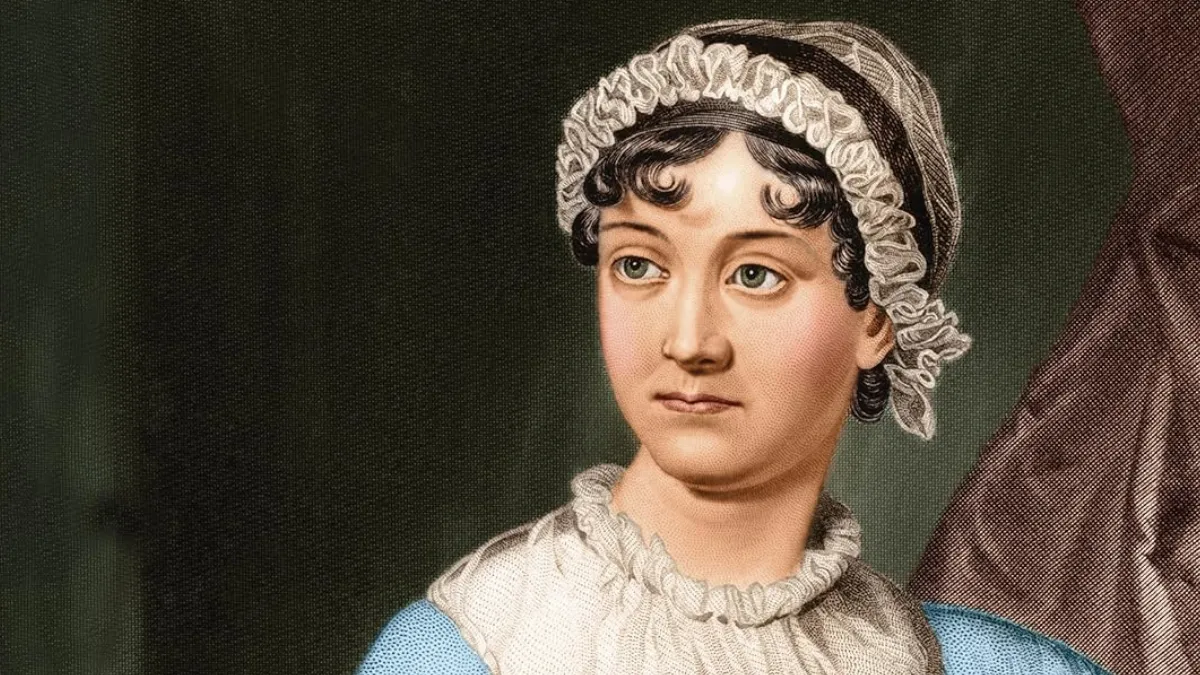
Jane Austen biography often reads like a contradiction: a woman who lived a seemingly modest, domestic life yet transformed the English novel with stories that remain vibrant more than two centuries later. Born into a rural clerical family, Austen wrote about drawing rooms, marriages, and manners, but beneath those polite surfaces she examined class, money, gender, and moral choice with extraordinary precision. Her novels, published anonymously during her lifetime, gradually reshaped how fiction could portray everyday life with realism, irony, and emotional depth.
Early Life and Family Background in Jane Austen biography
Jane Austen was born on December 16, 1775, in the village of Steventon, Hampshire, England. She was the seventh of eight children in a close-knit family led by her father, Reverend George Austen, a clergyman and scholar, and her mother, Cassandra Leigh, known for her wit and storytelling. The Austen household valued education, reading, and lively conversation, creating an atmosphere that encouraged Jane’s early interest in writing.
Unlike many girls of her time, Austen received access to her father’s extensive library. She read widely, from classical literature to contemporary novels, absorbing both their strengths and weaknesses. This exposure shaped her sharp literary judgment, which later became a hallmark of her work. Family theatricals and letter-writing further honed her sense of dialogue and observation. Her relationship with her elder sister, Cassandra, was especially close and emotionally significant; many personal letters to Cassandra later became key sources for understanding Austen’s life and character.
Education and Early Writing Years
Austen’s formal education was brief and irregular, typical for girls of her social standing in the late eighteenth century. She attended boarding schools for short periods, but most of her learning took place at home. By her teenage years, she was already experimenting with fiction. Her earliest writings, now known as the “Juvenilia,” were playful, exaggerated, and often satirical, mocking the conventions of popular novels of the time.
These youthful works reveal a writer already aware of literary clichés and eager to subvert them. Even in parody, Austen demonstrated control over narrative voice and a delight in exposing human folly. During the 1790s, she began drafting early versions of novels that would later become Sense and Sensibility, Pride and Prejudice, and Northanger Abbey. Though unpublished at the time, these manuscripts laid the foundation for her mature style.
The Social World That Shaped Her Fiction
To understand Jane Austen biography fully, it is essential to grasp the social context in which she lived. Austen belonged to the rural gentry, a class positioned between the aristocracy and the working population. This group relied on land, inheritance, and respectable professions, and it is this world that her novels portray with such accuracy.
Marriage was a central concern for women of Austen’s class, not only for emotional fulfillment but for financial security. Austen never married herself, a fact that has long intrigued readers. Her personal letters suggest she valued independence and intellectual companionship over economic convenience. This perspective allowed her to write about marriage with realism rather than romantic illusion, highlighting both affection and practical necessity.
Publication and Literary Breakthrough
Austen’s first published novel, Sense and Sensibility, appeared in 1811 and was released anonymously, credited only as “By a Lady.” The novel received positive attention for its balanced portrayal of emotion and reason. Encouraged by this success, she revised and published Pride and Prejudice in 1813, which quickly became her most popular work during her lifetime.
Subsequent novels, including Mansfield Park (1814) and Emma (1815), further established her reputation as a keen observer of social behavior. Though she earned modest profits, Austen never achieved widespread fame while alive. Nonetheless, her works attracted discerning readers who appreciated her subtle humor and moral insight.
Major Works at a Glance
| Novel Title | Year Published | Central Themes | Setting Focus |
|---|---|---|---|
| Sense and Sensibility | 1811 | Emotion vs. reason, family, marriage | Rural England |
| Pride and Prejudice | 1813 | Class, morality, personal growth | Hertfordshire |
| Mansfield Park | 1814 | Social responsibility, morality | Country estate life |
| Emma | 1815 | Self-knowledge, matchmaking, class | Village society |
| Northanger Abbey | 1817 | Satire of Gothic novels, imagination | Bath and countryside |
| Persuasion | 1817 | Second chances, love, regret | Coastal and rural towns |
Writing Style and Literary Significance
One of the most distinctive features in Jane Austen biography is her innovative narrative technique. She refined the use of free indirect discourse, allowing readers to experience a character’s thoughts while maintaining narrative distance. This approach created intimacy without sacrificing irony, enabling Austen to critique her characters gently yet effectively.
Her language is precise rather than ornate, and her humor often arises from understatement. Austen’s realism lies not in dramatic events but in emotional truth. Small misunderstandings, social missteps, and personal growth form the core of her storytelling. These qualities influenced later novelists, including George Eliot and Henry James, and continue to shape modern fiction.
Later Years and Declining Health
In 1809, Austen and her family settled in Chawton, a village that proved creatively productive. It was here that she revised her earlier manuscripts and completed Emma and Persuasion. Despite her growing literary confidence, Austen’s health began to deteriorate around 1816. Scholars still debate the exact cause of her illness, with theories ranging from Addison’s disease to Hodgkin’s lymphoma.
Jane Austen died on July 18, 1817, at the age of 41, and was buried in Winchester Cathedral. At the time of her death, her literary achievements were respected but not widely celebrated. It was only in later decades that her reputation expanded significantly.
Also read: International Mountain Day: Understanding the Significance of the World’s High Altitudes
Posthumous Recognition and Legacy
The enduring appeal described in Jane Austen biography owes much to the timelessness of her themes. Love, pride, self-deception, and social pressure remain universally relatable. In the nineteenth century, her nephew Edward, Lord Brabourne, published A Memoir of Jane Austen, which helped introduce her to a broader audience.
Since then, Austen’s novels have inspired countless adaptations, reinterpretations, and scholarly studies. Her characters, particularly Elizabeth Bennet and Emma Woodhouse, have become cultural icons. Academic interest in her work continues to grow, exploring issues of feminism, economics, and narrative form.
Also read: International Volunteer Day: A Global Celebration of Service, Solidarity, and Collective Action
Why Jane Austen Still Matters
Jane Austen biography ultimately tells the story of how careful observation and disciplined craft can outlast fame and fortune. Writing from a limited social sphere, Austen revealed universal human behavior with honesty and wit. Her novels invite readers to laugh, reflect, and reconsider their own assumptions.
Two centuries after her death, Austen remains not just a beloved novelist but a central figure in English literary history. Her life may have been quiet, but her voice continues to speak with clarity, intelligence, and enduring relevance.